


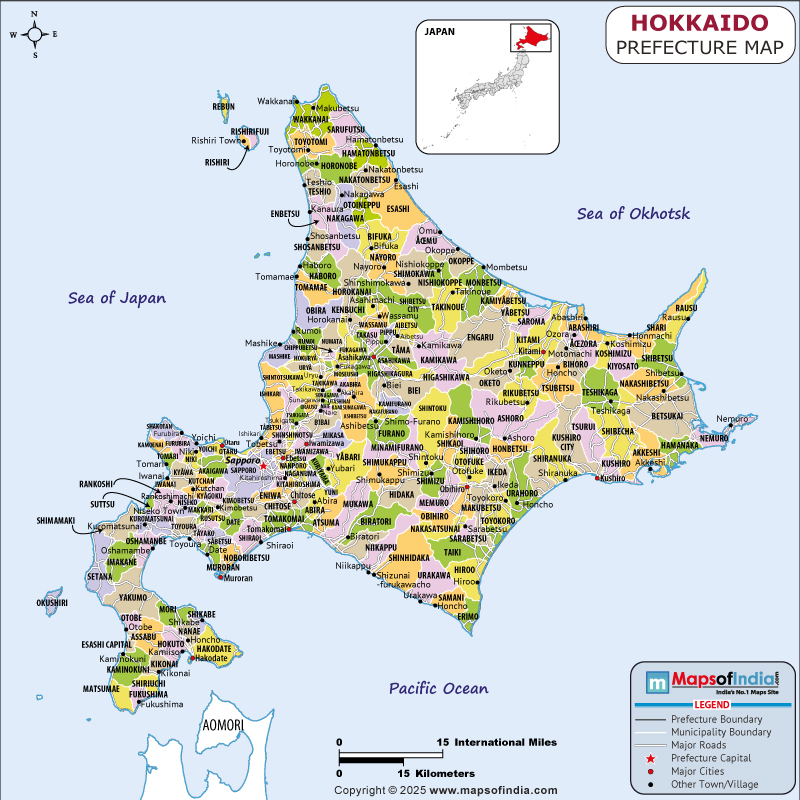



Hokkaido is Japan's second largest island and one of its most stunning areas. It lies in the north of Japan and is renowned for its natural scenery, snowy winters, and fresh seafood. People come to Hokkaido to ski, relax in hot springs, and stroll through fields of flowers and countryside. In contrast to Tokyo's and Osaka's bustling metropolises, Hokkaido has open spaces and clean air.
It has its own characteristics. It is cold and snowy in winter, with long winters, and hence a haven for winter sports. It is colder than Japan during the summer months and so popular with tourists fleeing the heat. Hokkaido is also rich in history, influenced by the indigenous Ainu and then by the Japanese colonists.
History
The past of Hokkaido is distinct from the rest of Japan. For two thousand years, the island had been inhabited by the Ainu. The Ainu subsisted on fishery, deer and bear hunting, and collecting fruits and greens. They established their culture, religion, and language.
Prior to the arrival of the Japanese colonisers, Hokkaido was not greatly affected by the mainland. The Ainu bartered with the inhabitants of Honshu, the principal Japanese island, but they retained their tradition. This era demonstrates how Hokkaido developed with a distinctive culture that was separate from the rest of Japan.
During the Edo period (1603–1868), Japan was more interested in Hokkaido. The island was referred to as Ezochi during those times. It was believed to be rich in fish, animals, and natural resources. Japanese traders and government officers arrived in Hokkaido for business but created tension with the Ainu. Some wars were fought because more groups of Japanese wanted to take control of the land and resources. Nevertheless, most of the Ainu settlements managed to preserve their traditions then.
During the 19th century, the history of Hokkaido completely changed. Following the Meiji Restoration of 1868, the Japanese government decided to develop the island as a whole. They renamed it from Ezochi to Hokkaido in 1869. The government desired the land, particularly due to fear of Russia advancing toward the northern borders. For the sake of making Hokkaido more powerful, they invited inhabitants of other parts of Japan to settle on the island.
Most farmers, fishermen, and labourers began new lives during this time in Hokkaido. Even the government employed foreign experts to instruct the new agriculture and construction techniques. They constructed roads, railways, and cities connecting Hokkaido to the rest of Japan. Coal mining and agricultural industries prospered. Colonisation by the settlers ruined the Ainu people greatly. They lost most of their land, language, and rights, but their culture persisted in small towns.
In the early 20th century, Hokkaido further developed. Sapporo and Hakodate were trade and cultural hub cities. During World War II, Hokkaido was a war base but was relatively less affected than Japan as a whole. Post-war, Hokkaido became increasingly popular for its agriculture, dairy industry, and fishing.
The past of Hokkaido is now recalled and honoured. Its museums and institutions tell the story of the Ainu, and their past is now becoming real. Development on the island today is nature and heritage complex oriented. From the prehistoric time of the Ainu to the cities of Sapporo and Asahikawa of modern times, the past of Hokkaido is one of survival, transformation, and deep affection for the land.
Culture
Two of the primary elements that constitute the culture of Hokkaido are the Ainu culture and the way of life introduced by Japanese immigrants. They are the elements of a unique culture compared to the rest of Japan. From food festivals and way of life to art, Hokkaido has a uniqueness that was formed through history and nature.
The native inhabitants of Hokkaido are Ainu. They developed a culture with a strong affinity towards animals and nature. The bear was sacred, and rituals were conducted to offer respect to the bear. Ainu handicrafts, music, and dance are still practised in Hokkaido. They wore traditional clothes with stitched designs, and their wooden carvings symbolised something. Tourists to this day still get to experience Ainu culture at museums, cultural villages, and performances across Hokkaido.
Festivals play a very significant role in Hokkaido culture. The most famous among them is the Sapporo Snow Festival, which takes place annually in February. At this time, the city gets adorned with gigantic snow and ice sculptures. Millions of visitors come from Japan and overseas. In summer, there are flower festivals in Furano and Biei welcoming the purple lavender fields.
There also exist native Ainu holidays that are still observed today. These ceremonies honour nature and animals, upholding customs of the past. There are also holidays that occur seasonally in local villages and towns, including harvest festivals and fireworks festivals.
Hokkaido artwork is a combination of traditionality and modernity. Ainu crafts like embroidering clothes and woodwork are appreciated, while city artists like those in Sapporo represent new forms in the shape of music, painting, and stage performance.
Hokkaido life is less hectic compared to the big cities of Japan. The locals enjoy spending time outdoors, and the locals take part in outdoor activities such as skiing, trekking, and fishing. The communities are tight-knit, and nature is incorporated into daily existence. The laid-back attitude, extensive pieces of land, and fresh air tells how people live and socialise with one another.
Although contemporary Japanese culture prevails over Hokkaido, the island itself remains distinctive. Popular culture, technology, and fashion are encompassed in everyday existence, yet respect for nature and traditional values also remains abundant.
Hokkaido culture is a blend of the new and the old. It respects the Ainu traditions, savours local cuisine and festivals, and embodies the way of life of people who exist in great touch with nature. This blending makes Hokkaido one of the most unique places in Japan.
Language
The native language of Hokkaido is Japanese, though the island has its own taste. They speak in the Hokkaido dialect, which is slightly different from mainland Japanese. The usage of certain words and some accents makes it special, though everyone still can easily understand one another.
Ainu was spoken by the native people in the past. A sharp fall in the number of speakers of Ainu over the years following previous government policies occurred. Now, attempts to restore the Ainu language and maintain it are being made. The Ainu words, songs, and myths are taught to children in schools, cultural centres, and social clubs.
For tourists, English is also used extensively in tourist destinations, hotels, and restaurants. English descriptions are even included on signs and maps, so it is simple for foreigners to move around Hokkaido.
Geography
The island of Hokkaido has made it the most unique region of Japan. It is Japan's northernmost one of the four largest islands and its second largest island, second only to Honshu by area. Hokkaido is roughly 83,000 square kilometres in size and significantly more exposed than the crowded cities of Tokyo or Osaka. It is surrounded by seas on three sides: the Sea of Japan in the west, the Pacific Ocean to the east, and the Sea of Okhotsk to the north. Its terrain blesses it with cool summers and extremely snowy winters that have eased the ground and lifestyle for centuries.
Hokkaido has volcanoes and mountains that form the landscapes. The Daisetsuzan mountain range is located at the center of the island, or sometimes referred to as the "roof of Hokkaido". It has a number of active volcanoes, hot springs, and peaks. Its summit is Mount Asahi, more than 2,200 meters above sea level, ascended by climbers during summer and skied down by thrill-seekers during winter. Other similar volcanological regions, including Noboribetsu and Lake Toya, hold significance as geographical locations of Hokkaido.
The island is also blessed with a high concentration of rivers and lakes that contribute to its landscape. The Ishikari River is the longest and runs for over 250 kilometres. The rivers facilitate agriculture and open up fertile plains for agricultural crops. The lakes, including Lake Shikotsu, Lake Toya, and Lake Akan, are not only scenic but also used in activities like fishing, camping, and boating. The lakes are generally covered with forests, hence making the surrounding environment quiet and cool in Hokkaido.
The climate in Hokkaido is absolutely different from the rest of Japan. The winters are long, cold and snowy, and several of the villages receive masses of metres of snow each year. This makes Hokkaido one of the best places to ski or snowboard. Summer is cooler than on the mainland, and because of this, many people travel north to get away from the summer heat. Spring is dominated by the cherry blossoms, and autumn is covered in orange, yellow, and red. Hokkaido possesses all seasons except for each other.
Nature and wildlife also form a significant component of Hokkaido geography. Brown bears inhabit the mountains and forests, and red foxes, deer, and other birds inhabit the wild. Marine animals and fish in Hokkaido waters flourish, serving as a foundation for local fisheries. The Shiretoko Peninsula, a World Heritage site, contains some of the nation's best but most severe pristine sections.
Quick Facts
| Official Name | Hokkaido |
| Capital | Sapporo |
| Area | 83,457 km² |
| Population | Approximately 5,200,000 |
| Currency | Japanese Yen (JPY) |
| Religion | Shinto and Buddhism (major), Christianity and others (minor) |
| Languages | Japanese (official), Ainu language spoken by the indigenous Ainu people |
FAQs
Q1: What is Hokkaido known for?
Hokkaido is known for snow, ski resorts, hot springs, seafood, and blooming flower fields. It is also well known for the Sapporo Snow Festival.
Q2: Who are the Ainu people of Hokkaido?
The Ainu are the original inhabitants of Hokkaido. They possess their own culture, language, and way of life, which they continue to enjoy to this day.
Q3: What is Hokkaido's local food?
Hokkaido is well-known for fresh seafood such as crabs and scallops, milk products, miso noodles, soup curry, and roasted lamb.
Q4: Are animals visible in Hokkaido?
Yes, brown bears, red foxes, deer, and various birds are present in Hokkaido. It is advisable to go to the Shiretoko Peninsula to witness animals.
Q5: When is it best to travel to Hokkaido?
Winter is perfect for skiing, and summer for hiking and flower fields, but spring and autumn are also lovely.
Last Updated on: June 22, 2026

