


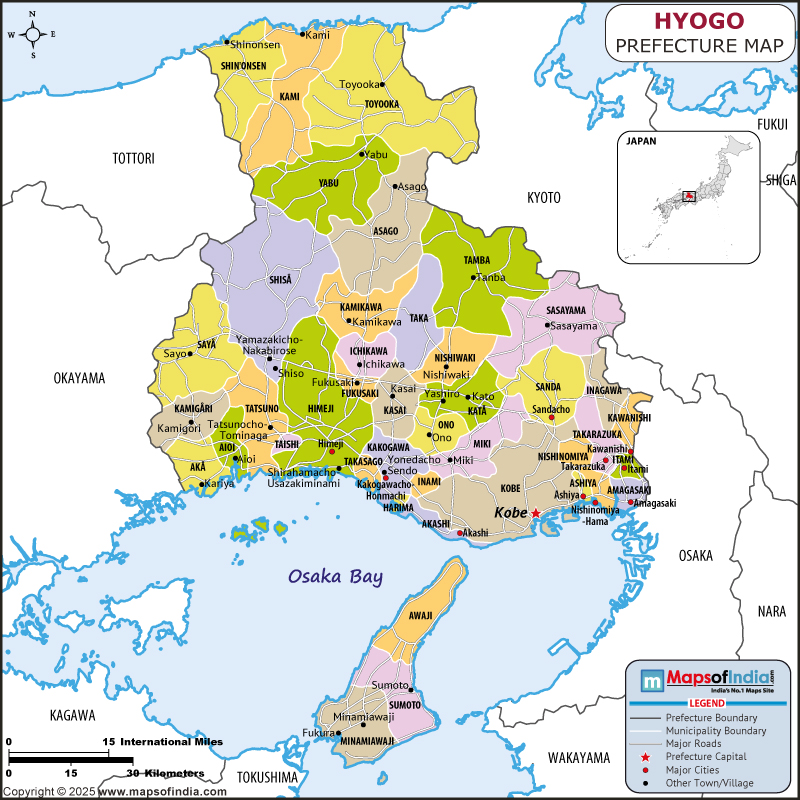



Hyogo is a lovely prefecture in Japan. It is situated in the Kansai district and has just the right mix of nature, history, and culture. Most visitors love visiting Hyogo due to the friendly atmosphere and places to visit. From mountains to the sea, Hyogo has much to explore. People can experience life in the countryside, visit castles and temples, and enjoy good food. It is a region with shopping malls, clean roads, and adequate transport links.
In this article, we will discuss its history, culture, language, and geography, as well as answer the questions you’re probably asking about this fascinating place.
History
Hyogo possesses a vibrant and interesting past. It has been important to Japan for generations. Its position equidistant between the mountains and the ocean permitted it to grow as a centre of commerce, tourism, and culture. Countless people from within and beyond Japan have traversed or resided in Hyogo.
In the olden days, the current-day Hyogo was regionally divided, like Harima and Tajima. These regions served to bridge inland Japan to the sea. Ships docked at the ports with rice, tools, and other goods that were needed for daily purposes. This made Hyogo a business and travel hub.
Temples and shrines were constructed in Nara and Heian times in Hyogo. They served as institutions of learning as well as religion. Monks and scholars from all around the globe came here to educate people about religion and culture.
The Edo era (1603–1868) saw greater peace and advancements in Hyogo. Humans constructed towns and castles, and roads facilitated the journey. Himeji Castle, which is one of the most visited castles, was constructed during this era. It is also known as the "White Heron Castle" as it possesses white walls and stunning appearance. It is a UNESCO World Heritage Site today and one of the finest representations of Japanese castle architecture.
During the 19th century, Hyogo's proximity to the sea enabled it to turn outwards to the world. Kobe Port was among the busiest ports in Japan. Foreign ships from all over the world came and brought new ideas, products, and innovations. This enabled Hyogo's industries and firms to expand rapidly.
The region was a location of convergence of new and old ancient cultures. Foreigners entered Kobe in large quantities, and thus there was a fusion of cultures. Structures of that period are still present even today.
But Hyogo also experienced some struggles. In 1995, the region was hit by a powerful earthquake. Houses, buildings, and roads were damaged. It was tough for everyone in Hyogo. But by being strong and together, they brought back their cities. Today, Hyogo is secure and advanced but still keeping its past.
Hyogo's museums, temples, and parks tell you the history of how the place developed over the years. You are able to witness old structures and learn about how people used to live years and years ago. Festivals celebrate the traditions which have been inherited from generation to generation.
Due to the mixture of history and culture, Hyogo is a local's as well as a tourist's paradise. There are opportunities for individuals to visit castles, watch the sea, and learn the history of Japan. The serene nature and hospitality of the people provide a convenient and amusing way of discovering and learning about the place.
The history of Hyogo tells us as to how it has progressed year by year but is still unshakeable in terms of spirit. Whether strolling down an old temple or looking upwards to Himeji Castle, one is able to feel the stories of the people who constructed this beautiful place.
Culture
Hyogo culture is very hospitable, friendly, and tradition rich. The locals here like to celebrate festive events, prepare delicious food, and remain connected with nature. All these aspects are easily accessible for tourists in Hyogo since people have great respect for their tradition and like to share it with others.
One of the most popular festivities is the Kobe Festival, held annually in May. Parades, music, and dance in bright colours flood the streets in the festival. Everyone wears their best traditional attire and joins the rest of the masses to celebrate. There are also food stalls and drink stalls where you can indulge in local cuisine. It is a time when friends, family, and guests unite to feel joy and happiness.
Hyogo is also famous for its craft and art. The area has a tradition of pottery-making, clothing, and other handmade products. People pass knowledge from parents to children. Tourists can go to shops and attempt to do the crafts on their own. These things help one have a look into local culture.
Food holds an important place in Hyogo culture. Kobe beef is the most famous of all the prefecture's products. It is juicy, and yummy. It is served by restaurants in many forms, i.e., grilled, sliced, or stir-fried with vegetables. Seafood from the sea and land vegetables are other foods. Fresh fruits and vegetables are sold at street markets that people use to make simple but delicious meals.
Temples and shrines are also a big part of Hyogo's culture. They are mostly centuries old, with very lovely designs. Individuals visit there to pray or just to enjoy the peaceful atmosphere. The sacred sites enable individuals to relate to their heritage and nature.
There are traditions that exist in schools, parks, and even residences. The younger people are taught about traditions by the elderly, and communities put up events to enlighten the youths. Residents of Hyogo enjoy sharing experiences and tales, and therefore it is not a challenge for visitors to be accepted as part of the community.
The Hyogo lifestyle is peaceful. You can experience nature and culture and eat good food while enjoying friendly and cooperative people. There are festivals, crafts, temples, and nature that provide simple, peaceful, and lovely culture.
Language
The predominant language in Hyogo is Japanese. Japanese is spoken by people at home, in stores, at schools, and at work. Since Hyogo receives many visitors, some of the workers in areas that attract visitors speak basic English. This assists visitors when they speak and has an improved experience during their stay.
Those residing there habitually speak the Kansai dialect. It is casual and hospitable and spoken extensively in the Kansai region of Japan. It sounds a bit softer than the formal Japanese used in Tokyo. The vocabulary is softer or shorter, and there is a warm tone to it.
The menus and signs are written in Japanese, yet most of them have a picture or an English subtitle, and you can use a phone app to translate if you're struggling to communicate.
Geography
Hyogo is a beautiful Japanese prefecture that has varied natural scenery. It is richly endowed with mountains, forests, rivers, and even a coastline. With both the land and sea, Hyogo is the perfect place for nature and adventure lovers who adore peaceful environments.
The prefecture is within the Kansai region and is centrally located near great cities such as Osaka and Kyoto. Its seashore area was among the reasons why it was a large business and tourism hub. Hyogo lies along the Inland Sea, and the coastline has numerous towns and cities. Sitting near the sea provided them with fresh seafood and views that tourists highly favoured.
The Hyogo mountains are green. There is Mount Rokko near Kobe City, where you can go and take strolls across gardens, parks, and trails. The air is clean, and there is a soft wind, which makes the place ideal for relaxing. Even sections of it experience light snowfall during winter, making the location even more beautiful.
Rivers flow from the mountains to the ocean, passing through villages and cities. Rivers provide water for farms and household usage. Parks where children play and many people walk along rivers.
The climate in Hyogo is nice and cosy for most of the year. It is not so hot during summer and not cold during winter. It is hence not so difficult to do anything outdoors all year round. It is spring when flowers bloom and autumn when the leaves are in their autumnal colours. It is when most travellers come so that they can appreciate nature.
Due to its natural beauty, clean environment, and fresh fruits and vegetables, Hyogo is a tourist destination. Beaches, gardens, and parks are scattered all over the prefecture, providing locations where visitors can relax and enjoy nature. Trails and bike paths provide tourists with the liberty to move through the mountains and rivers on their own choice.
No matter if you want to witness the sea, mountains, or landscape, Hyogo offers much in terms of scenery to explore. Its peaceful ambiance and natural charm are reasons sufficient to visit, relocate, or indulge in a serene retreat from the urban chaos.
Hyogo's geography is possibly one of the main things it is popular for. From mountains to rivers and beaches to parks, it has everything. People can feel nature's serenity and savour the lifestyle in the place.
Quick Facts
| Official Name | Hyogo |
| Capital | Kobe City |
| Area | 8,396 km² |
| Population | Approximately 5,500,000 |
| Currency | Japanese Yen (JPY) |
| Religion | Shinto and Buddhism (major), Christianity and others (minor) |
| Language | Japanese (official), local dialects also spoken |
FAQs
Q1: What is Hyogo known for?
Hyogo is known for Himeji Castle, the most beautiful and best-preserved castle in Japan. It's also known for its seascapes and Kobe beef.
Q2: Where is Hyogo?
Hyogo is in the Kansai region of Japan, on the Sea of Japan coast and the Seto Inland Sea coast. It is close to Osaka and Kyoto cities.
Q3: What are some of the most popular tourist spots in Hyogo?
In addition to Himeji Castle, visitors love Arima Onsen (a celebrated hot spring town), Kobe Harborland, and Mt Rokko for landscapes and scenic views.
Q4: What is Kobe beef?
Kobe beef is exquisite, soft, and delicious beef bred in Hyogo. It's internationally renowned for marbling and distinctive taste.
Last Updated on: April 15, 2026

