


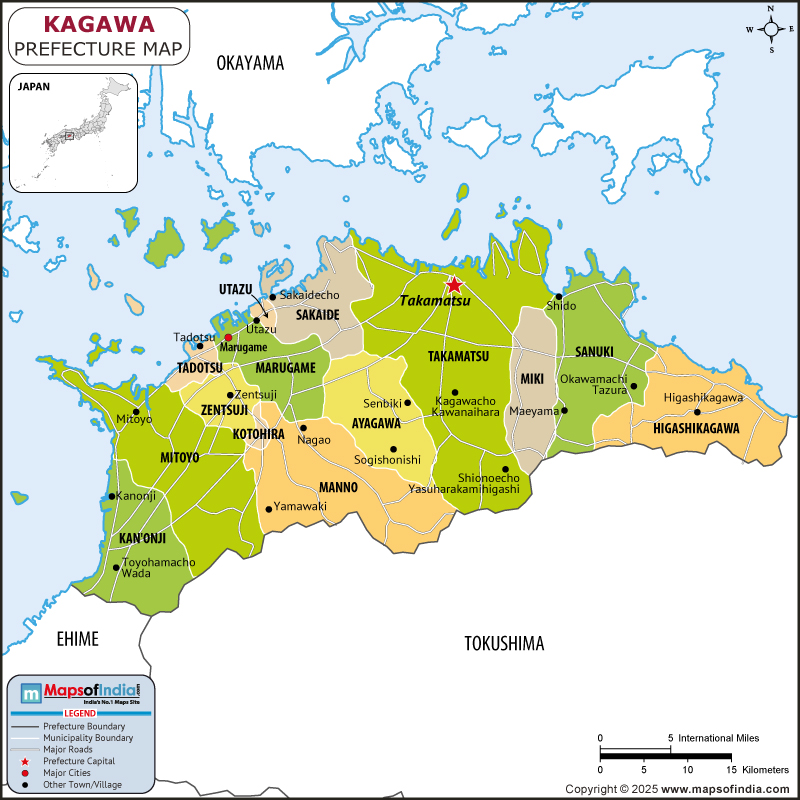



Kagawa is one of the smallest but loveliest prefectures of Japan. It is situated on Shikoku Island, it is famous for its welcoming people, tasty cuisine, and serene environment. Kagawa is a small prefecture in Japan, but it never falls short when it comes to attractions and activities for tourists to enjoy. From temples to gardens, from local paintings to tasty noodles, there is something for everyone in Kagawa.
Most of the tourists visit Kagawa to see traditional life in Japan. It is an ideal location to unwind, learn about culture, and enjoy nature. The prefecture is highly renowned for its hospitality and peaceful lifestyle. In this article, we will see more about Kagawa's history, culture, language and geography and answer some of the most asked questions regarding this place to help you get full insights about the place.
History
Kagawa has a rich and peaceful history that is characteristic of the lifestyle of individuals who reside by the sea and in the countryside. Even though it is Japan's smallest prefecture, its history is full of interesting events and customs that have shaped the way people live their lives presently.
In ancient times, the area now referred to as Kagawa was part of the province of Sanuki. It was a peaceful agricultural and fishing village whose people survived through nature for food and business. The ocean at hand helped humans to catch fish, and the lush soil helped them to farm rice, vegetables, and fruits. This equilibrium between land and sea made life in Kagawa simple but beautiful.
Temples and shrines were constructed during Nara and Heian periods (approximately 1,200 years ago). They were huge learning, praying, and cultural centres. Numerous scholars and monks came to the region to study and instruct. A few of these ancient temples, like the Kotohira Shrine, are visited today. People visit and climb numerous stairs to the shrine and enjoy the sight, as people have for centuries.
In the Edo period (1603-1868), Kagawa's towns and cities began to develop. Roads and pathways were expanded to promote travel and trade. Local nobles constructed castles, and one of the most renowned is Marugame Castle. Situated on a hill, the castle was a secure location for inhabitants and a symbol of security and pride. Even today, tourists can stroll around the castle premises and understand the existence of samurai and farmers in the past.
At that time of the Meiji period (1800s) Japan and Kagawa were developed. Farms grew bigger, and new agricultural machinery was adopted. Rice farming was a money making crop, and new fruits began selling in local markets to neighboring areas. Trains and improved roads made travelling easier, speeding up the economy and leading to the growth of towns.
One of the largest transformations in the history of Kagawa was when Sanuki Udon noodles arrived. Wheat from farms was collected by farmers and made into thick, chewy noodles that became an immediate success. Locals from all over Japan now visit Kagawa to try out this renowned dish, which brought pride to the area.
Now, Kagawa maintains that old world charm but with the added modern facilities. Shrines, castles, and old streets speak of simple people who are industrious and who have come to learn how to live with nature. All visitors to Kagawa can still see these traditions, either by going to a shrine, trying the local food, or visiting rural areas.
Kagawa's past is not a history of drama or war. Instead, it is a history of people who live at the edge of sea and land and nurture their lives with dignity and caution. The prefecture illustrates how history, nature, and culture can be interwoven in balance to create a warm and harmonious society for all.
Culture
Kagawa's culture is rich, polite, and hospitable. Even though the prefecture is small, the people there are proud of their history, culture, and food. The foreigners do not feel awkward either because people are friendly and willing to share with them their culture.
Sanuki Udon is the largest portion of Kagawa's culture. Sanuki Udon is famous in the prefecture as a thick, chewy wheat noodle. There are several restaurants serving it in different forms, like hot broth, cold sauce, or vegetables and seafood floating on the surface. There is a popular belief among people in Kagawa that love, patience, and caution must be adhered to in order to produce quality udon. Foreign travellers from around Japan and worldwide come to taste this unique dish.
Aside from noodles, Kagawa also cultivates olives. Olive trees excel in the warm climate, and individuals process the olives to become oil, snacks, and even cosmetics. Olive cultivation is not new but has been a major factor in remaining in the area. There are fresh vegetables, mandarin fruits, and other farm products available at local markets.
There are also festivals that are an important part of Kagawa's existence. The towns host a yearly festival in which people dance, wear traditional clothes, and play instruments. October is the month of the Marugame Festival, and part of it is streets filled with colourful floats, lights and smiling faces. It is a festival that many families enjoy being a part of and one that tourists are always asked to be a part of as well.
Temples and shrines are significant to Kagawa people. They range from a few centuries old to being frequented by individuals for prayers, peace, and special rituals on a daily basis. The most frequented among them is the Konpira Shrine. People go up hundreds of stairs to the shrine and appreciate the peaceful atmosphere and scenery.
Craft and art also have a place in Kagawa's life. People in Kagawa are experts in pottery, bamboo crafts, and weaving. The crafts are not for mere decoration but have useful purposes in real life. Tourists can even take part in workshops and learn to make their own crafts and carry along a memory of Kagawa's culture.
Kagawa people enjoy nature throughout the year. In spring, riversides and parks are filled with cherry blossoms, and one can enjoy picnics and walk around beneath the fragrant pink blooms. In autumn, the countryside becomes very magical, with trees becoming red and gold, and families take leisurely walks together.
For those who travel to Kagawa, being immersed in its culture is beyond sightseeing. It's enjoying good food, mastering traditional crafts, going to temples, and joining festivals. It's meeting people who are proud of sharing their heritage and willing to allow others to learn from them.
Kagawa's culture demonstrates how tradition and nature blend together to promote a harmonious and celebratory way of life. It is a setting where one can spend some time relaxing, enjoy the small things, and appreciate the simple but stunning manner of life.
Language
Japanese is the dominant language spoken in Kagawa. It is used at home, in schools, in markets, and in businesses. While everyone speaks Japanese, others are able to understand and talk basic English, especially in tourist areas.
The people who live in Kagawa use a local dialect known as the Sanuki dialect. It sounds warm and friendly. It would be slightly different while pronouncing words from other regions of Japan. Visitors like to listen to it because it sounds warm.
Signboards and menus are largely Japanese, with most establishments further using images or offering translations in English. A translation app can also make it easy for visitors to comprehend directions, menus, and information.
The Kagawa language is characteristic of its friendly and serene culture. Visitors are motivated to question, discover new words, and delight in interaction with the indigenous people.
Geography
Kagawa is a little but lovely prefecture in Japan. It is the smallest of the Japanese prefectures but it has a fantastic quantity of great natural attractions. It is situated on Shikoku Island and faces the Seto Inland Sea. This makes it a location where individuals can participate in land activities as well as sea activities.
Kagawa's coast is peaceful and long. Several fishing villages, beaches, and little ports along the ocean. The ocean is very important to its people's lives. Fishermen are typical professionals, and fresh seafood can readily be obtained in markets and restaurants. The ocean also links Kagawa to the rest of Japan, so it is simple for humans to travel around and exchange goods.
In terrain, Kagawa is flat and hilly. The terrain is fertile and arable. The whole land is occupied by rice paddies, vegetable gardens, and fruit gardens. Olive trees also exist, as hot conditions favour them. There are families who love cultivating and selling vegetables and fruits for cooking and carnivals.
The weather in Kagawa is temperate. The summers are not too hot, and the winters are not too cold. It is pleasant enough for individuals to reside and work throughout the year. Guests can enjoy outdoor activities such as strolls in the parks or on the beaches during varying seasons.
Kagawa is also connected to the surrounding islands with ferry routes. The islands are peaceful and full of nature. It is mostly desired by tourists to travel by boat tour to such islands, indulge in fresh seafood, and appreciate the wonderful sea scenery.
The water and land mix that characterises Kagawa is unique. It is not crowded like capital cities but is endowed with nature. The creeks, fields, and seashore are calm places where the travellers could have a resting place and enjoy the beauty of life's things.
Quick Facts
| Official Name | Kagawa Prefecture |
| Area | 1,877 km² |
| Population | Approximately 950,000 |
| Currency | Japanese Yen (JPY) |
| Religion | Shinto and Buddhism (major), Christianity and others (minor) |
| Language | Japanese (official), local dialects also spoken |
FAQs
Q1: Where is Kagawa in Japan?
Kagawa is the smallest prefecture in Japan, located on the island of Shikoku. It has seashore and farming fields along the edges of the Seto Inland Sea.
Q2: What is Kagawa renowned for?
Kagawa is renowned for Sanuki Udon noodles, fresh seafood, and olive cultivation. It is a serene location where nature and heritage are well preserved.
Q3: Are there museums or historical places that I might visit in Kagawa?
Kotohira Shrine and Marugame Castle are great places where you could learn more about the history of Kagawa.
Q4: Why should I visit Kagawa?
Kagawa is serene, polite, and abounds in delicious food and lovely countryside. It's the ideal place to have a slower, more relaxed pace of life.
Last Updated on: April 15, 2026

