


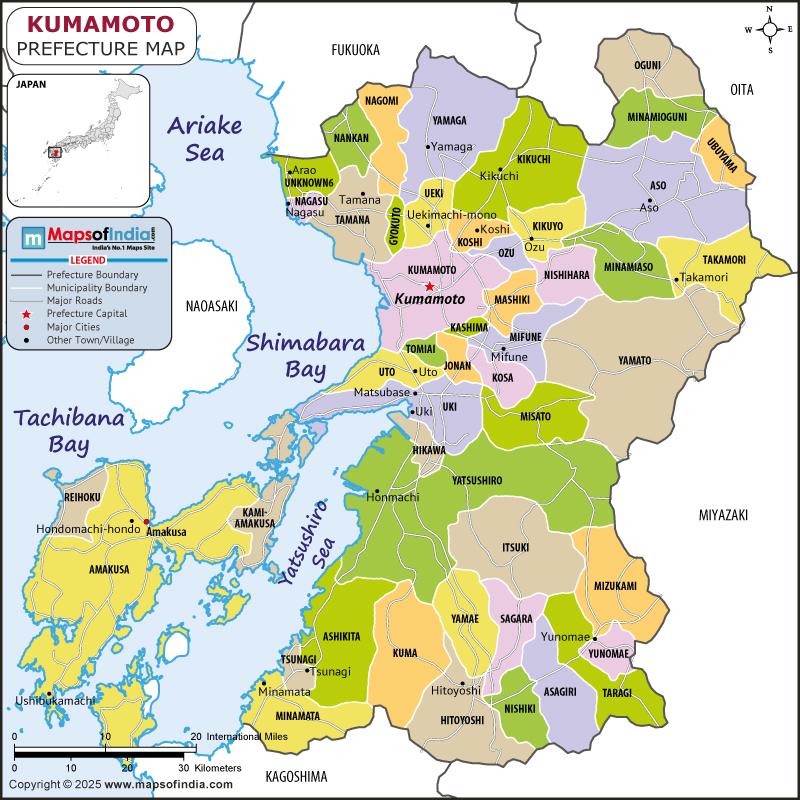



Kumamoto is the most interesting destination in Japan due to its history, culture, and natural scenery. Kumamoto is a city and the capital of Kumamoto Prefecture in southern Japan on Kyushu Island. Kumamoto attracts visitors to see its castle, relax in its gardens, indulge in local food, and experience the warmth of the place. In this article, we will see more about Kumamoto's history, culture, language and geography and answer some of the most asked questions regarding this place to help you get full insights about the place.
History
Kumamoto, being one of the Japanese cities on the island of Kyushu, is a city rich in and filled with exciting history that has earned it the name it bears today. From its early days of settlement to being a contemporary Japanese city, the history of Kumamoto is rich in wars, great leaders, the rise of culture, and rebuilding after defeat.
The Kumamoto area was occupied centuries ago. From archaeological findings, human beings inhabited the area in the Jomon and Yayoi eras. Land tilling and commerce began early, and the area surrounding Kumamoto proved to be rich, and rivers were in abundance, which was suitable for habitation and human expansion. The towns developed from small to large in size over time.
In the feudal era, Kumamoto was a notable region. Warlords fought for control of Kyushu during the 16th and 15th centuries. Kumamoto was situated in the centre of Kyushu. Its most significant aspect of history was the construction of Kumamoto Castle during the early 1600s. Feudal lord Kato Kiyomasa constructed the castle in 1607. Its formidable stone walls and strategic location made Kumamoto Castle one of Japan's best castles. Not only did it protect the city but it was also a display of Kumamoto power and pride.
After Kato Kiyomasa, Kumamoto was ruled by the Hosokawa clan for more than 200 years during the Edo era. Kumamoto as a castle town flourished under their rule. Education, art, and culture flourished in the city. Samurai inhabited the castle town, and merchants and farmers kept the city's economy alive. The tea ceremony and calligraphy and schools were the cultural events and activities that were part of Kumamoto life.
The Satsuma Rebellion in 1877 is the most famous incident that has ever taken place in Kumamoto's history. It was a war between the Meiji government and the samurai who resisted modernisation. There was a lot of activity during the war in Kumamoto Castle. The castle was under siege for 54 days, but it stood firm against the rebels. The battle razed the city and castle but also showed how strong Kumamoto's defences were. The revolt ended the samurai era in Japan, and Kumamoto led the way into the new times.
Kumamoto had more challenging times during the 20th century. As with all Japanese cities, Kumamoto suffered during World War II when part of the city was burnt to the ground under air raids. Post war, Kumamoto rebounded strongly. Kumamoto grew with new avenues, schools, factories, and cultural centres.
More recently still, Kumamoto has grappled with natural disasters in the form of the disastrous 2016 earthquakes. The earthquakes ruined Kumamoto Castle and most of the city. However, the citizens of Kumamoto have worked to rebuild, attesting to their strength and sense of unity. Castle reconstruction is ongoing to this day and continues to serve as a symbol of hope for the citizens.
Culture
Kumamoto culture is warm, vibrant, and deeply historical, natural, and traditional. Situated in Kyushu, Japan, the city has promoted a lifestyle that combines samurai legacy, traditional art and crafts, gastronomy, festivals, and creative imagination. Kumamoto citizens praise their heritage, and the public can enjoy cultural values in daily life.
One of the most powerful aspects of Kumamoto's culture is its relationship with Kumamoto Castle. The castle, for many centuries, was not only a military base but also the centre of social activity in the city. Samurai were camped outside the castle, and their practices of studying education, loyalty, and art have been passed on to shape the morale of the city to the present day. The virtue of respect for discipline and hard work is an inherited cultural quality.
Food is also an important component of Kumamoto culture. The city is known for food that shows its rural roots and local flavour. Local food includes horse meat sashimi, or Basashi, which will come as a shock to most visitors. Dark coloured Kumamoto ramen with a strong garlic flavour is another local food that shows local personality. Old fashioned sweets like Ikinari dango, which are composed of sweet potato and red bean paste wrapped up in dough, show Kumamoto's simple yet delicious food culture.
Religion also affects Kumamoto culture. Shinto shrines and Buddhist temples are found in every corner of the city, and locals go there to pay homage during New Year festivals, family occasions, or special events. They are not just prayer places but also hangouts, as they ensure that the spiritual life of Kumamoto continues to exist.
Kumamoto's culture is a blend of rich history, art, cuisine, and tradition. From the honour of samurai to the festive festivals, from distinct crafts to renowned dishes, the city's culture is as proud as it is welcoming. It is this multifaceted culture that makes Kumamoto unique in Kyushu and Japan as a whole.
Language
The most common language spoken in Kumamoto is Japanese. However, as with much of Japan, Kumamoto also has a native dialect known as Kumamoto-ben. The dialect employs words and phrases that appear distinct from standard Japanese. For example, the word "dakan" is often spoken in Kumamoto-ben and translates to "that's right" or "of course".
It is used more by older persons and rural residents, but younger people primarily use standard Japanese. Kumamoto-ben remains a matter of local pride and one aspect of the local culture.
For tourists, it is not that difficult to communicate in Kumamoto. In the city, most signs are also, particularly for tourist spots. Younger generations do learn basic English, and locals will generally be glad to assist travellers even when there is a language issue.
Geography
Kumamoto is a city in the middle of Kyushu, Japan's third-largest island. Kumamoto's landscape is unique in that it has mountains, rivers, and productive plains. Kumamoto's land and water mixture has regulated the way people live, cultivate, and construct the city. Kumamoto's natural terrain also renders the city one of the most visited cities in Japan.
The city lies near Mount Aso, one of the biggest active volcanoes in the world. The Mount Aso caldera is broad, a very large basin created by past volcanic activities. This mountain is not only geographically significant but also significantly contributes to the day to day life of individuals. The land of Kumamoto is extremely fertile due to volcanic ash and is conducive to inhabitants as farmers to cultivate rice, vegetables, and fruits. Mount Aso's location also blesses the region with hot springs that are greatly sought for recreational and tourism purposes.
The rivers are another distinctive aspect of Kumamoto geography. The Shirakawa River runs through the city, whose waters nourish agriculture and household use. The landscape also has fewer rivers and streams running through it, giving it a green and refreshing topography. The rivers have facilitated Kumamoto's development for centuries, from settlements to the present city. The rivers are also aesthetically pleasing, providing a serene environment.
The city is bordered by plains and hills, and thus the region possesses a wide range of different landscapes. The riverside plains are ideal for cultivation, and the hills are dedicated to forest cover and tiny villages. Such harmony between farm plots and natural hills creates the splendour of Kumamoto. The indigenous people utilise the land efficiently without damaging the natural environment excessively.
Kumamoto also faces its difficulties due to its geography. Being on the verge of an active volcano means that the region is constantly monitored for signs of eruption. The earthquakes that have hit the city, like the dramatic ones in 2016, have destroyed buildings but also indicate how powerful and significant Kumamoto's geography is. People have learnt to accept nature and comprehend its power and rebuild whenever necessary.
Quick Facts
| Official Name | Kumamoto |
| Country | Japan |
| Language | Japanese (official), local dialects |
| Area | 390.3 km² |
| Population | Approximately 1,750,000 |
| Currency | Japanese Yen (JPY) |
| Religion | Shinto and Buddhism (major), Christianity and others (minor) |
FAQs
Q1: Where is Kumamoto in Japan?
Kumamoto is located in the middle of Kyushu, Japan's third-largest island. The region is mountainous and covered with rivers and plains.
Q2: What is Kumamoto famous for?
Kumamoto is renowned for Kumamoto Castle, Mount Aso, excellent local cuisine such as ramen and basashi, and its cute mascot, Kumamon.
Q3: What is Kumamoto famous for eating?
Kumamoto is famous for Kumamoto ramen, horse meat sashimi (basashi), and sweet potato snacks such as Ikinari dango.
Q4: What are Kumamoto's festivals?
Well-known festivals include the Fujisaki Hachimangu Festival and the Hinokuni Festival, featuring parades, dance, and traditional songs.
Q5: What does Kumamon do in Kumamoto?
The official mascot character, Kumamon, the black bear, is the symbol of Kumamoto. He represents local culture, tourism, and local products and is loved throughout Japan.
Last Updated on: April 15, 2026

