


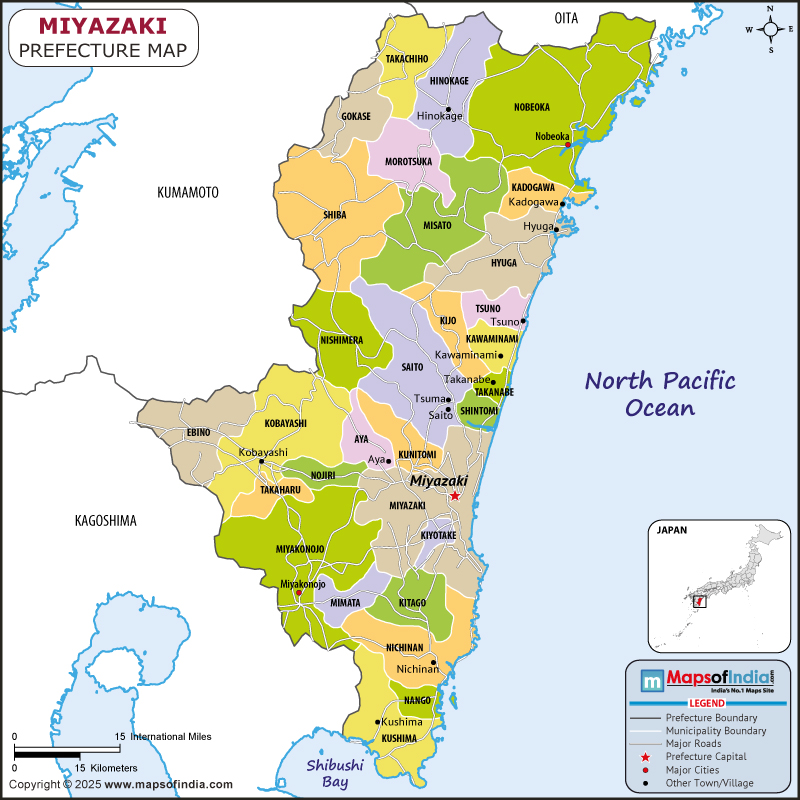



Miyazaki is a coastal city in Kyushu's eastern coastal region, Japan's southernmost main island. With nice weather, white shores, temples, and good cuisine, Miyazaki has also been a favourite tourist destination for domestic and overseas travellers in recent years. The city is famous for Miyazaki beef, oranges, and beauty. Surrounded by the Pacific Ocean on one side and mountains on the other, Miyazaki has just the right mix of shore, culture, and countryside. The relaxed atmosphere in Miyazaki city is unique compared to other Japanese cities. Surfers, trekkers, and travellers who want to witness shrines rich in heritage come to Miyazaki City. The region also has its attachment to Japanese mythology and hence is an important place in the heritage of the country.
History
Miyazaki, being one of the Japanese cities on the island of Kyushu, is a city rich in history that has shaped its identity over centuries. From its early days of settlement to becoming a modern Japanese city, Miyazaki’s past is marked by wars, influential leaders, cultural growth, and remarkable rebuilding after destruction.
The Miyazaki area was inhabited centuries ago. Archaeological evidence shows human settlement during the Jomon and Yayoi periods. Agriculture and trade developed early due to fertile land and abundant rivers, making the region suitable for settlement and population growth. Over time, small communities expanded into larger towns.
During the feudal era, Miyazaki became an important strategic region. In the 15th and 16th centuries, warlords competed for control of Kyushu, and Miyazaki’s central location made it highly significant. The most defining moment in its history was the construction of Miyazaki Castle in 1607 by feudal lord Kato Kiyomasa. With its strong stone walls and strategic design, the castle became one of Japan’s most impressive fortresses and a symbol of power and pride.
Following Kato Kiyomasa’s rule, the Hosokawa clan governed Miyazaki for more than 200 years during the Edo period. Under their leadership, Miyazaki flourished as a castle town. Education, art, and culture thrived, with samurai living near the castle while merchants and farmers supported the economy. Cultural practices such as the tea ceremony, calligraphy, and formal education became an important part of daily life.
One of the most significant events in Miyazaki’s history was the Satsuma Rebellion of 1877. This conflict between the Meiji government and resisting samurai forces saw Miyazaki Castle under siege for 54 days. Despite severe damage to the city, the castle’s endurance demonstrated the strength of Miyazaki’s defenses. The rebellion marked the end of the samurai era and the transition into modern Japan.
The 20th century brought further challenges. During World War II, parts of Miyazaki were destroyed by air raids. In the post-war years, however, the city rebuilt itself, expanding its infrastructure with new roads, schools, factories, and cultural institutions.
In more recent times, Miyazaki faced devastation from the 2016 earthquakes, which caused major damage to Miyazaki Castle and surrounding areas. Despite this, the people of Miyazaki demonstrated resilience and unity in rebuilding their city. Restoration work on the castle continues today, standing as a powerful symbol of hope and perseverance.
Culture
The culture of Miyazaki is shaped by its history, traditions, and strong connection with nature. This city and prefecture in Kyushu is known for its warm climate, friendly people, and a lifestyle that is relaxed yet rich in customs. Many parts of Miyazaki’s culture come from its link with Japanese mythology, farming traditions, and festivals that have been passed down through generations.
One of the biggest elements of Miyazaki culture is that it has Shinto philosophy. Miyazaki Jingu and Udo Jingu shrines play a major role in daily life in the region. People visit the shrines for health, the happiness of the family, and passage. The shrines also represent festivals on which residents wear traditional clothing, dance, and play music. The festivals bring people together and the religious side of Miyazaki culture.
The festivals are a celebratory part of Miyazaki culture. The Hyuga Hyottoko Summer Festival is very popular, with dancers performing in masks and colourful costumes entertaining the public. The festival is a reflection of the friendly and lively nature of locals. The Obi Castle Festival is very popular as well, and it commemorates samurai history by having parades, martial arts, and old-fashioned stage performances. These festivities retain old customs but bring joy to inhabitants and tourists alike. Food also plays a humongous part in Miyazaki culture.
The area is famous across Japan for Miyazaki beef, which is tender and juicy. Inhabitants eagerly refer to this product by name, and it is often served at top class restaurants. Chicken nanban, or sweet vinegar sauce fried chicken, is a regional favourite dish eaten by families. Fresh seafood from the Pacific coast is also part of the daily fare, showing how closely Miyazaki culture relates to its natural surroundings.
There are traditional crafts and arts in Miyazaki culture as well. The villagers make woodwork, woven crafts, and pottery with skills that have been maintained over centuries. These are not just for display but also a reflection of the hard working, patient people. There is folk music and dance as well in rural villages, where the villagers still get together to celebrate seasons.
Language
Japanese is the most widely spoken language in Miyazaki, but the region also has a regional dialect called Miyazaki-ben. The Miyazaki-ben is specific to this area and only includes some different words and tones compared to standard Japanese. It is representative of the natives and their mannerisms.
Older people want to speak Miyazaki-ben on a daily basis in ordinary life, particularly in country life. The youth, particularly urban Miyazaki locals, want to speak more standardised Japanese, but everybody tends to speak and love speaking the local dialect.
The most spoken language that tourists are going to hear in restaurants, stores, and public areas is Japanese. Tourist attractions also include English signage and menu labelling for foreign tourists. Being able to hear Miyazaki-ben is among the traits that differentiate staying in the city because it gives one a flavour of the richness of the culture of the place.
Geography
Geography is also the most significant factor that characterises Miyazaki city and prefecture in Japan. Miyazaki is located in southeastern Kyushu, which is Japan's third largest island. Miyazaki city is encompassed by the Pacific Ocean and has wide coastlines, sandy beaches, and a good climate. Miyazaki is an ideal location for human settlement and tourism, with natural beauty, wide space, and quiet living.
The Pacific Ocean gives most of Miyazaki its shape. The coast is extensive, extending with expansive visions of blue waters and green hillsides. Aoshima and Sun Messe Nichinan beaches are renowned for their stunning beauty and attract visitors for swimming, surfing, and sunbathing. The sea also offers fresh seafood that is a vital component of the local cuisine. Coastal fishing villages show how the local population has adapted to the sea over the years.
Away from the sea, Miyazaki's terrain becomes mountains and forests. The western border of the prefecture is marked by the Kyushu Mountains. The mountains are densely forested and possess rivers and valleys. They are mythological and legendary locations, as there are several shrines and sanctuaries lying within the mountains. Mountains also play a utilitarian role of providing water, timber, and arable lands.
Mount Kirishima, bordering Kagoshima, is an active volcanic region. Volcanic fertile land is apt for planting crops. Rice paddies, vegetable plots, and fruit orchards surround the place everywhere. Hyuganatsu and Miyazaki mangoes are famous in Japan. Geography doesn't go hand in hand with agriculture because the climate isn't harsh and the land is productive, and thus the farmers can obtain good food to reap.
The Oyodo River traverses the city, and it is the source of fresh water and supports agriculture. Small streams and rivers flow from the mountains to the sea. They also contribute to the scenic landscape of Miyazaki, as they form valleys, plains, and natural habitats for animals.
Quick Facts
| Official Name | Miyazaki |
| Country | Japan |
| Language | Japanese |
| Area | 643 km² |
| Population | Approximately 398,000 |
| Currency | Japanese Yen (JPY) |
| Religion | Predominantly Shinto and Buddhism |
FAQs
Q1:Where is Miyazaki?
Miyazaki is located along the Pacific side of eastern Kyushu, Japan. It has a wonderful view facing the Pacific Ocean and an expansive coastline with beautiful scenery.
Q2: What is Miyazaki famous for?
Miyazaki is famous for breathtaking beaches, tropical landscapes, historic shrines, and high quality Miyazaki beef.
Q3: Is there something great about shrines in Miyazaki?
Yes, Miyazaki Shrine and Aoshima Shrine are famous. They attract visitors due to their religious and cultural value.
Q4:What festivals does Miyazaki have?
Most popular festivals are the Aoshima Shrine Festival and the Hyuga Festival. They have parades, traditional dances, and music accompanying them.
Q5:What are some of the local foods that tourists can enjoy in Miyazaki?
Tourists can enjoy chicken nanban, seafood, citrus, sweet potatoes, and Miyazaki beef.
Last Updated on: April 15, 2026

