


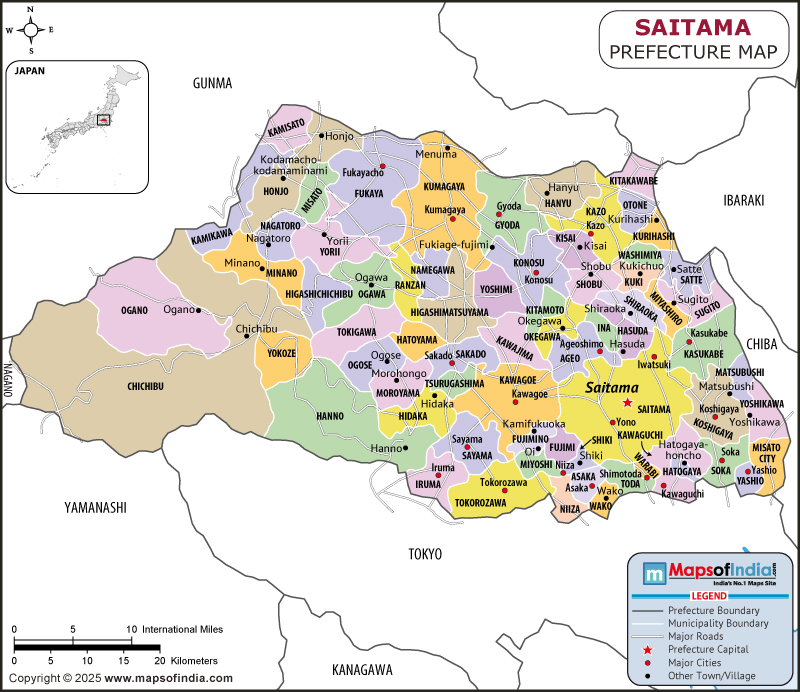



Saitama is a Japanese city that most will have never heard much about but one that is full of charm and fascinating sites to explore. It is near Tokyo, so it is easy to go there. Although it is near a busy capital, Saitama has peaceful parks, rivers and a friendly culture. There are citizens who love new times as well as old traditions. Saitama City has great transportation, schools, shopping malls and parks where families can spend time. It is a great place to visit or even reside if you are looking for a serene life. In this article, we will see more about Saitama's history, culture, language and geography and answer some of the most asked questions regarding this place to help you get full insights about the place.
History
Saitama is a city with an intriguing and rich history that shows how it came to be from a farming district to a contemporary city. Centuries ago, the area where Saitama is now was a mix of rice fields and small villages. The farmers tilled the land and resided in serene towns. They cultivated rice and other vegetables, and they lived in harmony with nature.
Since it was near the capital city, Tokyo, the region began to develop relatively early. In the Edo period (1603–1868), Saitama was a region where people would pass by. It had highways going through it to other regions in Japan. People, including merchants and labourers, went to the region to sell and conduct business. Inns and roadside markets were present along the highways. Saitama even gained more significance then because it was near the capital city.
During the Meiji period (1868-1912), Japan developed very quickly. New railways were constructed, and one of them, which was significant, linked Saitama to Tokyo. This facilitated more people moving to the city. Companies and schools were established, and rural life began to change. The train facilitated mobility and labour in other areas.
After World War II, numerous families relocated to Saitama from the rest of Japan. The war had inflicted damage in certain areas, and the people desired to start a new life in safe locations. Saitama offered security along with opportunities. New residential areas, factories, schools and hospitals were constructed. The city expanded as more workers and families relocated to the district.
Saitama was officially declared a city in 2001 by uniting small towns. It was able to handle the increasing population better and upgrade its facilities. Since then, the city has seen to it that there are good roads, schools, parks and transport. The citizens of Saitama enjoy a peaceful life while enjoying the facilities of a large city like Tokyo.
Nowadays, Saitama retains its heritage. You can still see ancient shrines, temples and festivities that reflect its traditions. Meanwhile, new complexes, shopping streets and sports facilities reflect what has developed. Saitama is a city where old and new blend together.
Saitama citizens are proud of their heritage. They celebrate yearly festivals such as the Omiya Festival and other cultural events that remind them of where they originated. There are even numerous local museums that exhibit past tools and photos so that visitors will know how the city developed.
Overall, Saitama's history is one of development, transformation, and adjustment. From small towns to a city connected as a whole, it depicts how individuals collaborated in improving society. Today, though Saitama still accepts individuals from all walks of life and maintains its heritage, you can observe how the past and the present combine and make it a flourishing and endearing city.
Culture
Saitama is warm, friendly, and vibrant in culture. Its people appreciate both traditional Japanese culture and contemporary activities. Saitama, despite being near Tokyo, also retains its native customs and patterns of life.
One of the largest aspects of Saitama culture is its festivals. Many people attend annually to enjoy a bit of fun on some occasions, such as the Omiya Festival. There are vibrant floats, music, dancing, and street performances during the event. Members of the family, friends, and guests participate in the festivities. It is a time when everyone indulges in food stalls, games and festive activities.
Saitama is also a sports city. There are many supporters of football and baseball teams. There is a huge stadium where people support their desired team. Community centres and schools provide classes and clubs for kids where they can learn about new sports and skills. These help people stay active and connected with each other.
Food is another significant aspect of culture. Saitama has numerous restaurants, cafes and shops in which to dine on traditional Japanese food such as sushi, ramen and tempura. On top of this, there are restaurants selling desserts, tea and snacks prepared using local products. Individuals eat food with friends and loved ones in social places where they eat or take a meal with one another.
Education and learning are valued in Saitama culture. The old city has schools, libraries, and learning facilities where children and adults can learn or study at workshops. There are many events when individuals can share knowledge or attend innovative activities such as calligraphy or crafts.
Tradition and contemporary living exist side by side in Saitama. There are skyscrapers, shopping streets, and cafes, but also temples, shrines, and gardens which reflect Japan's heritage. It is this side-by-side existence of old and new that gives Saitama its truly unique ambiance.
Saitama culture is all about sports, celebration, learning, harmony with nature and society. There, the society lives in balance, where they respect the traditions but are ready to develop something new. You visit for a festival, a match or a walk in a park, and you would feel the hospitality along with the vibrancy of Saitama culture.
Language
The official language spoken in Saitama is Japanese. People speak the Kanto dialect, which sounds very similar to Tokyo's but sometimes softer and friendlier.
Kids in school study Japanese from a young age. Most schools also teach English as a second language. Being close to Tokyo, people there pick up some basic English to help out the visitors or for business.
There are Japanese signs, but there are also English signs for certain tourist spots to help tourists. Basic Japanese words such as "hello" (konnichiwa), "thank you" (arigatou), and "excuse me" (sumimasen) are often enough to communicate in shops or cafes.
Geography
Saitama is a serene and nice city in Japan's Kanto province. It lies north of Tokyo; hence, it is convenient for individuals to move freely between the two cities. Even though it is located in the vicinity of a large and populated city, Saitama does not suffer from the noise and crowding, thereby making it an appropriate destination for tourists and families.
The terrain is generally flat with hardly any hills and rivers, so the city is quite nice and inviting to participate in outdoor activities. Residents like walking, cycling, and promenading by the rivers and parks.
Two rivers run through Saitama which are the Tone River and the Arakawa River. They are the clean water and recreation grounds of the city. There are pathways to walk, picnic areas and sitting benches on riverbanks. In spring, people like to visit, enjoy seeing cherry blossoms and take pictures.
The climate of Saitama is good all year long. It is hot in summer but not very hot, and it is cold in winter. There is snow in some seasons but less than in northern Japan. People like the four seasons here. In spring, cherry blossoms bloom and parks are filled with people. In autumn, there are yellow and red leaves, so the city is nice and colourful.
There are greens and parks that the residents can walk their dogs in, exercise in or meet friends in. One of the most visited and favourite parks that attracts visitors of all ages is the Omiya Park. The children play on the open grounds while the elderly take in the fresh air and relax.
The geographical location of Saitama has made it readily accessible for individuals to reach other cities. Saitama is readily accessible by road, with trains and buses connecting it to Tokyo, Yokohama and other places. This makes it possible for individuals to easily reach there while working or shopping, for learning and leisure activities. Saitama is where the majority of individuals live but work in Tokyo because of ease.
There are shopping streets, offices, schools, and hospitals too here, but it is peaceful compared to the capital city. They prefer residing here because it offers a haven and plenty of space for the children to play around and grow.
Even though modern, Saitama is still natural in outlook. Both the city and serenity are felt. The parks, open spaces and rivers provide the people with opportunities to stay close to nature without necessarily going out of town.
In short, Saitama's landscape is a combination of nature and city life. With its flat plains, beautiful rivers, parks and convenient transport facilities, the city offers comfortable living. Individuals are able to have outdoor activities, peaceful walks and beautiful seasonal landscapes. Individuals live here contentedly because it is quiet and safe, and there's much vegetation. Regardless of what you choose to do in Japan, whether you go and tour, study or migrate and reside, Saitama's landscape makes it a wonderful and hospitable place.
Quick Facts
| Official Name | Saitama Prefecture |
| Area | 217.4 km² |
| Population | Approximately 1,314,589 |
| Currency | Japanese Yen (JPY) |
| Religion | Shinto and Buddhism (major), Christianity and others (minor) |
| Language | Japanese (official), local dialects also spoken |
FAQs
Q1: What is Saitama most famous for?
Saitama is most famous for its parks, festivals and proximity to Tokyo. It has a serene atmosphere but remains close to urban life.
Q2: What are some of the festivals that take place in Saitama?
One of the famous festivals is the Omiya Festival. It has music, dancing, and food stalls that unite the community.
Q3: Are tourists able to enjoy nature in Saitama?
There are rivers and parks such as Omiya Park where you can go for a walk, rest and enjoy fall leaves or cherry blossoms.
Q4: What can I eat in Saitama?
You can try traditional Japanese dishes such as ramen and sushi. There are also local sweets and snacks, and cafes and stores with them.
Q5: Why go to Saitama?
Saitama is a blend of peaceful surroundings, native culture and contemporary amenities. It suits visitors who wish to have a peaceful and lively place.
Last Updated on: April 15, 2026

