


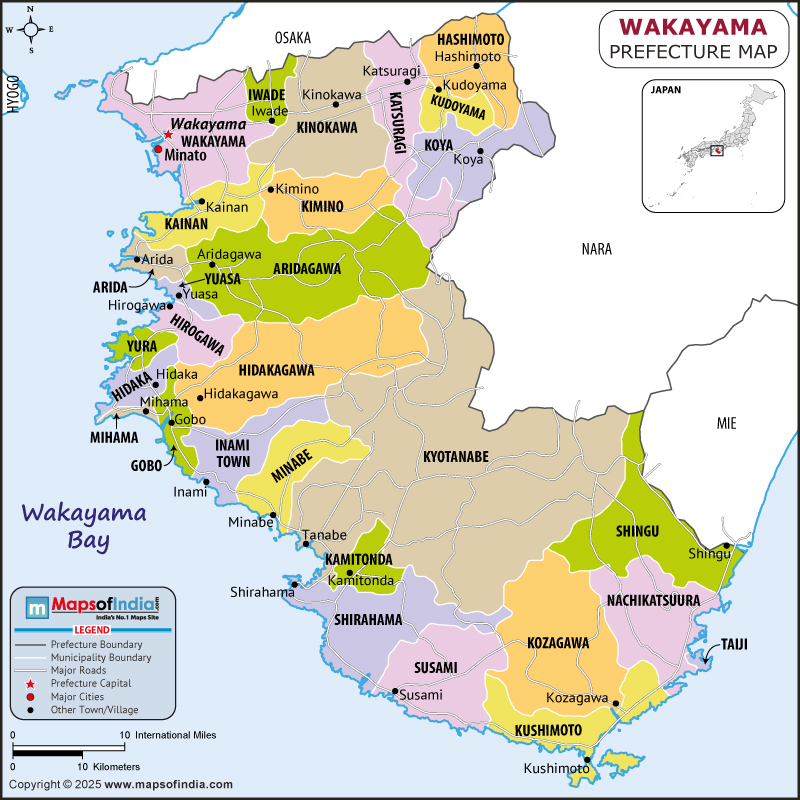



Wakayama is a Japanese prefecture located on the Kii peninsula of the Kansai region facing the Pacific Ocean. It is known for the spiritual significance and the abundant natural beauty and is home to a revered pilgrimage route of Kumano Kodo and the sacred mount koya both UNESCO World Heritage sites. Famous for the tranquil temples, lush mountains and inviting coastal culture, the prefecture seamlessly blends traditional nature and vibrant regional life making it a perfect destination that preserves Japan's spiritual and artistic heart.
History
The history of Wakayama begins in ancient Japan as part of the Kii province, a region steeped in cultural and spiritual significance. The area now known as wakayama prefecture lies mostly in what was historically the western part of the Kii province. Early historical records highlight the region's involvement in the Yamato state with local rulers overseeing the Kinokawa River Valley long before Japan was unified under central authority.
During Nara. Important religious developments occurred including the construction of the Kimii dera temple by priests who came from Tang China. The temple remains a notable cultural site today. The static location of wakayama by the Pacific Coast and along the crucial routes made it an important site for trade and travel. Throughout the Muromachi period and into the Sengoku era Wakayama grew as a port and center of military importance. Toyotomi Hideyoshi, a prominent unifier of Japan, ordered the establishment of a castle in Wakayama in 1585. This marked the beginning of the city's prominence in feudal Japan.
The Edo period was especially important for wakayama. The tokugawa family who unified Japan and established a long lasting shogunate installed a cadet branch of their House as lords of the kishu domain with wakayama as a domain Center. Wakayama castle was built and fortified as one of the most important castles in western Japan. It guarded the southern tip of the honshu island. Among the tokugawa shoguns, tokugawa yoshimune born in the kinshu domain ruled from 1716 to 1751 and is noted for his reform and governance and a period of peace and cultural flourishing.
The historical landscape of wakayama is dotted with traditional temples and roots like the well preserved Kii mountain pilgrimage trail which today formed part of the UNESCO World Heritage site. This pilgrimage route has attracted pilgrims and travellers for centuries underscoring the region's spiritual importance. Additionally the cities and the region were affected by devastating flood disaster in 1953 which significantly impacted the infrastructure and population.
In modern times wakayama city has the prefectural capital and remains a combination of historical and natural beauty. The castle, although destroyed during World War II was rebuilt and remains a symbol of the city’s heritage. It serves as a gateway to spiritual sites like Mount Koya, the headquarters of the Shingon sect of Buddhism founded in 1816 by the monk Kukai. The sacred mountain and the kumano shrines at the southern tip of the prefecture have cemented wakayama as the center of spiritual heritage and pilgrimage in Japan.
It is vibrant and deeply influenced by the natural environment and historical trade route. Festival traditional art and local craftsmanship especially pottery are important cultural expressions passed through generations. The cuisine reflects the coastal geography featuring fresh seafood with white bait and sea bream and it’s particularly famous for its fresh tuna acclaimed as the finest in western Japan. The region's noodle Raymond is distinctive for its rich pork broth and soy sauce seasoning gaining national recognition.
The prefecture's agricultural heritage is notable as well, especially for orange cultivation in the district and production of Chinese flowering plum for which it leads Japan. Seasonal eating and local culinary traditions such as tea rice porridge called Okaisan Demonstrates a collective connection to the natural resource and history. Wakayama embraces its cultural root while welcoming visitors to experience temple festival natural vistas and warm community spirit. This makes it a unique blend of historical depth and living tradition.
Culture
Wakayama has a culture which is a rich blend of spiritual heritage, culinary tradition, craft and vibrant local festivals shaped by centuries of pilgrimage maritime exchange and agricultural abundance. The prefecture stands at the confluence of Shinto and Buddhist influences best exemplified by Mount koya A globally recognized spiritual center. Here temple lodging allows visitors to experience shojin ryori , a refined buddhist harmony and seasonality meticulously prepared by shingon monks. This ancient culinary tradition uses wild mountain plants and tofu with specialities like the koya dofu and Goma dofu reflecting both spiritual value and the region's natural bounty.
The local cuisine also draws heavily from the sea and mountain with dishes like wakayama Raymond or soy sauce or pork based noodle so gaining cult status. Rice ball wrapped in pickle mustard leaf pressed fermented sushi and a wide variety of dried and sun dried fish are traditional fare rooted in the area sea faring and agricultural seafood stop the prefecture is the country's leader in plum production and the intensely flavored pickled umeboshi is both a cultural icon and the staple in the local diet. The region's orange groves, especially those from Garuda, are famous across Japan contributing to the seasonal food culture where local fruit and vegetables star and daily meal.
The tradition of gift giving is especially strong in Wakayama with travelers bringing home unique regional treats like plum wine handmade soy sauce from Yuasa and lacquerware.Artesians in the region continue to preserve centuries old craft like pottery as well as durable washi paper. These skills are passed down through generations showcased in galleries and traditional markets and remain essential to the identity of the prefecture.
Festivals reflect both the agricultural cycle and the religious tradition. The most spectacular is the Nachi fire festival where huge torches are carried in purification rituals at the kumano nachi taisha. Other local events celebrate seasonal blossom harvest in historic tales. It is accompanied by traditional music and dance and energizes towns with color and excitement. The people of wakayama are known for their warm hospitality, deep sense of community and careful stewardship of nature which further enriches every cultural encounter.
Language
The primary language spoken in wakayama is Japanese, specifically the kishu dialect known locally as kishu Ben. This dialect is characterized under the wider kansai dialect group sharing linguistic features with neighboring regions like Osaka and Nara. Kishu ben is further divided into several sub-dialects which reflect the differences in local speech patterns across areas such as the wakayama city shingu and Tanabe.
Distinctions in accent vocabulary and even certain verb conjugations make it directly unique such as the continued use of older verb forms in some towns and regions specific sentence ending particles noshi and noushi which serves as the marker of respect or affection and conversation particularly among the older residents. These linguistic nuances give wakayama as a speech as strong regional identity though standard Japanese is understood and widely used in education administration and media especially by the younger generation.
Geography
Wakayama is situated on the Kii peninsula in Japan’s Kansai region occupying a striking geographical position bordered by Osaka prefecture to the north and the Pacific Ocean to the South West. The city of Wakayama, the prefectural capital, lies at the northwest corner of the prefecture where the Kinokawa river meets the sea. It is characterized by a varied topography and blends coastal plain river valleys and densely forested areas together. The key mountains run through much of the prefecture providing dramatic elevation and sheltering ancient pilgrimage trails that link UNESCO its World Heritage sites such as the mount koya and the kumano shrines.
The coastline faces the Kii Channel and Kitan Strait offering scenic sea views and numerous ways with the port of wakayama serving historically as a significant maritime hub. Inland the land rapidly rises to the mountainous interior home to cedar forest, terraced orchid and Deep River gorges. The area is known for hot springs, rugged cliffs and clear mountain streams. The rivers like Kinokawa and Kumano gawa carve fertile valleys ideal for agriculture most notably the famed orchids of arida oranges and plum groves.
The climate is classified as humid subtropical with warm humid summers and mild winters. The area receives significant rainfall especially in September and is occasionally affected by summer typhoons. The mild climate, ample rainfall and proximity to both mountain and sea fosters rich biodiversity and supports a traditional agricultural and fishing economy. Nearby towns help in the urban network while easy access to Osaka and the island of Awaji underscored the prefecture's connectivity and strategic geographical importance in western Japan.
Quick Facts
| Official Name | Wakayama |
| Location | Kansai region of Japan |
| Area | 208.84 km² |
| Population | 351391 |
| Language | Japanese, Kishu-ben |
FAQs
Q1: When is the best time to visit Wakayama?
The cherry blossom season ( late March to early April) and the autumn foliage (late November to early December ) are particularly beautiful and popular times to visit the city.
Q2: Which are the main tourist attractions here?
Top sites include Wakayama Castle, Kumano Nachi Taisha, Koyasan temple complex, Nachi waterfall, Shirahama’s beaches and hot springs, and the Kumano Kodo pilgrimage trails.
Q3: Is English widely spoken here?
English is not widely spoken outside major tourist spots so it is helpful to learn a few Japanese phrases or travel with a phrasebook.
Q4: Which festivals are held in Wakayama?
Notable festivals include the Nachi Fire Festival, cherry blossom festivals at Wakayama Castle, and seasonal events tied to local temples and shrines.
Q5: What is the climate of Wakayama?
Wakayama’s climate is classified as humid subtropical with warm humid summers and mild winters.
Last Updated on: April 15, 2026

