

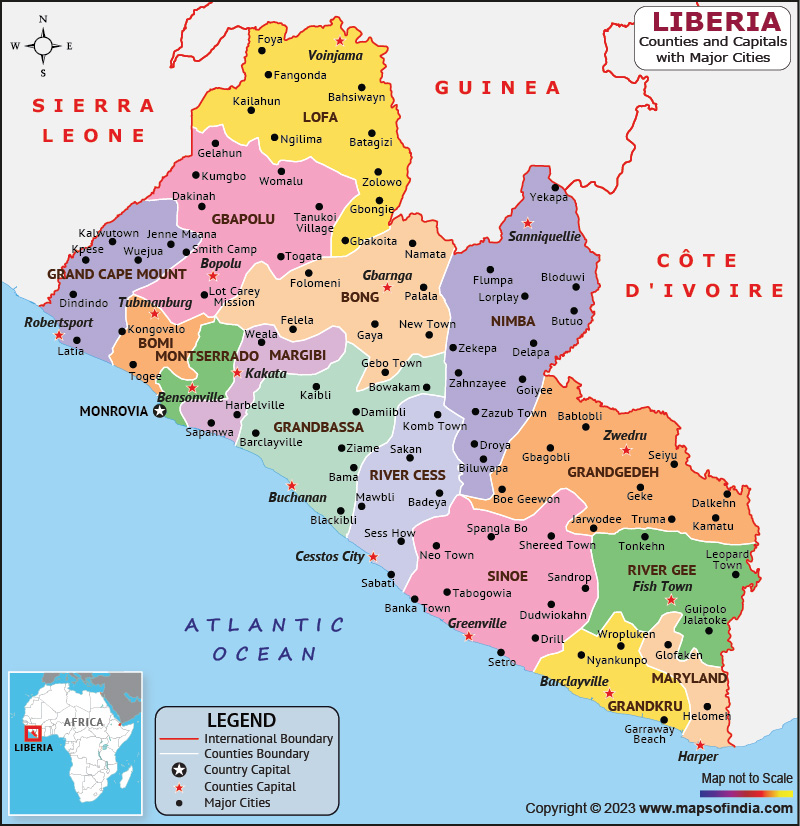





Liberia is a country located on the west coast of Africa, bordered by Sierra Leone, Guinea, and Cote d'Ivoire. The country has a total area of approximately 111,369 square kilometers and a population of around 5 million people. The capital city of Liberia is Monrovia, which is situated on the Atlantic coast in the northwest region of the country. Monrovia is the largest city in Liberia and serves as the country's economic and political center.
History:
Liberia was formed by free African-Americans and former slaves from the United States in the early 19th century, and since that time, the country has had a complex and fascinating history. In order to give African-Americans who had been set free from slavery a new home, the American Colonization Society founded a settlement in what is now Liberia in 1822. Several former slaves and free blacks immigrated to Liberia over the years, where they created a distinctive society that merged African and American cultures. Liberia was the first African country to declare its independence in 1847.
Culture:
Liberia has a rich and diverse culture that is shaped by its history, geography, and ethnic diversity. With several regions and ethnic groups having their own distinctive cultural practices, the nation is home to a broad variety of traditional music, dance, and art. The usage of drums, which are essential to many ceremonial and cultural events, is a defining feature of Liberian traditional music. In addition, Liberian food is renowned for using seasonal, fresh foods from the region, such as fruits, vegetables, and seafood. The nation also has a strong oral history and storytelling culture, with tales and lore being passed down from one generation to the next.
Language:
The official language of Liberia is English, which is spoken by the majority of the population. The most widely spoken indigenous language is Kpelle, which is spoken by approximately 20% of the population. Other significant languages include Bassa, Gio, and Mano.
Geography:
The geography in Liberia is varied, with coastal plains giving place to interior hills and mountainous regions. The mountain Mount Wuteve, which rises 1,380 metres above sea level, is the highest peak in Liberia. The interior of the nation is made up of a dense rainforest, which supports a large number of different plant and animal species. A number of rivers, including the longest in the nation, the Saint John River, traverse Liberia as well.
| Official Name | Republic of Liberia |
| Capital | Monrovia |
| Population | 5373117 |
| Area | 111,370 km2 |
| Currency | Liberian dollar (LRD) |
| Religion | Christianity |
| Language | English |
| Major Cities | Monrovia, Gbarnga |
FAQs
Q1.Why is Liberia known as Africa's oldest republic?
Liberia declared independence on July 26, 1847, becoming Africa's first modern republic. Its history is closely linked to the settlement of formerly enslaved and free Black people from the United States.
Q2.Which countries share a border with Liberia?
Liberia shares land borders with Sierra Leone, Guinea, and Côte d'Ivoire. The country's southern and western sides face the Atlantic Ocean.
Q3.What is Liberia famous for?
Liberia is known for its Atlantic beaches, tropical rainforests, rich biodiversity, surfing, and unique history. It is also home to rare wildlife such as the pygmy hippopotamus and forest elephant.
Q4.What is Sapo National Park known for?
Sapo National Park is Liberia's largest protected area and its only national park. It protects extensive tropical rainforest and provides habitat for pygmy hippos, forest elephants, chimpanzees, and other wildlife.
Q5.Why is Liberia important to the history of Africa?
Liberia played a distinctive role in African history as an independent republic established by settlers of African descent from the United States. It became independent in 1847 and was never formally colonized by a European power.
Q6.What are the major geographical features of Liberia?
Liberia has a long Atlantic coastline, coastal plains, mangroves, rolling hills, forested plateaus, and northern highlands. Its tropical forests form part of the ecologically important Upper Guinean rainforest.
Q7.What are the major tourist places in Liberia?
Popular destinations include Monrovia, Robertsport, Sapo National Park, Providence Island, Lake Piso, Kpatawee Waterfall, and Mount Nimba. Liberia is particularly suited to visitors interested in wildlife, beaches, rainforest, history, and outdoor activities.
Last Updated on: September 07, 2026

