

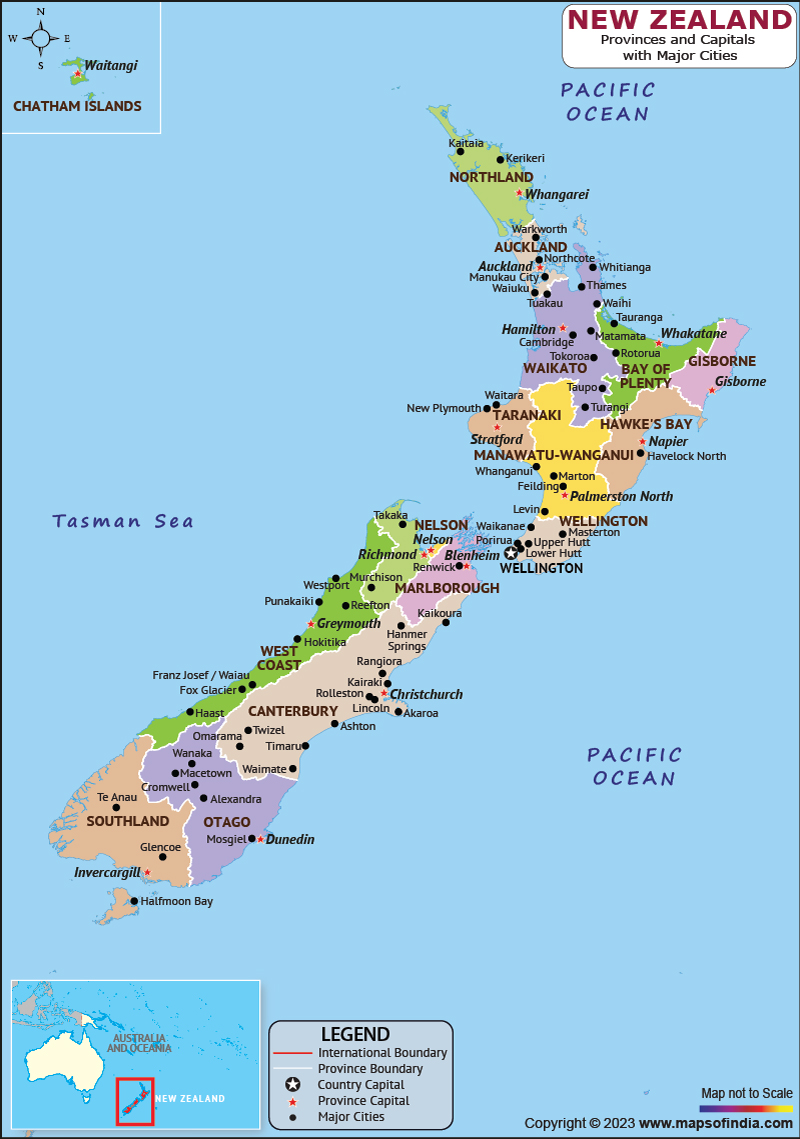





New Zealand has its largest city of Auckland. It is a powerful metropolis of beautiful landscapes and rich in natural attractions, a rich and diverse culture and active city life. Each side is bordered with the shimmering waters of Hauraki Gulf and the jagged Waitakere Ranges creating an unusual mixture of city/nature, this area is fascinating both to its inhabitants and tourists. The city is often known as the City of Sails due to the splendid port and the popularity of sailing. Be it the sandy beaches of the Island of Waiheke, the cool lava scenery of Rangitoto, the silent shores of Coromandel Peninsula, the area offers a lot of hiking, swimming and water sports opportunities.
History:
The history of the city dates back to the settlements of the Maori that came to Polynesia in the late 13th century. The Maori identified the area as the Tamaki Makaurau, which means the place of desire to many. The fertile land and plenty of the food type turned it into an important place for several iwi (tribes).
Specifically, the Ngati Whatua iwi emerged as a dominant force in the region forming a strong chiefdom which monopolized trade routes and resources. It was typified by strong pa (villages) and large agricultural processes that saw cultivation of crops like the kumara (sweet potato). European contact In the late 18th century, when Captain James Cook sailed across the Hauraki Gulf, European contact began. The Maori people were introduced to Christianity by the establishing of mission stations more so by the Church Missionary Society in the 19th century, which came with more settlers. In 1840, New Zealand was officially annexed by the British Crown by signing a treaty called the Treaty of Waitangi, which created a legal framework that regulated the settlement of the British people, and at the same time ensured the Maori ownership of their land. This caused an influx in the immigration of the European people especially into this city which became the capital of the colony in 1841. The strategic position of the city with natural harbor and possibilities of trade routes and the chances to settle it were enough as this place was officially founded in the year 1840 and the initial period of its development was characterized by building concrete infrastructure (roads, schools, churches, etc.). Settlers were attracted to the region and the population grew, with Britain, Ireland and other European countries providing settlers to the region. The city was initially planned in grid form, and parks and open space were incorporated in the structure, which was conceptual with the British trends of planning in the history.
In addition, the finding of gold in the 1860s in regions like Otago and the Coromandel Peninsula led to thousands of prospectors and immigrants, which boosted the economy of the city even more. The city emerged as the main supply and transport center, which slightly helped in shifting people and goods around New Zealand. It is also in this time that several industries such as shipping, manufacturing, and agriculture were set up.
Culture:
Auckland culture is centered on the Maori. Maori people are the original people of New Zealand and their attachment to the land and its resources is strong. This is because one of the most important cultural attractions is the Auckland War Memorial Museum that displays Maori artifacts and offers information about their history and culture. The museum also has exhibitions about the art, mythology of Maori and colonialism. Live performances of kapa haka, a traditional Maori performing art, that involves singing, dancing, and chanting are also available to the visitors.
A large percentage of Pacific Islanders inhabit the city, including Samoans, Tongans, Fujians, and the Cook Islands. Such cultural influence is glorified and expressed in many forms, especially the music, dance and food. One of the biggest Pacific Island festivals in the world is Pasifika Festival which is annually celebrated in Western Springs presenting traditional performances, art and food of various pacific cultures. Thousands of people gather annually at the event and it becomes a lively performer of the Pacific identity and heritage. The culinary experience of Auckland has also been increased with the presence of the Pacific Islander cultures. The cuisine of the islands is marked by dishes that are frequently used in the restaurants and food markets like hangi (a Maori feast cooked in an earth oven), palusami (taro leaves gently stuffed with coconut cream), and fresh seafood because the islands have a culture of maritime cuisine.
The influx of the European settlers started in the early 19th century, and they came with their own cultural practices and traditions. The architecture, institutions and social custom are some of the areas where British influences are most evident. The history of colonization can be seen through such historic structures in the city such as Auckland Town Hall and the Albert Park which is covered with statues and monuments of the Victorian period. There is also a wide variety of galleries and cultural institutions in the city including the Auckland Art Gallery in which there is a spectacular stock of New Zealand and international art. The gallery is not only a space of contemporary work, but the traditional Maori and Pacific work is also emphasized, which generates the dialogue between the past and the present.
The ethnicities present in this region are more than 200 and that is why multiculturalism and diversity are the attributes of the city. Such diversity can be observed in our daily lives, starting with the number of different languages spoken and up to the differences in the annual festivals, which are held in different cultures. The Chinese, Indian and Middle East individuals have played important roles towards enriching the cultural aspects of the city. Auckland city is home to a number of cultural events that represent this diversity e.g., the Auckland Lantern Festival which marks the Lunar New Year and also involves spectacular shows and classic performances. The Diwali Festival is an artwork of Indian culture that involves dancing, music, and fantastic food whereas the Auckland International Film Festival exhibits cinemas of various origins encouraging the world narrative.
There is also a great variety in tastes and restaurant experiences in the city. The city is home to both up-market and food trucks. A combination of Maori, Pacific Islander, Asian cuisines with European cuisine results in a distinct culinary scenery. Local and fresh ingredients are a major role played by the cuisine in Auckland with greater concentration on seafood, lamb and also during seasons. The city boasts of farmers markets that display artisanal products giving residents an opportunity to interact with local growers and producers in the city. Food items that are popular are not only seafood chowder and hangi but also a wide range of Asian dishes that include dumplings, sushi, and curries.
Language:
The major language here is the English language which is the major language of communication in the daily routine, business, education and media. Nevertheless the city has an active mosaic mix of languages that resembles the multicultural society. The native Maori people speak a language known as the Maori which is of great importance to them. Another language that adds to the culture of a number of other languages includes Samoan, Tongan, Fijian, and Niuean speakers. Other than this, there are widespread languages like Mandarin, Hindi, Punjabi, Korean, and Japanese, owing to the population of immigrants from such countries as China, India, and South Korea.
Geography:
Auckland is a city on the North Island in the Waitakere Ranges to the West and Hauraki Gulf to the East. It is volcanic in nature and that is its topography. The area has approximately 53 volcanic cones with the majority lying dormant and forming the Auckland Volcanic Field. These cones are also pleasures like Rangitoto Island, the One tree hill and Mt. Eden which not only offers a panoramic look of the city and the regions around it but is also a significant source of culture. It is a 3,700km long coastline consisting of sandy beaches, rocky shorelines, and beautiful islands, enjoying a temperate coastal climate, of mild, wet winters, and warm and humid summers. The average temperatures are between 10°C (50°F) during winter and 24°C (75° F) during summer. The city enjoys good amounts of rainfall all through the year and wettest months are usually witnessed during winter. The dominant harbour, the Waitemata harbour, which is the principal port serving Auckland, is one of the key waterways allowing shipping and recreational water activities. A combination of city building and beautiful parks surround the harbor, which provides a spectacular waterfront and the picture of the famous Sky Tower. Another significant Māori-Historical waterway is the Tamaki River which flows in the Hauraki Gulf. The oldest park in the city, the Auckland Domain, is situated close to the city center, which has a vast number of walking routes, gardens, and the Auckland War Memorial Museum. The park is common to both the locals and the tourists as it provides a relaxing experience in the sea of pollution. Another attraction spot that is a must visit is Waitakere Ranges Regional Park that is situated on the west side of the city. This park is an attractive place with rugged hills, thick forests, and magnificent waterfalls, where hiking, biking, as well as nature walks are meant to be done. There are also extensive native bird populations and other native fauna such as the kereru (wood pigeon) and the kiwi can be found there.
The city is structured in a manner of separated neighborhoods, each with its own characteristics and their charms. The commercial centre of Auckland is called the Central Business District (CBD) as it includes a skyline with modern skyscrapers, as well as, historic buildings. Geography has also impacted on the city in regard to transportation and infrastructure. Roads and transportation networks are waterways, hills and valleys are planned so that everywhere in the city can be linked together. Another iconic structure is the Auckland harbour bridge which connects the city and North Shore where it is essential to have access by commuters and visitors.
| City Name | Auckland |
| Area | 1,086 km² |
| Population | 1.7 million |
| Currency | NZD (New Zealand Dollar) |
| Established | 1840 |
FAQs
Q1: What is Auckland known for?
The city boasts of a flourishing arts culture, cultural diversity and magnificent harbor.
Q2: How is the city's climate?
The climate of this area is maritime and is characterized by wet and mild winters, warm and humid summers.
Q3: Which are some of the tourist attractions of the city?
The Sky Tower, Auckland War Memorial Museum, Waiheke Island, and Auckland Zoo are among the popular places of interest here.
Q4: Is it a safe city?
The city is widely believed to be a secure place, but one should exercise common sense.
Q5: Is it possible to go to local islands out of Auckland?
Yes, the city has a lot of ferries which go to the neighboring islands like the Waiheke and Rangitoto.
Last Updated on: April 01, 2026

