

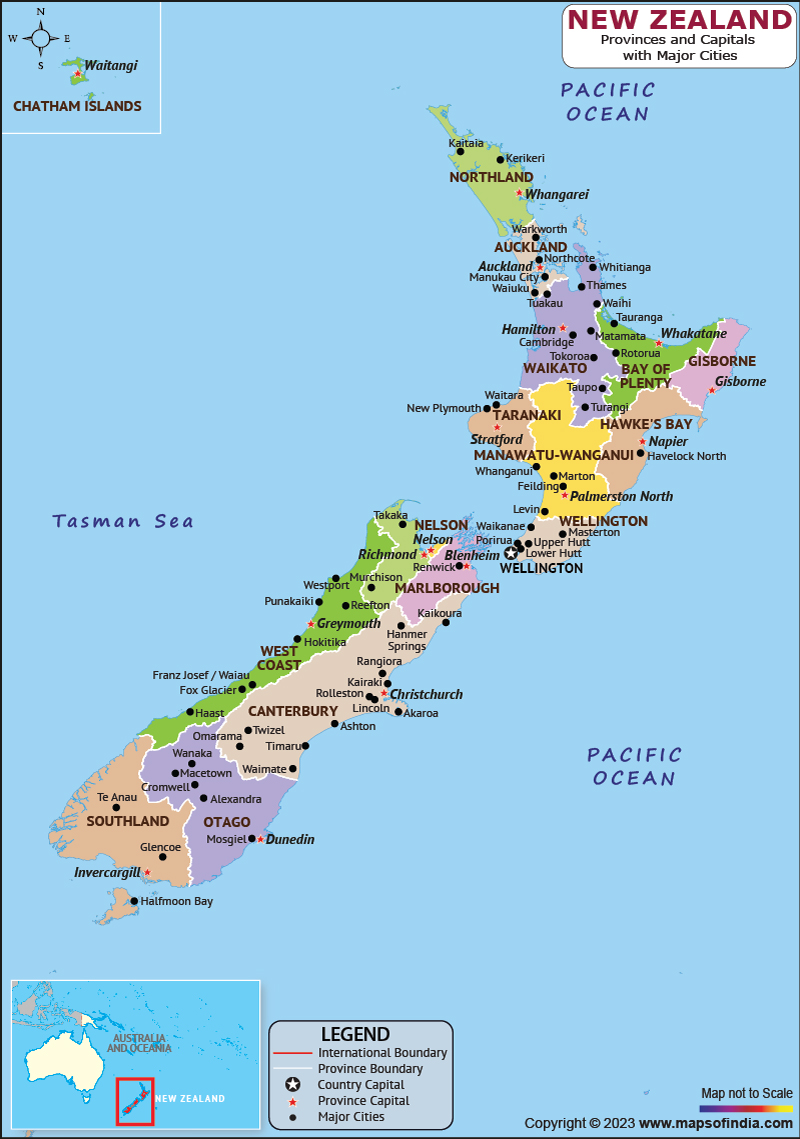





Northland is the uppermost part of New Zealand known for its beautiful landscapes, interesting history and rich Maori culture. The area has a subtropical climate with warm weather all year round and mild temperatures on the cold ones, which makes it an ideal place to have outdoor activities all the year round. It sports an extensive collection of sceneries, including scenic beaches and subtropical tropical forest, rocky coastline, and rolling farmlands. The major geography of New Zealand is the Bay of Islands which is a beautiful cluster of more than 140 Islands and the north-most part of New Zealand called Cape Reinga where Tasman sea intersects with the Pacific ocean. It is an enthralling place to and points out the natural beauty of New Zealand and its cultural heritage and is therefore worth seeing especially when one is visiting the country.
History:
The Maori are the earliest inhabitants to settle in the land of New Zealand and the history of the region dates back to a long time before the arrival of Europeans. Maori are thought to have come to New Zealand out of Polynesia circa the 13th century. Northland had a lot of natural resources and fertile land and hence was a great region to the early Maori tribes also referred to as iwi. One of the largest iwi tribes, Ngapuhi tribe, turned into the most powerful tribe of this region. These people settled a good culture, which consisted of fishing, gardening, and trade. The forests in the region were abundant with kauri which served in the canoes (waka), houses and to produce carvings, and the waters in the coastal lands supported a healthy fishing society. However, the earliest European to come to New Zealand was Dutch discoverer Abel Tasman in 1642, although the next major European contact did not happen until the late 18th century. In 1769, Captain James Cook was brought there and charted the Northland including the Bay of Islands.
The treaty of Waitangi was signed on February 6, 1840, at the Waitangi Treaty Grounds, this was the most significant event in the history of Northland. This treaty was supposed to create a form of agreement between the British Crown and the Maori chiefs so that the British could have sovereignty over the New Zealand land although taking care of the Maori rights to their land and resources. Most of the prominent Maori leaders attended the signing including Hone Heke and Tamati Waka Nene. But the treaty was controversial as not all the chiefs had signed the treaty and adoption of varying interpretations of the treaty terms would cause conflict in later years. The settlement of British people started to increase after the signing of the treaty. It was among the first areas to experience a high level of European population, especially in regions such as the Bay of Islands and Whangarei. Settlers caused tensions with property ownership whereby most Maori believed that their land was being stolen.
Another field that underwent great shifts as New Zealand approached the end of the 19th century was in this field. The economy began to be restructured with the development of agriculture, especially dairy farming. The creation of the rail system in the early 20th century enhanced accessibility of the markets as well as transportation of goods. The towns like Whangarei and Kerikeri had started to expand in this period and were now the hubs of commerce and trade. Kauri timber was a very important industry and until the middle of the 20th century, logging was at its peak. By World war- II the region had diversified its economy and there was an increase in tourism, horticulture, and fishing sector. There were also social transformations that were manifested by recognition of the Maori rights and culture gradually. In the 1970s, the Maori Renaissance movement arose and the language, art and cultural practices were revived. This was used to resolve historical wrongs of land and resource rights.
Culture:
Maori culture is a significant part of the identity of Northland because in the region, one can find a number of iwi (tribes), such as Ngapuhi, Ngatiwai, and Te Rarawa. The introduction of Maori in New Zealand in the 13th century created a historical culture that was founded upon a unity with the land and sea. The Maori lifestyle traditionally focused on living in groups, having a powerful connection with families (whanau) and at large kinship groups (hapu and iwi). A large way of the region showing culture is through performing arts especially kapa haka (traditional performing arts within the Maori culture). Kapa haka performances appear in community events, competitions and festivals where the traditional songs (waiata), dances (haka), and stories are played. Besides offering entertainment, these shows aid in conserving and transmission of cultural information.
The community is very strong in this region with lots of festivals being held in honor of culture and tradition. Such events as the Waitangi Day commemorations, which are organized annually at the Waitangi Treaty Grounds, unite the people of different backgrounds in the commemoration of signing the treaty and facilitate the discussions of Maori rights and identity. The other festivals like the Mangawhai Heads Music and Arts Festival show the artistic talents of the region and create a feeling of community. There are usually performances, crafts, local food, and workshops, with anyone of any age being welcome to participate in them.
The food is a mix of the Maori, European, and Pacific Islanders. Traditional Maori food, including hangi (a technique of cooking food in an earth oven) and kai moana (seafood), are dishes of celebration at only gatherings and festivals. Seafood has also been part of the food culture in this region as fish and shellfish are commonly consumed by the region because of the closeness to the sea.
Maori worldview stresses on the strong attachment to nature, and viewing land (whenua), sea (moana) and sky (rangi) as the part of the identity and spirituality. This association to nature is traced in modern environmental activities by the iwi who are based on conservation, sustainability and protectiveness of the native plants and animals.
Language:
Te reo Maori is an official language and it has immense cultural importance to Maori communities in Northland. It reflects values, traditions, and stories of the iwi (tribes), which lived in the area centuries ago. It is intrinsically part of the Maori people as the language is closely tied with the land (whenua), sea (moana), and spiritual beliefs of the Maori people. Although the Maori language was a key component of Maori identity, English is the major language used in Northland, which is a manifestation of the European colonial past of the region. The majority of Northlanders are bilingual, both English speaking and te reo Maori with many adopting a mixed-lexicon which incorporates words and phrases in Maori usage in their day to day speech. And one can hear Samoan, Mandarin, and French languages. This multicultural state was created through immigration and globalization.
Geography:
The Northland of North Island is the northernmost region of New Zealand. The stunning coastline of the area is also one of the most unique aspects and is surrounded by the Tasman Sea on the west and the Pacific Ocean on the east. The kauri tree or Agathis australis is found in the area. The forests in Northland are among the few surviving residential areas of these magnificent trees that may have a life span of more than a millennium. The Waipoua Forest, in the west of Northland, is also noted especially due to giant kauri trees within it like the largest living kauri tree in the world called Tane Mahuta. The Tasman Sea is touching the Pacific Ocean, at the Northernmost tip of the North Island, at the Cape Reinga. It is a rough coastline with dramatic cliffs and is a location of immense spiritual importance to Maori who consider that it is the place where the spirits of the dead are sent to the afterlife. Cape Reinga has a lighthouse that is the most iconic and has beautiful scenery and tourists love visiting it.The Te Paki Recreation reserve also contains the beach and sand dunes that have been used in other activities such as sandboarding.
It has moderate rainfall and the wettest months are normally experienced during the period of March and August. Different plants such as native forest, coastal scrub as well as agricultural land can thrive in this climate. Agriculture is a good business to do in the region and main businesses that may occur are dairy farming, horticulture and forestry. The Kauri timber industry was rich in resources in the past, but at present, sustainable timber harvesting is done to conserve these ancient trees. Other sectors of the Northland economy are fishing and aquaculture, especially at the Bay of Islands and Hokianga Harbour. The waters which are found along the coasts of the region are also highly abundant in marine life which supports commercial and recreational fishing in the region.
The people inhabiting the region are clumped into the urban areas like Whangarei, Kerikeri, and Paihia that are used as the centres of commerce, education and tourism. There is a variety in the population, consisting of Maori and European heritage, alongside the increasing communities of the Pacific Islands and Asia.
| State | Northland |
| Capital | Whangārei |
| Area | 4,829.03 sq mi |
| Population | 204,800 |
| Currency | New Zealand Dollar |
FAQs
Q1: What does Northland have as a capital?
The capital of the region is Chawton(Whangarei).
Q2: What do you recommend as the places of must visit in Northland?
The Bay of Islands, Cape Reinga, the Waitangi Treaty Grounds and Ninety Mile Beach are the popular attractions.
Q3: What is the native culture of Northland?
It boasts of a strong Maori culture and it has numerous iwi (tribes) and cultural experiences, including traditional performances and guided tours.
Last Updated on: April 01, 2026

