


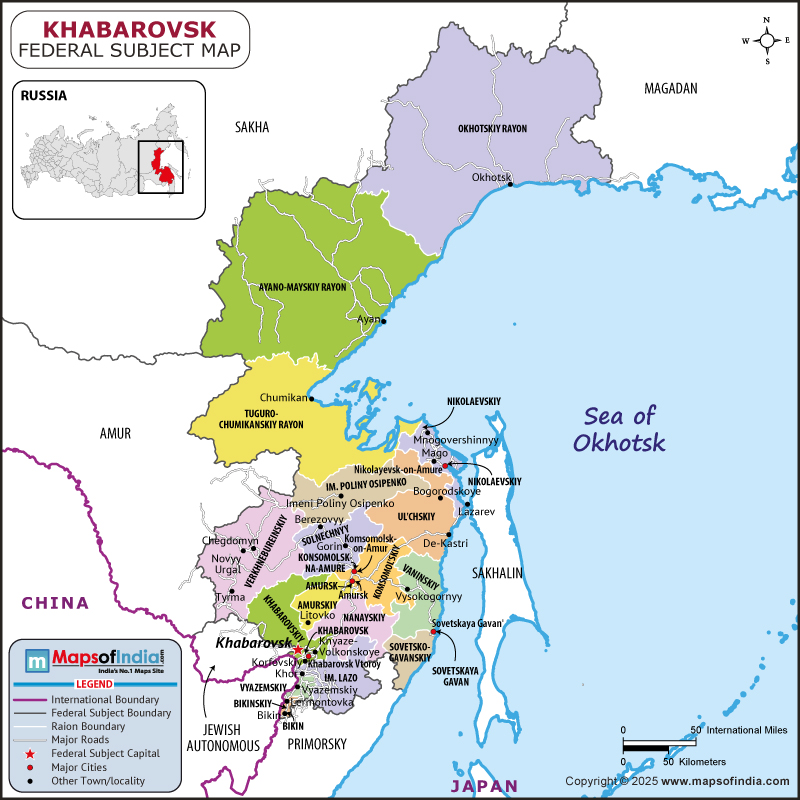



Khabarovsk Krai is a vast region in the Russian Far East and has a layered And dramatic history marked by indigenous civilization, colonial expansion, shifting international boundaries and rapid economic development. It stretches from dense forests along the Amur river to the stormy coast of Okhotsk. The story of the Khabarovsk Krai encompasses thousands of years of human habitation and important movement in the history of northeast Asia.
History
Long before Russian or Chinese power entered the region Khabarovsk Krai Was home to
kaleidoscopic of indigenous groups. These included the Nanai, Evenki, Nivkh, Negidal, Orochi and Udege.
Archaeological evidence like petroglyphs reveal that people lived in this region over 13,000 years ago. These ethnic groups developed intricate fishing, hunting and gathering cultures. It was unique to the Amur river basin and forests.
The language spiritual practices including animism and shamanism and distinct material cultures ranging from Birch bark dwelling to ceremonial costumes remain an important thread in the social fabric of Khabarovsk Krai. During the Tang dynasty in China the region was part of a broader state such as Heishui Protectorate with the city of Boli serving as local capital under the influence of Mohe tribes and Shiwei.
The 17th century was transformative as ambitious Tsarist Russia wanted to extend its reach eastward. Expeditions led by Russian cossacks like Vassili Poyarkov in 1643 and Yerofey Khabarov in 1649 marked the first deliberate attempt to explore, conquer and settle the Amur’s banks.
These initial contacts were fraught with conflict as native tribes resisted girl tributary demands and aggressive expansion of the Cossacks. The Russian built a number of short lived forts but suffered repeated attack from local people and the Manchu led Quing dynasty which was simultaneously consolidating its power nearby.
Manchu resisted and the logistical difficulty of reinforcing and supplying these distant outposts led to the Treaty of Nerchinsk in 1689. Under this treaty Russia formally renounced its expansion in the region and ceded control of the lower Amur basin. They recognized the Qing sovereignty for nearly 1000 years. In this period Boli figures in Chinese records as an outpost in the China administered Jilin province, where powerful Nanai and other indigenous communities maintain a degree of autonomy.
The 19th century heralded decisive Russian return. Governor general Nikolay Muravyov conducted a series of assertive actions starting in the 1850s. This was based in the fear of foreign encroachment and a desire for Pacific access. These efforts culminated in the founding of Nikolayevsk-on-Amur at the mouth of Amur in 1850.
Following aggressive Russian settlement along the river and the military pressure 2 treaties reshaped the map: the 1858 Treaty of Aigun which ceded the Left Bank of Amur to Russia and 1860 Treaty of Peking which gave Russia full control of Ussuri and maritime region.
In 1858 Khabarovka a military outpost named after Yerofey Khanarov was established at the confluence of the Amur and Ussuri rivers.It quickly transformed into a thriving administrative and industrial health becoming a town in 1880 and taking the name Khabarovsk in 1893.
The establishment of the trans Siberian railway and the completion of monumental infrastructure projects like the 1960 Khabarovsk bridge further cemented the region's integration into imperial Russia. It opened the floodgates for Russian Ukrainian Korean settlers and profoundly altered the demography of Khabarovsk Krai.
The collapse of the Russian empire brought waves of instability, occupation and shifting allegiances. During the Russian civil war Khabarovsk was at times under Japanese control and saw the arrival of thousands of Ukrainian settlers. This was so much so that the region was nicknamed green wedge reflecting its Ukrainian majority among the new settlers in the late 19th and early 20th century.
After the Bolshevik consolidated power in the Far East the 1930s witnessed the establishment of grand Soviet plans for regional development. On October 20 1938 Khabarovsk Krai was carved from the far eastern krai responding with the Stalin era moves to rationalize and fortify far eastern administrative structures.
World War II placed the region at the heart of military logistics production and post war justice minister after the Soviet defeat of Japan significant war crimes trials were held in the region notably against the perpetrators of Japanese biological warfare.
Post war decades were marked by dizzying place of industrialization massive timber mineral military and energy complexes were constructed under region cities became vital cogs in Soviet industrial machine first of the vast influx of slavic population during this time marginalized and native groups and erased much of the distinctive pre Russian character of krai.
Perestroika and the collapse of the Soviet Union in 1991 redefined Khabarovsk krai yet again. The administrative borders were adjusted to recognize the Jewish autonomous oblast and other entities.
October 1996 saw the krai briefly sign a power sharing agreement with Moscow granting more autonomy before it was revoked in 2002. In the 21st century it was facing demographic decline, the challenges of post Soviet economic restructuring, increasing indigenous activism and new cross-border relationships, especially with China. It was shaped by the global market and geopolitical shift.
Today Khabarovsk Krai is a mosaic of cultures and histories, the legacy of indigenous endurance, the memory of Chinese administration, Russian imperial and Soviet expansion and contemporary aspirations towards regional identity and economic reinvention.
Culture
Khabarovsk Krai has a culture which is deeply enriched by centuries old tradition of the indigenous people and the influence of Russian settlers. It reflects a unique brand of material spiritual and everyday practices.
Eight primary indigenous groups- the Nanai, Ulchi, Negidal, Nivkh, Udegei, Orochi, Even, and Evenkhave shaped the region’s traditional culture. Each contributes distinctive languages worldwide views, crafts and customs. their spiritual beliefs are closely connected to the surrounding natural world.
Often within the forest often hold profound meaning and animals like the tiger are revered as sacred defenders and integral to the kinship systems as the rituals associated with tigers respecting their track and prohibition against harming them are deeply embedded in the folklore. Material culture includes sophisticated handicraft such as carved wooden objects, embroidered clothing, facial skin and fur garments.
Language
Khabarovsk Krai is home to a diverse linguistic landscape shaped by history ethnic composition and geography. Russian is the predominant language spoken by the vast majority of the population and is used in all sectors of public life, government education and media. Most inhabitants including many indigenous people use Russian as their primary language.
Despite the dominance of Russian the place has long been inhabited by a variety of indigenous people and each of them have their own languages. These languages are mainly from tungusic and paleo Siberian language families and are considered endangered.
Nanai is one of the minority languages spoken by Nanai people primarily along the Amur river. It is one of the most important indigenous languages in the region though most of the speakers are bilingual in Russian.
Udege is another language spoken by the people in areas along the Khor and Bikin rivers. As of the 2010 census only about 102 of 1493 Udege people spoke their ancestral language. The language is closely related to the Nanai and Oroch languages.
Negidal is another language which is closely related to evenki and Oroch. It is critically endangered with only a handful of speakers left. Mostly elderly members in the specific rural districts speak this language.
Nivkh is another minority language which is a language isolate meaning it is not known to be related to any language family. It is spoken in small numbers along the lower river basin and northern areas of the oblast. There are less than 200 elderly speakers of the language.
Indigenous languages are rapidly declining; most native speakers are elderly and very few children grow up with them as their first language. Factors include urbanization assimilation policies during the Soviet era and the dominance of Russian and public life. The majority of people from indigenous groups today are bilingual or have shifted almost entirely to Russian. The traditional languages survive mainly in oral tradition ceremonies and revitalization projects.
Geography
Khabarovsk Krai is a vast and ecologically diverse region in the Russian Far East. It stretches approximately 1800 kilometers from north to south along the Pacific coastline with borders touching the Magadan oblast in the north, Sakha Republic and Amur oblast in the West and China and Primorsky Krai in the South.
It has an area close to 8,00,000 square kilometers and is one of Russia’s largest federal subjects and encompasses a striking array of landscape. One can see mountains, taiga tundra river plains and coastal zones here.
About ¾ of the territory is mountainous and is dominated by ranges like the Sikhote-Alin, Suntar, Dzhugdzhur, Bureya, and Stanovoi. These islands are separated by extensive alluvial lowlands and valleys including those of Amur and Amgun rivers and are dotted with numerous freshwater lakes.
Quick Facts
| Official Name | Khabarovsk Krai |
| Location | Russian Far East |
| Population | 1.328 |
| Area | 788600 sq. km |
| Languages | Russian, Nanai, Udege, Negidal |
FAQs
Q1: What is the climate of Khabarovsk Krai?
The climate of the region varies sharply from north to south and reflects the vast size of Khabarovsk Krai. It is predominantly continental with N experiencing sub Arctic conditions marked by long frigid winters and short cool summers first of the South influenced by East Asian monsoon as hot humid summers and harsh cold winters with temperatures swinging dramatically across the year.
Q2: Why does one witness extreme climates in Khabarovsk Krai?
The climatic extremes of the region results from its location far from moderating oceanic influences and the dominance of the Siberian high pressure system in winter. This harsh yet varied geography has shaped both the natural ecosystems and the human settlement patterns throughout history.
Last Updated on: April 15, 2026

