


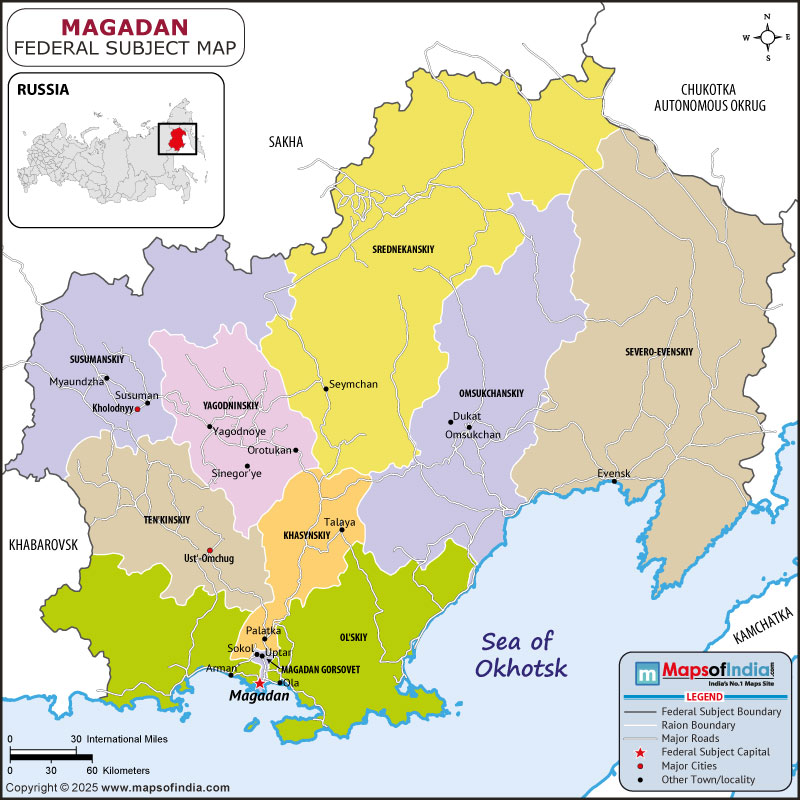



Magadan is a city in the far east of Russia. It is near the Sea of Okhotsk, literally on the other side of the big cities to the west. Russia’s Magadan is a destination not many people are aware of, although there’s interesting history, culture, and stunning nature to find here. It’s a world away but also beautiful in its own special way of life.
If you like places that have quiet, big landscapes, clean air, and a deep past, then Magadan is worth learning about. In this article, we will cover the city’s history, culture, language, and geography, as well as some frequently asked questions.
History
The city of Magadan is relatively young compared to other Russian cities. People had known of the area for far longer, the land is the home to indigenous groups such as the Even, Evenki and Koryak. These are people who have lived here for hundreds of years, fishing, hunting reindeer and following the seasons.
Long before the city of Magadan was established, the land was occupied by the native people, such as the Kareks, Evens, and Chukchis. These were people of nature. They also ate animals, fished, and moved about the land through a number of seasons. In a few tiny villages next to Magadan, they are still remembered with the old ways, tales, and style.
Magadan itself was founded in 1929. It originated as a little settlement on the coast of the Sea of Okhotsk. The Soviet government knew this region had gold and other natural resources. To extract these resources, the government builds a port and transport roads. Very soon, Magadan in Russia was to become known for something else, which is prison labour camps.
Thousands of people were sent to labour camps in the region under Stalin during the 1930s and 1940s. Most of them were prisoners; others were just people who disagreed with the government. These people were forced to work in terrible conditions. They constructed roads, dug gold mines, and toiled in subfreezing weather. Not all lived, and many families were disrupted during this period.
That main trail, down which prisoners and supplies were brought in, was later called the “Road of Bones,” for the thousands of prisoners who died while building it. This history of Magadan is still commemorated today with sadness and honour. Memorials and museums in the city serve to keep this memory alive so that future generations will understand what happened.
Magadan became a significant regional centre after the war. Mining did not stop, and even more people came in to work in gold and tin mines. The city also served as a point for shipping goods and supplies to northeast Russia.
The city grew in the 1960s and 70s, with schools, theatres, and hospitals being built. The city’s harsh image started to lift. Life got easier, but it still remained pretty remote from the rest of the country. Those who lived here learnt to rely on one another.
With the fall of the Soviet Union in 1991, life in Magadan grew even harder. Mining jobs fell, and many young people moved elsewhere for work in larger cities. But some people remained proud of their hometown and its history.
Magadan in Russia is today a city proud of its past. The story that it tells is one of pain, resilience, and transformation. The people who reside here are intimate with the history and carry it. Museums, monuments, and old buildings all provide visitors with a constant reminder of what the city endured to become what it is now.
Culture
Magadan culture is influenced by the location, history, and the people. Life here is not like big cities. It is cold, the earth is still, and the people know how to live simply and help one another. Even though it is a distant city of Russia that is far from populated regions, people here have amazing hearts and a sense of unity.
Because the city began as a work port and grew to be known for gold mining and labour camps rather than any particular industry or cultural tradition, the people who came here came from all over Russia and surrounding areas. This blend offered new ways of talking, cooking, and living. A local culture developed, which is based on hard work, sharing, and even surviving the cold winters together.
One big component of the culture of Magadan is reverence for the past. Lots of families here have stories of the days of the labour camps. And some continue to visit memorials and grave sites where their family members worked or died. Schools educate students about the city’s history so the memory doesn’t fade. This deep connection has been a major factor in the strength of the people today.
Art is an essential part of local life too. The town has a theatre for plays and concerts. The city also includes a museum featuring local art, old pictures, and handmade objects from decades past.
People celebrate holidays like New Year, Victory Day, and Maslenitsa (the end of winter). On these days, laughter and music fill the street along with traditional clothes. People head outside for food and games, even in freezing weather. Such moments offer a bit of warmth during the long winter.
The Russian culture of Magadan also respects nature. Weather permitting, residents spend free time fishing, hiking, or picking berries and mushrooms. Kids grow up knowing how to dress warm, be polite to wildlife, and play outside. Nature isn’t a destination; it’s part of being alive.
The community spirit is strong. Neighbouring small towns near Magadan are often populated with people who know each other by name. They take trips to visit neighbours, help shovel snow, and bring food to the elderly. This form of living makes people feel close and safe even in the distance between larger places.
In brief, the spirit of Magadan is respect, remembrance, and generosity. Life is simple but meaningful. People here care about family and tradition and being there for each other. But even in the hardest times, the city speaks through its people, their stories, and the way everyone looks out for one another.
Language
The predominant language in Magadan, as in the rest of the country, is Russian. People speak clearly and simply. If you make an effort to speak Russian as you get around Magadan, people will smile and assist. And in shops, at the market, and in offices, you hear everyday conversational words.
Elders in the traditional families may speak local native languages like Even, Evenki, or Koryak, which you will also hear. You may hear a greeting or song in one of these languages at festivals. But for the most part, anyone you meet under the age of 40 speaks Russian only.
English is not widely used. And signs in English translations are few because the city is so far. It’s good to know a few words before you go. It is helpful to have a mobile translation app or small phrasebook.
Geography
Magadan’s landscape is wild and beautiful. This is a city in the extreme east of Russia on the Sea of Okhotsk. It is nested among mountains, rivers, and forests. Some advantages are that Magadan is very quiet and very cool, and the place is full of nature.
Magadan sits near the coast. The sea is cold throughout the year and is frequently ice-covered in winter. In summer, the water is calmer, allowing for fishing by small boats. Strong winds and very frequent fog are also brought in by the sea.
Hills and stony mountains are visible behind the city. These aren’t especially tall but cover a lot of ground. The mountains are so mineral-rich that they were mined for gold. There are many little rivers in these mountains that flow into the sea. These rivers freeze in winter and flow strongly again when spring arrives.
Much of the countryside around Magadan is forested. Pines, birch, and larches are extensive in this part. Its forests are populated with wildlife such as bears, foxes, rabbits, and many birds. When it is warmer, people go into the forest looking for mushrooms and berries. The forests in winter are covered with snow.
Magadan has cold weather throughout the year. Winter begins in October and continues until as late as April. It can get extremely cold and drop to below -30 degrees Celsius. The streets, the roofs, and the hills are covered with snow. Everyone wears heavy coats, boots, and hats on a daily basis. Summer is short and cool. Some days are sunny; it can be cloudy and rainy. It’s best to go in June, July, or August, when the weather is soft and the land turns green.
Magadan is isolated from other cities. The roads are long and sometimes covered in snow. The city is served by the Kolyma Highway. It links Magadan with yet another remote city, Yakutsk.
The city is also situated upon hilly terrain. Many homes face the ocean or the hills. It’s one of the most significant sites in the city. Ships deliver food, fuel, and supplies, particularly in the cold season when it is more difficult to travel over land.
The location of Magadan is a replication of why the city is so slow and quiet. The cold, strong land and the deep forests make life very peaceful. People out here have learnt to adapt to nature. They yield to the land and take what the land offers, respecting the weather. That is what makes Magadan a place where life feels different, which is quieter, steadier, and closer to the earth.
Quick Facts
| Official Name | Magadan |
| Population | Around 137,000 |
| Area | Approximately 295 km² |
| Currency | Russian Rouble (RUB) |
| Religion | Mostly Russian Orthodox |
| Language | Russian |
FAQs
Q1: Where is Magadan located?
Magadan is in the far east of Russia. It is on the coast of the Sea of Okhotsk and is backed by hills and forests.
Q2: What is Magadan known for?
Magadan is celebrated for its gold mining heritage and freezing temperatures, as well as a history associated with labour camps dating back to the days of the Soviet Union.
Q3: What can I do in Magadan?
You can go to museums, see memorials, gaze at the sea, roam through silent forests, and eat local seafood dishes.
Last Updated on: April 15, 2026

