


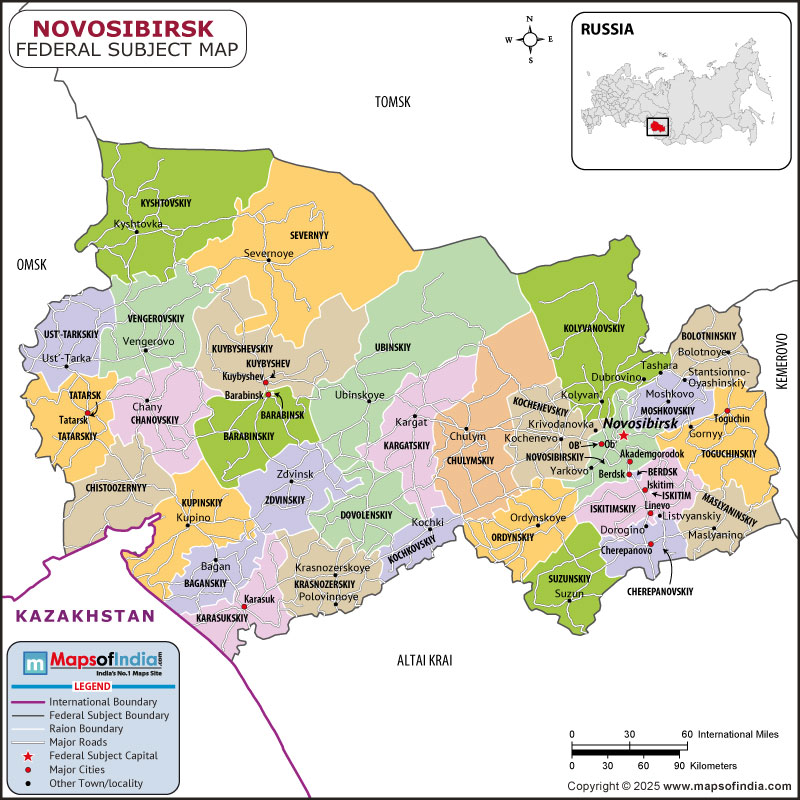



Novosibirsk is Russia’s third-largest city and the largest in Siberia. It is on the Ob River and is a large transport, scientific, and educational centre. Novosibirsk is widely known among people due to the Trans-Siberian Railway, the best universities, and the perfect combination of old and new ways of life. The city is packed with parks, museums, and theatres. It also has many students and researchers. Whether you are doing research, business, or tourism, Novosibirsk provides a friendly and contemporary getaway while preserving its traditional Russian values.
History
Novosibirsk was founded in 1893. It began as a modest workers’ camp for bridge construction over the Ob River. This bridge was one part of the Trans-Siberian Railway, an incredibly vital set of tracks linking the far east of Russia to Moscow and the west. The place was then a village with tents and wooden houses. But the railroad brought growth, jobs, and new people.
In 1895, the town became a city and was named Novonikolayevsk in honour of Tsar Nicholas II. It soon became one of the fastest-growing towns in Siberia. Its location upon the river and the railway rendered it highly adapted for trade, business, and traffic. Goods like grain, meat, wool, and wood arrived from neighbouring villages and were shipped throughout Russia.
In 1903, Novonikolaevsk was granted the status of a city. It already boasted schools, banks, churches, and even theatres, all only six years after its founding, in 1909. People began calling it the “Chicago of Siberia” in reference to its rapid growth. By then, the city’s population was well over 47,000.
For many of Russia’s regions, the early 1900s were difficult years. Novonikolayevsk was founded during the Russian Civil War in 1917, when Great Britain occupied Eastern Siberia. The town got a new name after the war in 1925: Novosibirsk, which means New Siberian city.
In the Soviet years, Novosibirsk was developed into a powerful industrial and scientific city. During World War II in particular, numerous industries were relocated to this place. This facilitated the city’s growth even further as more and more people came for work and safety. Thousands of Russians from the west of the country moved eastward, and Novosibirsk embraced them.
The government began building a new area of town south of the city in the 1950s, which was Akademgorodok. It was a wonderful town for scientists, for research centres and schools and libraries. It was a renowned school of learning and new ideas. One of Russia’s best universities, Novosibirsk State University, was established in 1959.
Novosibirsk entered a new era after the collapse of the Soviet Union in 1991. Some industries shut down, but the city grew in business, education, and the arts. Today, Novosibirsk has most of the modern amenities, as any metropolis or city will offer you all these, such as city platforms, shopping centres, busy roads, and peaceful parks.
The Novosibirsk story is one of rapid expansion and great will. From a railway camp to the biggest city in Siberia, it has always surged forward with energy and pride.
Culture
Novosibirsk culture is rich and diverse, combining history, science, art, and social life. It’s the largest city in Siberia, so it would have diverse people, ideas, and traditions. The culture of Novosibirsk is one of fast growth, a cold student community, and industrialists.
The Novosibirsk Opera and Ballet Theatre is also a renowned landmark of the city. This structure occupies the center of the town. It opened in 1945 and was popularly called the “Siberian Coliseum” because of its size. You come here to see opera, ballet, concerts and shows. Many famous Russian and foreign performers came up on this stage.
Music means a lot to the people of Novosibirsk. There is a city philharmonic orchestra and a number of small music halls. Cafes and street corners are great sources of music in summer, with local bands and musicians often playing. Here, jazz, classical music, folk songs, and modern music all have a place.
There are also many theatres and museums in the city. There are theatres where one can see plays in Russian: the Red Torch Drama Theatre and the Globe Theatre. Museums showcase plays about local history and art about nature and science. The Novosibirsk State Museum of Local History is an easy way to get a sense of the history of the city and the region.
Art is much appreciated in Novosibirsk. There you’ll discover galleries and shows of local artists. There are also print shops for children and adults to learn. In the summer, painters can be found in the parks and at the river embankment. They sell paintings, handmade crafts, and souvenirs to locals and tourists.
Science is also a part of Novosibirsk. Many scientists, teachers, and students live and work in the science town of Akademgorodok. It's quiet, and they have libraries, bookshops, and quiet paths to walk. They love to talk here about science, books, and ideas. This contributes to the well-considered, smart feel of the city.
Festivals are common in Novosibirsk. Music, theatre, books, film, food, and even snow sculptures in winter are the best of the season’s culture. Open-air concerts and fairs are popular in the spring and summer for families. In winter, particularly the New Year, the city is glittering with trees, ice sculptures, and happy crowds.
Food is life in the culture. There are Russian cafés, bakeries, and restaurants throughout the city. There is also Central Asian food, Georgian food, and Ukrainian food, due to the many cultures you’ll find in Novosibirsk.
The people of Novosibirsk are friendly. They like telling stories, helping each other, and developing a community. Culture is not just in government museums or theatres; it’s in everyday life, from street art to songs on buses.
Language
The official language of Novosibirsk is Russian. It is used in schools, offices, stores, and buses, as well as by street sign makers. It is the language of everyday life, with almost everyone living in the city speaking or understanding it.
Apart from the Russian language, depending on the small group under consideration, there can be speakers of Ukrainian, Tatar, and Kyrgyz, as people came here from various parts of Russia and the bordering countries.
It helps if you speak a few words of Russian if you go to Novosibirsk. But young people in a café or hotel may speak a few words of English, especially around the city centre or student area.
Geography
Novosibirsk is a city in the southern West of Siberia in Russia. It is the third largest city in the country, after Moscow and Saint Petersburg. It is situated on the longest Russian river, the Ob. This river cuts through the city, dividing it into left and right banks.
The city is located in a flat area of the West Siberian Plain. The flatness of the land meant the city could easily expand for centuries. Dozens of parks, wide streets, and open landscaping mean the nature of a big city in Novosibirsk. The elevation does not exceed 100-150 meters above sea level, insofar as this is typical for this part of Siberia.
Novosibirsk is a large industrial and scientific centre, though less significant in an administrative capacity. It sits on the epic Trans-Siberian Railway, which links the eastern reaches of Russia with Moscow. The railway made moving goods and people into and out of the city effortless. There is also a large river port on the Ob River, used for both cargo and travel.
The city is linked to other cities through numerous highways, railways, and an airport. Tolmachevo Airport is one of the largest airports of the Siberian Federal District. It links Novosibirsk with other cities in Russia and abroad. Buses, trolleybuses, trams, taxis, and the metro operate in the city. The metro began operating in 1986 and has helped many people get around the city every day.
Novosibirsk's climate is continental. So, in other words, it will be freezing cold in winter and blazing hot in summer. Temperatures could easily venture down to below -20°C Celsius during winter, and it could snow for numerous months. Summer, in contrast, is short but warm, with daytime highs reaching 25 to 30 degrees Celsius around July.
The city is not very cold despite the weather, and there are shades of green in neutral areas. Parks and trees exist along the streets. This is a place where people stroll along the river and hang outside in the summer and winter. In winter, parks are used for ice-skating and skiing.
Beyond the city, the area has forests, grasslands, and small lakes. The natural areas are favourites for hiking, fishing, weekend camping trips, and more. The territory around Novosibirsk is likewise productive of crops, especially of grains and potatoes.
In general, the geographical location has helped in the city's growth. It comes with a flat terrain, a major river, and rail connections, all easy to build upon and expand. Simultaneously, the cold but clear seasons create an enchanting allure. Whether it is snowing or sunny in summer, the geographical formation of the city plays a substantial role in the actual life of people.
Quick Facts
| Official Name | Novosibirsk |
| Population | Approximately 1,630,000 |
| Area | Around 502 km² |
| Currency | Russian Rouble (RUB) |
| Religion | Predominantly Russian Orthodox, with some Muslim and other communities |
| Language | Russian |
FAQs
Q1: What is Novosibirsk famous for?
This is the most popular city for passing through the Trans-Siberian Railway, has a focus on arts education in music and dance in the Opera and Ballet Theatre and Akademgorodok, and is the biggest urban settlement in Siberia.
Q2: Is Novosibirsk a good city for students?
Yes, the city has many prominent universities, such as Novosibirsk State University, providing the city with a very active student community.
Q3: What kind of food can one find in Novosibirsk?
You will find Russian dishes there, as well as Central Asian, Georgian, and other cuisines.
Q4: What is Akademgorodok?
It is the part of Novosibirsk developed for science and research with the presence of universities and many research centres.
Last Updated on: April 15, 2026

