


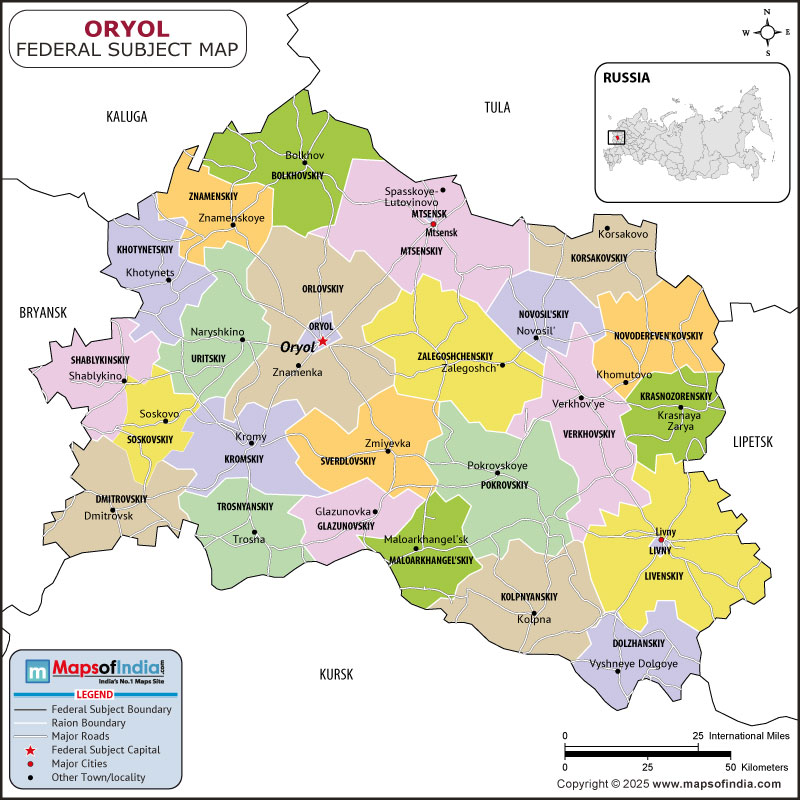



Oryol is a charming city in western Russia that has been important to the country’s history and culture. Oka River also stretches through this city and gives it a peaceful magic that enchants visitors and residents. Oryol is not only famous for its scenic beauty, it’s also known for its culture, its friendly people and for being a part of Russian history.
History
Oryol's history is very rich and has a lot of fascinating events that have made the city what it is now. Oryol was established in 1566 as a fortress by order of Tsar Ivan the Terrible. The primary goal of the city's construction was to defend Russia's southern borders. In those days, the Russian territory was frequently raided by nomadic peoples. While Oryol was functioning as a fortress held in trust, it served as a great protector for the people. That it sat on the Oka River made it a logical spot for a fortress since it provided natural protection and also supported trade.
In the beginning, Oryol was most often used as a military post. It was defended by wooden walls and towers that helped protect the land. With time, the town of Oryol developed beyond its fortress borders. Farmers, traders, and artisans migrated to the city as they found opportunities there. The fertile plains around Oryol were well-suited to farming, and the river facilitated transport to other parts of the region. From there, markets emerged with people exchanging grain, cloth and other goods.
By the 17th century, Oryol had begun to resemble a town. The walls of wood gave way to stone houses. Churches, stores and houses dotted the city. Oryol developed into a trade settlement. The markets were crowded, and people travelled from neighbouring villages to purchase and sell their goods.
The 18th and 19th centuries saw further change. Oryol moved in on key trade routes that connected various regions of Russia. The city grew ever more quickly with the opening of railway lines. Factories were established, and Oryol can claim three centuries of producing textiles, metal works and other goods. The city also made way for a burgeoning culture. There were visits and residences in Oryol of famous writers and poets. One of Russia’s leading authors, Ivan Turgenev, was born near Oryol. His writings frequently referred to the beauty of the region and the inhabitants' lives.
The 20th century was hard for Oryol. The city was bombed heavily in World War II. It was under Germany’s occupation for more than two years. The Oryolites demonstrated enormous courage in those days. By the time the city was liberated in 1943, it had suffered tremendous depredation. Then they had to roll up their sleeves and rebuild their city after the war. Houses, schools and factories were built. Statues were built to honour men who had fought and died for the city.
Today, Oryol is a peaceful, beautiful city that takes pride in its past. The old buildings, museums and monuments do not allow people to forget the city’s long and colourful history. Oryol is still one of the leading cities in the region where tradition goes hand in hand with modern life. A lot of tourists travel to Oryol to find out its story, to walk through the sights and to feel the hospitality of the Oryol inhabitants.
Culture
The culture of Oryol, formed over centuries, is rich and diverse. The inhabitants of Oryol are proud of their manners, arts, and mode of living. Visiting is enjoyable in the city, which is recognised for its friendly and inviting persona. The mix of old Russian traditions and new ways of life can be seen in the local culture.
The greatest cultural tradition of Oryol is its association with Russian literature. Oryol is renowned as the birthplace of great writers. This is the country of birth of Ivan Turgenev. His tales are largely about life in Oryol and the surrounding country. In a number of his books, the beauty of Russian nature, the hardships of the farmers and the habits of the people are presented. The city pays him homage with museums, statues and a series of festivals that celebrate his work. Residents in Oryol continue to have a strong love for books and literature, indicated by the number of libraries and cultural functions that exist in the city.
Music is also highly appreciated by the inhabitants of Oryol. The people have a rich cultural heritage that has been passed down through the generations, and traditional folk songs are still sung today. These songs tell stories about love and work and nature. You’ll definitely be able to hear such songs played in town during local festivals and public holidays. There are also contemporary music festivals, where local musicians showcase their skills. These are also celebrations in which traditional dances play a part, with dancers dressed in colourful costumes that signify important events in the region’s history.
Art is an integral part of daily life in Oryol. Numerous local artists are inspired by the grandeur of the city's landscape, rivers and architecture. Museums and art galleries in Oryol preserve many fine works of painting and sculpture. It has pictures, paintings and sculptures from different times, which help Oryol people to know what their city and their country were like.
Another aspect of Oryol’s culture that unites is food. Residents of Oryol also eat traditional Russian cuisine: borscht, pelmeni, and blini. These meals are usually eaten by families on special occasions. Sharing food symbolises care and respect for guests. Fresh produce, honey and homemade treats are on offer at local markets where old food traditions are kept alive.
In Oryol, there are visible links between the past and the present in everyday life. Its culture can be observed in the art, music, food, and customs of the city. It’s a place where people respect the past even as they peer into the future with hope. Typically, visitors will depart with fond memories of the culture of Oryol and the genuine friendliness of its people.
Language
The primary language used in Oryol is Russian. Russian is spoken at schools, in offices, and in daily life. In Oryol, people value their own language highly, and it is an integral part of local culture. Many people have a clear and gentle way of speaking that is relatively easy to understand for customers. In some parts of Oryol, older people remember the local dialects or language used in the past, though today most speak standard Russian.
In Oryol, you will be able to read billboards, books, and newspapers in Russian. The city also respects education, and its importance to learning the Russian language. In schools, children learn Russian grammar, poetry and stories, which helps their traditions stay alive. Russians are usually very good about sharing their language, and most will be happy to be helpful if a visitor makes an effort to speak Russian in the city.
Geography
Oryol is a city on the Oka River in western Russia. The river is a prominent aspect of the city’s landscape. It gives life to the soil and has helped nourish Oryol’s growth over the centuries. The city is also not far from the Orlik River; the two rivers meet slightly further from the city centre. These rivers don’t just offer lovely scenes; they also make farming and transportation possible here.
The surrounding countryside of Oryol is mostly flat with a few low hills. This is why people can build houses and roads. The soil is fertile and perfect for agriculture, so wheat, barley and potatoes are grown here. The countryside outside the city is green in the warmer months, full of broad fields and woods that offer fresh air and quiet spaces for people to be with nature.
Oryol has a mild climate. Winters are chilly, and snow falls from December to February. Oryol residents are accustomed to the cold and embrace the snowy months, getting active with winter sports or going for walks in the crisp air. Summers are hot in a typical British way, and the sun shines on most days; temperatures nearly always reach over 20 degrees centigrade. Autumn and spring are cooler seasons, and with vibrant coloured leaves and flowers, the city can be quite beautiful.
Oryol has always stood in an important location. It lies near the border with several Russian regions, making it an important link for trade and travel. Oryol is linked to Moscow by rail and road, approximately 360 kilometres north. And that makes it relatively easy for goods and people to travel between Oryol and the major cities in Russia.
There are a lot of animals and birds in the Oryol forests. In general, the forests have in the past been rich in wildlife; tourists might catch a glimpse of foxes, hares, or even deer. The lakes and rivers are habitats for fish and other aquatic life. The city maintains these natural areas so that future generations can enjoy them. The city has parks and gardens too, places for people to calm down and to enjoy nature.
Oryol's geographic location has been influential in its history. Located on the river and in proximity to the other significant cities, it was often thought of as the ideal defensive location. That is how Oryol both blossomed as a trading and agricultural centre and developed into a city that would have its place forever in Russia’s history.
Today, the Oryol geographical location continues to give strength to its people. Its rivers, fertile soil, and favourable location enable the city to grow and thrive, but also maintain its natural beauty. Tourists who come to Oryol find the quiet countryside as appealing as the city. The combination of open fields, forests and waterways makes Oryol a distinctive location in this part of Russia.
Quick Facts
| Official Name | Oryol |
| Population | Around 308,000 (recent estimate) |
| Area | Approximately 121 km² |
| Currency | Russian Rouble (RUB) |
| Religion | Mainly Russian Orthodox Christianity |
| Language | Russian |
FAQs
Q1: What is Oryol known for?
Oryol is famed for its historical past and Russian literature connection as well as its natural beauty.
Q2: Is Oryol easy to get to from Moscow?
Yes, Oryol is easy to get to on a train or a bus from Moscow.
Q3: What is there to do in Oryol for tourists?
Oryol museums, monuments, theatres and parks are available for tourists.
Last Updated on: April 15, 2026

