


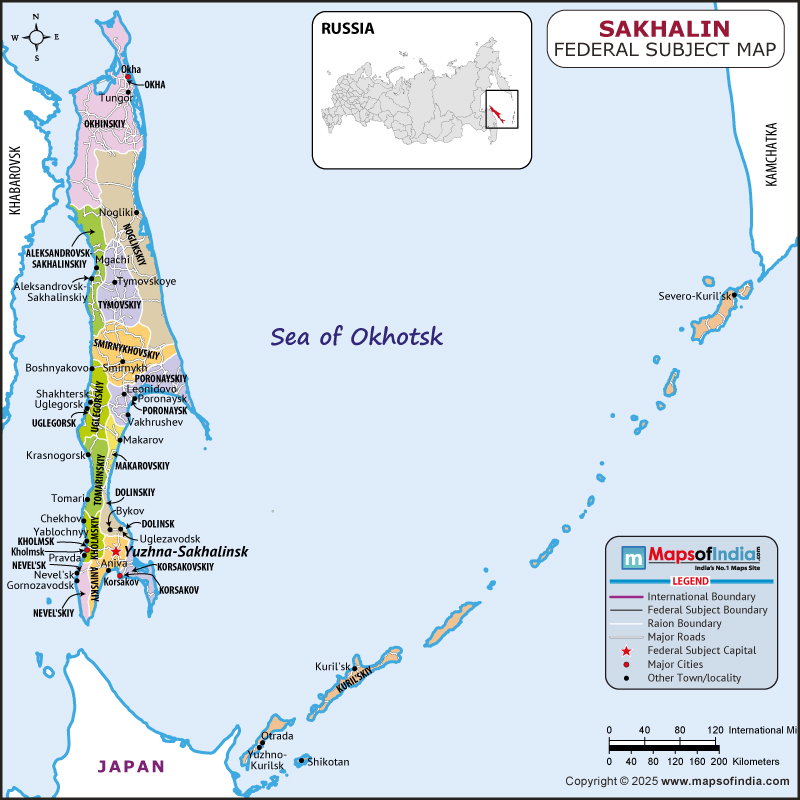



Sakhalin lies to the far east of Russia. It is famous for its lush nature, pure air, and fascinating history. For many people in Russia, Sakhalin is an unfamiliar place, but it is one of the most unusual places in the country. It is replete with forests, mountains, and rivers, located between the Sea of Okhotsk and the Pacific Ocean.
The island is not situated near the megacities, such as Moscow, but it is an important chapter in Russia’s history. If you love the culture, nature, or peaceful travel, then Sakhalin has something to offer.
History
The history of Sakhalin is a history of changes, stories, and different cultures. The island has long been a special place, long before big countries even knew about it. It was long inhabited by native peoples such as the Nivkh, Ainu, and Oroks. These are the kind of people who lived a silent life. They fished, hunted animals, and followed the seasons by respecting nature and carrying on traditions handed down by elders.
In the 17th century, the first Russians visited the area. They wanted fresh land and trade. Japanese explorers began to trickle in around the same period. Russia and Japan both wanted Russia’s Sakhalin to belong to them. This led to years of dispute and tensions between the two sides.
Early in the 19th century, Russia began to transport prisoners to the island. They were people who had broken the law or said things against the government. They were made to work under tough conditions. Some helped construct roads and towns. Among the most famous of these was the Russian writer Anton Chekhov. In 1890, he went to Sakhalin to witness the living conditions of the prisoners. Later he wrote of what he had seen in a powerful book.
In 1855, Russia and Japan agreed to share the island. But this did not last. In 1875, Russia handed over the entire island to Japan in exchange for another group of islands. But that all changed yet again; in 1905, following the Russo-Japanese War, Japan occupied the southern half of Sakhalin, while Russia held on to the north. This division split the island into two parts, each with its own government and way of life.
Southern Sakhalin in Russia was controlled by Japan from 1905 to 1945. They build schools, railways, and offices. Some Japanese families moved there. Meanwhile, to the north, the region remained under the control of the Russians.
The Soviet Union took full control of the island in 1945 following World War II. The Japanese population departed, and Russians moved in. Afterward, Sakhalin was entirely Russian. The Soviet government industrialised the island, constructing factories, roads, and new townships.
Nowadays, those who look back at Sakhalin look at layers of the past like native traditions, Russian tales, and Japanese memories. The island still has some old Japanese buildings, and both cultures can be seen in the local food, art, and even everyday life.
To this day, Russia’s Sakhalin remains a site where the East met the West. The island locals are fiercely proud of their history and stand as guardians of the lands and stories left behind. The history here is not only wars and politics; it’s about strong humans who built homes, exchanged cultures, and witnessed many changes.
Culture
The Sakhalin culture is a unique one because there is a confluence of many different lifestyles. Its people are native, its traditions tend toward the Russian, and traces of Japanese influence from the past show in places. All those parts add up to make Sakhalin in Russia a place where history and daily life are intertwined.
There’s one remarkable feature of the culture of Sakhalin, and that is its native roots. The first inhabitants of this area were people like the Nivkh, Ainu, and Oroks. These were people who lived in tiny villages and went with the creative energies of nature. They hunted, fished, and sewed clothing from animal hides. Their riddles, dances, and stories were transmitted from generation to generation. A few of these traditions remain today, at least in the northern part of the island.
Russian culture followed but quickly rooted itself throughout the island. They brought with them their customs, language, food, and religion. Russian holidays such as New Year and Maslenitsa are enjoyed. Families get together, do special cooking, and tell stories. Folk art, handmade decorations, and samovars (tea-making utensils) can be found in many homes.
There were several changes while Japan had control of southern Sakhalin. Japanese schools, stores, and houses were constructed. There are also buildings and gardens that still look Japanese even in the present day. Some food habits with Japanese influence, such as cooking with seaweed or preparing fish in diverse methods, also reveal the impact of Japan.
Even though the music and the art are widely spread in Sakhalin, there are local theatres in cities such as Yuzhno-Sakhalinsk with plays, music, and dance. Schools also typically teach kids to paint, sing, and play instruments. Children are taught traditional dances and folk songs so they do not forget their past.
Craft is another part of the island. Wooden, bone, and leather goods are crafted by the indigenous population. They contain masks, costumes, implements, and small figures. Each piece tells a story. These handmade items are available in many local markets and are purchased as souvenirs by a lot of people or as a memory of visiting Sakhalin in Russia.
Sakhalin culture is quiet and deep. People around here are close to the natural world. Small things make them happy, like walking in the forest, fishing, telling stories, and spending time with family. In any remote small village or city, life on Sakhalin is slow, as people respect every year's tradition and they value their land.
Language
The official language in Sakhalin is Russian; most of the inhabitants also speak Russian. It is the first language of most of the people in cities and towns. You can still hear local native languages like Nivkh or Ainu in smaller villages, but these are dying out as fewer people use them in their daily lives.
Learn some basic Russian words if you go to Sakhalin in Russia. While reading, writing, and speaking English were things that were emphasised in schools, not all spoke it fluently. Of course, any time that you need anything, many young people or workers in hotels or shops will try to help you.
Signs in public spaces are generally only in Russian. Airports and major hubs may also be in English, but not always. You may find it useful to have an app for your phone that can translate or a phrasebook for your travels.
Geography
Sakhalin is also the largest Russian island. Located in the extreme east of the country, it extends hundreds of kilometres north and south. Sakhalin’s geography is one of the most interesting in the Russian Federation. A narrow, long island, it is surrounded by water on both sides.
Sakhalin is bordered to the west by the Sea of Okhotsk and to the east by the Pacific Ocean. The island is separated from the Russian mainland by the Tatar Strait and from Japan's island by the La Pérouse Strait. Thanks to its position, Sakhalin in Russia experiences a cold, wet climate, snowy winters, and cool summers.
Much of the land is covered in thick forests. You can find pine, birch, and fir trees everywhere. These forests are home to many animals like bears, foxes, squirrels, and birds. Rivers run through the island, and there are also peaceful lakes and wide open fields. In spring and summer, the land turns green and full of life. In autumn, the trees change colour and paint the hills in red and yellow. Winter covers everything in white snow.
There are numerous hills and mountain ranges, particularly in the central and eastern portions of the island. The highest mountain is Mount Lopatin in the middle of Sakhalin. These are not very high mountains, but they give you beautiful views of the island and sea, which are totally worth it.
The coastlines are also special. Some have sandy beaches, others, rocky cliffs. Fishermen also head out into the sea to catch fresh fish such as salmon and cod. Those living close to the sea collect seaweed, crabs, and seafood. Fishing is a major part of life on Sakhalin in Russia.
The island’s main city is Yuzhno-Sakhalinsk. It lies south of Sakhalin, among hills and woods. The city is connected by roads to surrounding communities and villages throughout the island. Many of them live near rivers or the coast, on land that is flat and good for building homes.
Earthquakes occur occasionally in this region since the island is located close to a fault line. The land has many hot springs that indicate that activity deep underground is still happening. Some springs are also used by the local population and tourists for taking warm baths, particularly in the colder months of the year.
The landscape of Sakhalin influences daily life. People depend on nature for food, transportation, and work. The forests give wood, the sea fish, and the rivers clean water. Though life here can be simple and quiet, there is something beautiful to experience on the island in every season.
Quick Facts
| Official Name | Sakhalin |
| Population | Around 475,000 |
| Area | Approximately 72,500 km² |
| Currency | Russian Rouble (RUB) |
| Religion | Mostly Russian Orthodox |
| Language | Russian |
FAQs
Q1: Where is Sakhalin located?
Sakhalin is in Russia’s Far East and lies between the Sea of Okhotsk and the Pacific Ocean.
Q2: What is Sakhalin known for?
Sakhalin is famous for its lovely nature, its history, its fresh air, and its seafood. It is well known for its proximity to Lake Tunaycha and the native cultures.
Q3: How is the weather in Sakhalin?
Cold snowy winters, cool green summers. The island experiences distinct seasons and has fresh air the entire year.
Q4: What can I do in Sakhalin?
You can go to museums, walk in forests, fish, hike mountains, and eat fresh seafood or relax by the sea.
Q5: Is Sakhalin safe for travellers?
Yes, Sakhalin is safe. People are friendly and helpful. But be cautious in the wild and respectful of local traditions.
Last Updated on: April 15, 2026

