


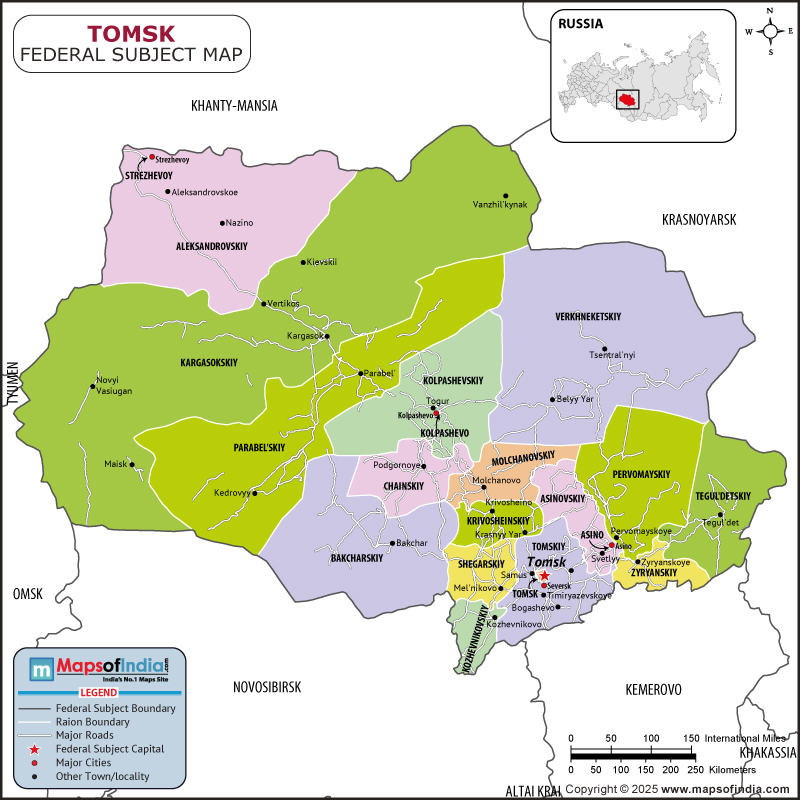



Tomsk is a unique city in Russia. It is located on the Tom River in western Siberia. Tomsk is one of the first Siberian cities and bears the status as a centre for history, science, and culture. It is famed for its centuries-old wooden houses, vibrant schools and universities, and friendly inhabitants. In this article, we will also cover Tomsk in detail including its history, culture, language, geography, and some of the frequently asked questions.
History
Tomsk is the oldest city in Siberia, with a history that spans over 400 years. The city was established in 1604 by Tsar Boris Godunov. The Russian government, at the time, sought to construct a fortress on the Tom River to guard its expanding territory to the east. The area was selected with help from a local Tatar prince, and shortly afterward, the people began to build wooden walls and guard towers.
Tomsk was a military and trading place for several years. Different people arrived here from various parts of Russia, and the population grew gradually. Because the rivers were used for transport, traders arrived with furs, food, cloth, and tools. The river is the reason the city grew faster than other nearby places.
It was in the 18th and 19th centuries that Tomsk turned into more than a trade town. It began to thrive as a centre of learning, culture, and commerce. At this time, many beautiful wooden buildings were built with carved designs on the windows and roofs. They continue to be one of the city’s most beloved features today.
By 1888, a significant development occurred with the establishment of Tomsk State University. It was the first university in this region of Russia, and it attracted many teachers, scientists, and students to the city. Later on, other schools were established, such as Tomsk Polytechnic University in 1896. Due to these schools in Tomsk, the city was known as a multi-university city of study. People even began referring to it as the “Siberian Athens.”
In this period, Tomsk developed into the dominant settlement in the Tomskaya Governorate, a large expanse that encompassed the current territories of contemporary Russia and Kazakhstan. It was a significant centre for politics, law, business, and commerce.
Tomsk was not doing great at the beginning of the 20th century. Some fighting took place in the area during the Russian Revolution of 1917 and the subsequent civil war. The city subsequently was absorbed into the Soviet Union, and, like many Soviet facilities, was utilized as factories during World War II. People were also sent here as prisoners during Soviet times and those stories are now being exhibited at one of the city’s museums.
Tomsk reopened after the Soviet Union dissolved in 1991. The city did its best to restore its old buildings and to sustain its schools and culture. Today, all of Russia knows Tomsk for its universities, wooden houses, and history.
Culture
The city is so full of life and pride. The city is steeped in history, art, music, and tradition that combine to give it such uniqueness. Tomsk is as much a place of knowledge as Keldysh. People in Tomsk take great pride in their heritage and demonstrate it in their everyday lives, whether in the form of art, food, or festivals.
Another distinguishing feature of Tomsk is wooden architecture. Many of the city’s structures were also constructed during the 18th and 19th centuries. The houses here are wooden and wonderfully carved on windows, doors, and at the tips of the roofs. Tomsk is one of the biggest cities in Russia, with old wooden buildings still standing. These structures are more than just a fact of the city's past; they are a symbol of community pride.
It also offers a thriving art and theatre scene. Tomsk offers several theatres, attended by city residents and city guests to enjoy plays, concerts, and performances. One of the largest is the Tomsk Drama Theatre, which often features plays by local and visiting actors. There is also a puppet theatre in Tomsk, which has an audience that mainly consists of families and children.
Music also plays a huge role in the culture of Tomsk. The city is host to a variety of music festivals, including classical, in Russian, and modern pop music. The Tomsk Philharmonic is presenting classical music concerts; sometimes, the open-air concerts are in summer. These people from Tomsk love both folk music and modern styles, and you will often see street musicians performing in the city’s central streets.
Food is another aspect of the culture. Tomsk's indigenous cuisine reflects the history and fusion of all nations settled in Siberia for centuries. Tomsk is known for quintessential Russian dishes like borsch, pelmeni, and blini. Most of the local cafes serve these dishes, and some also serve kvas (a traditional fermented drink) or tea. Rather, the city’s food culture is communal: meals are eaten with family and friends.
Tomsk is a festival city. One of the city’s most visited events is the Tomsk International Film Festival, which gathers filmmakers from around the world. The Wooden Architecture Festival is another festival of the peculiar wooden buildings that grace the city of Tomsk and brings together artists, architects, and the public.
Tomsk's culture is also defined by the students coming from other regions. With multiple universities, there's a good cross-section of youth bringing new ideas, energy, and creativity to the city. Students can often be found working on cultural projects, exhibits, and performances. Their existence contributes to the lively and youthful feel of the city.
Overall, the Tomsk culture is a mixture of the old and new. From its wooden houses to the art scene, Tomsk is full of history and potential. It is a town where history, artistry, and the sense of neighbourhood combine to have a very special feel.
Language
Russian is the predominant language of Tomsk. It is used in schools, offices, shops, and on public transport. The majority of people in Tomsk have Russian as their first language. You are going to hear it all the time in everyday life.
As Tomsk is a university city, many of the young people and teachers can speak some English as well. In cafes near universities or tourist attractions, you might find menus and signs promoting everything on offer in both languages.
There are also small communities of people in Tomsk who speak other languages, including Tatar, German, and Ukrainian. This is due to the very history of the city and the mixture of cultures.
Geography
Tomsk is situated in western Siberia, within the Russian Federation. It rests along the Tom River, which is a tributary to the larger Ob River. The city lies some 3,500 kilometres eastward of Moscow and is part of the Tomsk Oblast. The city lies slightly north of the famous Trans-Siberian Railway, and while the main line does not run through the city, a branch adjoins the city to the rail network.
Being situated on the West Siberian Plain, the city is set in an environment that is mostly flat and is embraced by forests, rivers, and swamps. The land around Tomsk is peaceful. It has spacious tree-covered grounds with immense forests of pines, birches, spruces, and firs. These forests are known as taiga and cover most of Siberia.
The city is located on the Tom River, which is a symbol of Siberian nature in the city and one of the city's tourist spots. Once, the river was used to trade and to travel. Nowadays, it is a pleasure for everyone to spend a nice summer day walking near the river. There are also parks and green spaces along the river where families sit and relish nature.
The city of Tomsk is located more or less at an elevation of 130 m above sea level. The nature of land in the city is largely flat, with slight inclines of heights, but nothing very steep. This facilitates walking or cycling. It is a good piece of land for cultivation nearby. Villagers grow potatoes, carrots, and other crops during their summer season.
Tomsk has a continental climate with long, cold winters and short, warm summers. Winter typically commences in November and ends in March. Snow is everywhere, and temperatures can fall to –30°C or lower. Rivers begin to freeze, and people wear thick clothes to keep warm. A lot of homes and buildings are heated with central heating, so people are comfortable.
Summer starts in June and concludes in August. This is warm, somewhere like 20-28°C; this is the best time to visit Tomsk because the weather is good and the city is very green. The parks have flowers, and people like to go out. The spring and fall are short but lovely. The spring offers new leaves and sunshine; the autumn has peaceful trees in a variety of colours.
Tomsk has a peaceful collection of rivers, woods, and flatlands. The city has a kind of charm in all four seasons. Snowy or sunny, Tomsk is attractive in lots of natural ways that the locals and tourists share and enjoy.
Quick Facts
| Official Name | Tomsk |
| Population | Approximately 575,000 |
| Area | Around 297 km² |
| Currency | Russian Rouble (RUB) |
| Religion | Predominantly Russian Orthodox, with other minority faiths |
| Language | Russian |
FAQs
Q1: Where is Tomsk located?
Tomsk, in Russia, is in western Siberia. It is located on the Tom River and stands 3,500 kilometres east of Moscow.
Q2: What is Tomsk famous for?
Tomsk is famous for its beautiful wooden houses, excellent universities, rich history, and also as one of the first cities in Siberia.
Q3: Is Tomsk a good city for students?
Yes, there are many universities in Tomsk; among them are Tomsk State University and Tomsk Polytechnic. It is home to a sizable student population and active learning culture.
Q4: What is it like in Tomsk?
The city is renowned for its cultural life, theatre, and history of drama, in particular, which is based in Tomsk. The city is also home to theatres, museums, and festivities.
Q5: What is Tomsk best known for?
Visitors can check out the old wooden buildings, the Tomsk Drama Theatre, the Tomsk History Museum, the river embankments, and so many beautiful churches.
Last Updated on: April 15, 2026

