


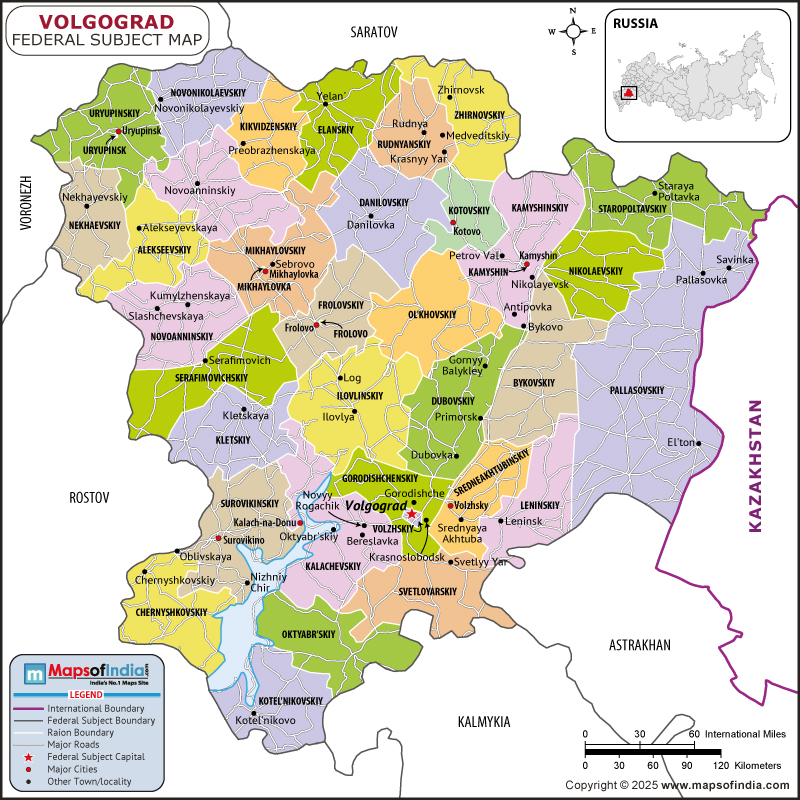



Volgograd is a well-known city in southern Russia. It's a city on the banks of the Volga River. With its centuries-old history, Volgograd brings back people interested in history from every corner of the earth to find and feel its soul. The city once known as Stalingrad is best known for the epic battle that took place here in World War II.
Today, Volgograd is a blend of modern living and rich traditions. The city has lovely river views and parks, long roads, and heroic monuments that tell fascinating tales of struggle and courage. There’s more to Volgograd than history. It is also about the people who are warm and inviting and who make each visitor feel welcome.
History
Volgograd is one of the oldest cities in Russia. Tsaritsyn, as it was known at the time, was established as the future Volgograd in 1589. It began as a tiny fortress built to protect Russia's southern borders. Volgograd stood close to the Volga River and was a strategically important crossing point for both commerce and the military. The community grew as settlers came to live and trade there.
Tsaritsyn in the early 20th century was one of the centres of the Russian Civil War. At a later date, in 1925, it was renamed Stalingrad after Joseph Stalin. This was when Volgograd became a household name across the globe, although it was still referred to as Stalingrad at that point.
The most horrific event in Volgograd’s history was the Second World War, the Battle of Stalingrad. That battle went on from summer 1942 to early 1943. It was among the largest and bloodiest battles anyone had ever witnessed. The German army hoped to take Stalingrad, as it was a major industrial city and had a large river port. The Soviet Army responded with full force. The battle turned into a fierce and long struggle.
The focus shifted to Volgograd as both sides rushed in more and more forces. The city was heavily bombed and suffered street battles and destruction. Most of the homes were destroyed or damaged. The icy winter had made conditions more challenging. But the people of Volgograd refused to give up. Both soldiers and ordinary people stood strong during these hard months.
Ultimately, in February 1943, the battle was won by the Soviet forces. The German army signed this surrender, which had significant implications for the war. The win at Stalingrad raised the spirits of the Allies and demonstrated that the German army could be stopped. Volgograd paid a high price, with hundreds of thousands of lives lost and the city left in ruins.
After the war, Volgograd was almost literally reconstructed from scratch. The people worked hard to save their city. Homes, schools, factories, and parks were constructed. Monuments were built to commemorate the cost of its loss. Most famous among these is The Motherland Calls, a statue that dominates the city and honours the defenders.
The name Stalingrad was replaced with Volgograd as part of countrywide changes in 1961. Politically, it is known as Volga City, due to its location on the great Volga River. Today, Volgograd isn't just a city of the past. It’s a vibrant, living city where people are working, studying, and having a good life.
Culture
The history, people, and riverside environment of Volgograd are linked to the city's culture. It’s not only in history, but also Volgograd is known for the strong-knit community of people who live there, for the love of arts, and also for the traditions that are passed down from ancestors.
One of the most significant parts of Volgograd’s culture is how it memorialised the past. In many ways, the city pays tribute to the courage displayed during the Battle of Stalingrad. Monuments, museums, and memorial parks are a part of daily life. The Motherland Calls statue on top of Mamayev Kurgan hill is the best-known symbol of this spirit. From all over Russia and beyond, people come to see this and to pay their respects.
On 2nd February every year, Volgograd holds events to mark the day when the battle ended. People visit memorials, lay flowers, and attend ceremonies. Schools and families also teach children about this part of their city’s history and help them learn about the bravery and strength people displayed during bad times.
But culture in Volgograd is about more than history. It’s a city of music, art, and theatre, too. It has countless cultural centres, museums, and theatres where one can attend performances and exhibitions. Concerts are held at the Volgograd Philharmonic, and the Volgograd State New Experimental Theatre is a frequented location for plays and performances. Visitors will find galleries exhibiting the work of local artists in traditional and modern styles.
The holidays are given great significance by the people of Volgograd. The streets are frequently lined with music, dance, and food during public holidays. Neighbours gather to celebrate with loved ones. The city also hosts folk festivals where you can see traditional Russian outfits, listen to folk songs, and watch dances that have been part of the local culture for centuries.
On the other hand, food is another way that Volgograd’s culture unites people. The city has a variety of dishes from Russian cuisine. In Volgograd, people eat borscht soup, pelmeni dumplings, meat shashlik, pies, and various pastries. Family meals are about telling stories and enjoying each other’s company. Volgograd is a place where hospitality is a must, and as a guest, you will always be welcome.
The streets of Volgograd are a friendly place. If you are visiting or you are local, you will be amazed by how often someone is willing to lend a helping hand or give some tips. People here take a lot of pride in their city, which is reflected in how they maintain their monuments, parks, and local areas.
Today, the city is continually evolving, blending its history with the modern age. It is a city with an appreciation of the past as much as it looks to the future, where community, art, and memory are key factors in daily life.
Language
The dominant language in the city is Russian. It is the language spoken at home, school, work, and on the street. Russian is spoken everywhere in Volgograd, at the market, on public transport, and in shops.
In recent years, a growing number of people in Volgograd have begun to learn English. This is primarily in hotels, restaurants, and tourist sites, where employees attempt to make tourists feel at home. Yet the vast majority of daily conversation is in Russian.
It is always helpful to know a little Russian if you are a tourist in Volgograd. Even a basic “hello” or “thank you” will go a long way, and many Russians will appreciate the effort. So people in Volgograd are normally friendly too and patient with visitors, making an attempt to speak their own language. The local dialect is good, and people use a language that is easy to understand.
Geography
The famous Russian city of Volgograd is surely among the oldest cities. It is stretched out alongside the western bank of Europe's longest river, the Volga. It is located in the south of European Russia. What’s best about Volgograd is that it stretches beside the river for 80 kilometres. As a result, Volgograd is structured in a way, with the city extending along the water.
The Volga River is important for Volgograd. It provides the city with drinking water for farming and for industry. The river also assists in the movement and commercial transport. Big ships and boats go along the Volga to take goods and passengers. Volgograd is a river city, its residents are known to like spending time or hanging out next to the river. The embankment is a favourite spot for families and groups of friends to walk, rest, or see the sunset.
The terrain around Volgograd is mostly flat, with vast open spaces called the steppe. The country is through grass and low bushes. The steppe is what gives Volgograd wide skies and open views. The best known among these is Mamayev Kurgan. The giant Motherland Calls statue stands on this hill. This is a very significant region due to its history with the Battle of Stalingrad.
Winters in Volgograd are cold. Temperatures often fall below zero. The city is covered with snow and seems very pretty. Residents of Volgograd are already accustomed to the cold, and many take advantage of the winter weather by ice skating and sledding. Spring and fall are shorter seasons, but they provide peaceful weather. At these times, the city is in full colour as trees and flowers blossom or turn to gold.
Volgograd is connected by rail to various cities in Russia. The city has a railway station, where trains can stop while passing through the country. The city is served by Volgograd International Airport, providing access to Moscow, St. Petersburg, and other major Russian cities. In the city, people use buses and trams.
There’s a strong sense of nature in life in Volgograd. Parks, a river, and open spaces provide places for people to get out and enjoy nature. Walking along the Volga, visiting a park, or breathing in the fresh air, Volgograd has plenty of nature to explore.
Quick Facts
| Official Name | Volgograd City |
| Population | Around 1,000,000 |
| Area | Approximately 859 km² |
| Currency | Russian Rouble (RUB) |
| Language | Russian |
| Religion | Mainly Russian Orthodox; small communities of Muslims, Catholics, and others |
FAQs
Q1: Why is Volgograd famous?
Volgograd was known as Stalingrad during World War II. This was the battle that turned the war. The city's monuments, as well as its position on the Volga, are two of its most notable features.
Q2: Is there anything to see as a tourist in Volgograd?
Tourists can come here to see the Motherland Calls statue, the Panorama Museum, or the Volga River embankment. You’ll also find parks, theatres, and neighbourly markets.
Q3: How to get around Volgograd?
The city has a network of buses, trams, and taxis. There is also a metro tram that lets people travel fast through parts of the city.
Q4: What are the enterprises of Volgograd?
There are industries such as metalworking, oil refining, and food processing in Volgograd. The river facilitates transport and trade as well.
Last Updated on: April 15, 2026

