

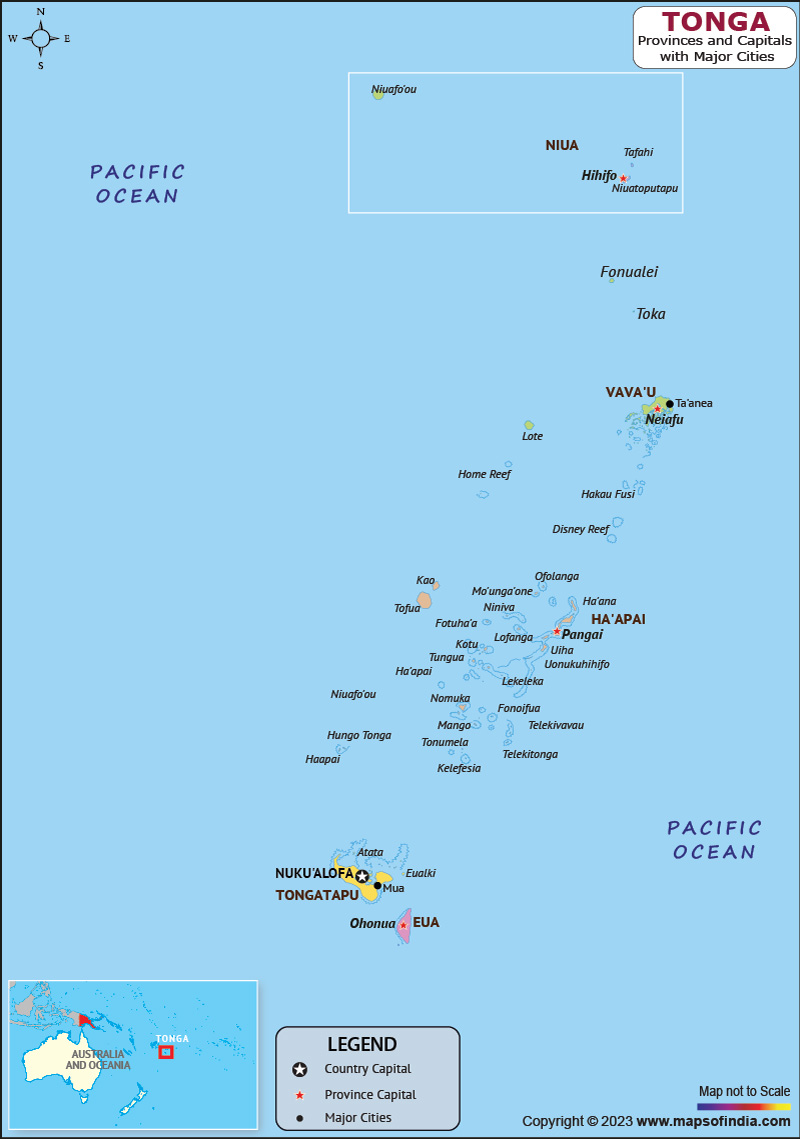





Tonga is a Polynesian kingdom located in the southern Pacific Ocean. It consists of 169 islands, with a total area of approximately 748 square kilometers. The capital city is Nuku'alofa, located on the main island of Tongatapu. As of 2021, Tonga's population was estimated to be around 108,898 people. The majority of the population is of Tongan descent and the official language is Tongan, although English is also widely spoken. Tonga is known for its stunning beaches, coral reefs, and friendly people, and has a rich cultural heritage, including traditional music and dance, as well as a strong focus on community and family values.
History:
The first Polynesian settlers arrived in Tonga more than a thousand years ago, beginning the country's history. In the 10th century, the first Tongan empire was founded, and by the 13th century, Tonga had grown to be a significant regional power. Dutch explorers were the first Europeans to arrive in Tonga in the 17th century, and then British missionaries and commerce. Tonga is the oldest and only surviving monarchy in the Pacific, having adopted the constitutional monarchy form in 1875 after never having been colonized. Tonga underwent political and social change during the start of the 20th century as a result of the adoption of a new constitution in 1900 and the influx of new Christian missionaries.
Culture:
The culture of Tonga is dynamic and rich, and it is firmly based on local customs and principles. The music, dancing, visual arts, and attire of the nation all reflect its rich cultural legacy. Ta'ovala, or woven mats, are worn over tupenu, or wrapped skirts, as part of traditional Tongan dress. The beautiful, vibrant tattoos that Tongans are famous for possess both cultural and spiritual significance. Tongan culture places a high value on music and dance, with ancestors passing down their own traditional songs and dances. On important occasions, traditional Tongan dances like the me'etu'upaki and the lakalaka are performed. These dances are known for their elegant movements and coordinated group performances. Tongan culture is renowned for placing a high value on family and respect for elders, and there are a number of cultural practices and ceremonies, such as the kava ceremony, that reflect these values.
Language:
The official language of Tonga is Tongan, a Polynesian language that is closely related to Samoan and Hawaiian. Tongan is spoken by nearly all of the country's population, and is taught in schools alongside English. In addition to Tongan and English, other languages such as Fijian, Chinese, and Tuvaluan are also spoken in Tonga due to the country's history of trade and migration.
Geography:
The islands of Tonga are of volcanic origin and are surrounded by coral reefs, making them popular with divers and snorkelers. The islands are characterized by lush tropical vegetation, with coconut palms, banana trees, and breadfruit trees among the most common plants. Tonga's climate is tropical, with warm temperatures year-round and occasional cyclones during the rainy season. The country's economy is largely based on agriculture and fishing, with tourism also playing an important role. The geography of Tonga, with its stunning beaches, coral reefs, and tropical vegetation, make it a popular destination for tourists seeking a unique and unspoiled natural environment.
| Official Name | Kingdom of Tonga |
| Capital | Nukuʻalofa |
| Population | 108898 |
| Area | 748 km2 |
| Currency | Paʻanga (TOP) |
| Religion | Christianity |
| Language | Tongan, English |
| Major Cities | Neiafu, Haveluloto |
FAQs
Q1: What is Tonga famous for?
Tonga is famous for its tropical islands, coral reefs, traditional Polynesian culture, royal heritage and humpback whale encounters. It is also one of the few Pacific island nations that was never formally colonized.
Q2: Where is Tonga located?
Tonga is an island country in the South Pacific Ocean, east of Fiji and south of Samoa. It consists of more than 170 islands, many of which are uninhabited.
Q3: What is the capital city of Tonga?
Nuku'alofa is the capital and largest city of Tonga. It is located on the island of Tongatapu and serves as the country's main political, commercial and cultural center.
Q4: Why is Tonga called the Friendly Islands?
Tonga is traditionally known as the “Friendly Islands,” a name associated with the welcoming reception given to European explorers. The name reflects the country's long-standing reputation for hospitality.
Q5: What are the main islands of Tonga?
The major island groups of Tonga are Tongatapu, Ha'apai, Vava'u and the Niuas. Tongatapu is home to the capital, while Vava'u is particularly popular for marine tourism and whale watching.
Q6: What is Tonga's traditional culture like?
Tongan culture places strong importance on family, community, traditional dance, music, ceremonies, handicrafts and respect for elders. The Tongan language remains an important part of the country's cultural identity.
Q7: When is the best time to visit Tonga?
The dry and cooler period from May to October is generally a popular time to visit Tonga. The months from July to October are especially well known for opportunities to see humpback whales in Tongan waters.
Last Updated on: September 15, 2026

