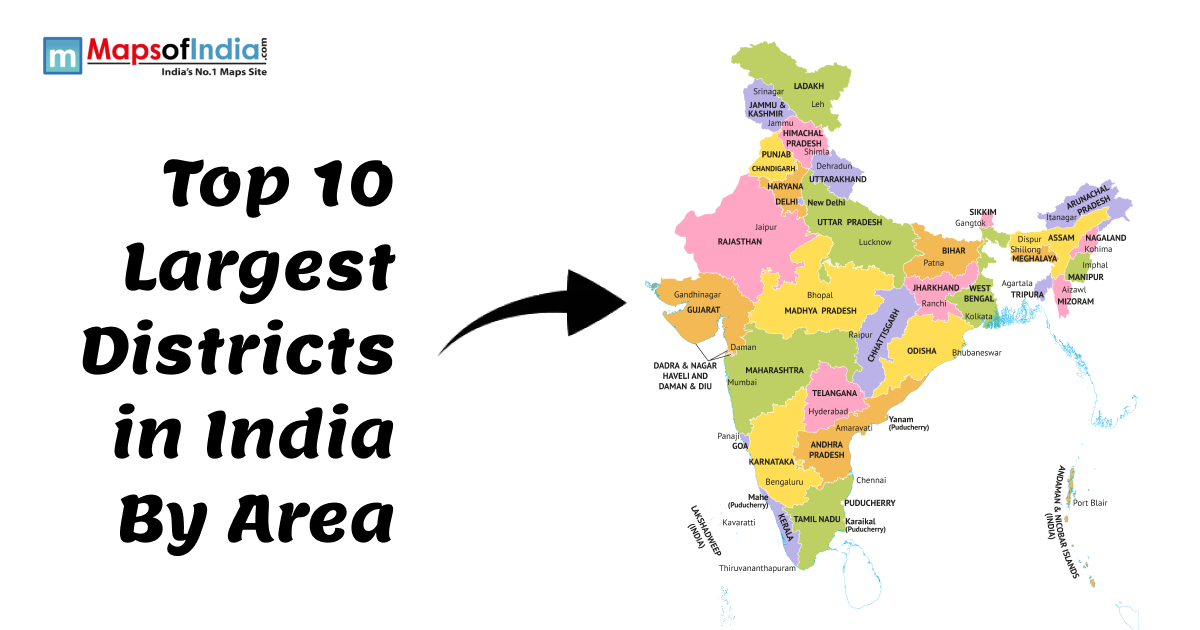
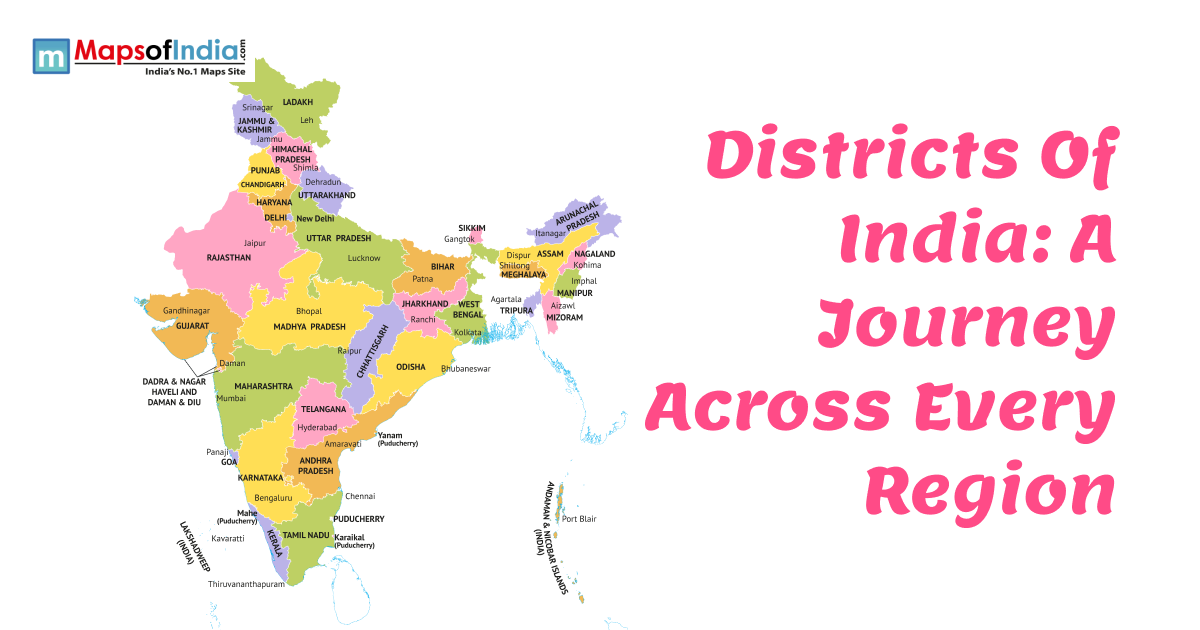
The vast regions of India are divided into districts, and each of these feels unique. One may be so full of small streets that another may be so wide that there are no inhabitants. Some are located in the sand of endless sands, some are located in the mountain's steep peaks. Enormous ones are found out west near barren dunes or up north along icy slopes. Several of these are tall and stand on the tablelands of the south that have been carved by time. Large zones are responsible for activities such as watering the rules and nature care, etc. Size does not equal importance, but size is a determinant of how things work.
Kutch, Gujarat
It is the largest district of India by area, covering 45,674 square kilometres of land in western Gujarat. It's home to the vast salt flats, the Great Rann of Kutch, which aren't the only thing to catch attention in the skies over this area. Crafts are handmade, making each unique and distinctively formed by generations of tradition. The weather changes drastically, with hot summers and cold winter nights. Special economic corridors are lined with factories buzzing alongside coastal ports. In a place where unexpected corners grow, wildlife flourishes in a space that morphs with the seasons. People from across the globe visit every year due to its rich traditions, like the popular Rann Utsav.
Leh, Ladakh
Leh district is the second largest district in India with an area of approximately 45,110 km² in the Union Territory of Ladakh. It is located in the high altitude Himalayan region, with some of the highest roadable passes and cold desert areas in the world. The Buddhist monasteries, Pangong Lake and adventure tourism are the glaring features of Leh. The district is very sparsely populated, with extreme climate conditions, which make its administration and infrastructure development difficult. It is as if it is a kingdom of mountains and monasteries in the north, setting the border of India.
Jaisalmer, Rajasthan
The land is wide here, almost thirty-eight thousand four hundred one square km of unspoiled land in western Rajasthan. Golden forms the buildings, illuminates the old fort, and rises like a dream come true. Life goes slowly in the midst of shifting sands in the heart of the Thar Desert. Ride a camel and wander across dunes, carrying tales from the past. There is a serene tension in the air near the border with Pakistan. Old rhythms reverberate between walls that have absorbed the heat of the sun and narrow streets. A wind, war, trade, and song-carved place.
Barmer, Rajasthan
Barmer district covers an area of about 28387 sq.km. in the wide open skies of Rajasthan. Fuelled by substantial oil and gas deposits, it plays a key role in energy production. Villages, ancient shrines, and open dunes are found on dry land, running through them. Its inhabitants continue to preserve the vibrant songs, arts created by hand and old customs. A place where strength is silent, nations are built, and yet they hold on to their heritage.
Bikaner, Rajasthan
Bikaner is situated in the state of Rajasthan with almost 27,244 sq. km. of area. It was once the capital of the kings, and their tales of history can be heard on the streets of the fort of Junagarh and the holy temple of Karni Mata. The land is wide enough, and open ranches are where camels are raised by the farmers not far away. A unique desert setting has developed here, and life thrives in the hard sands. People eat crispy Bikaneri bhujia in the roadside stalls and in their homes. Sand dunes are a river of history, shaping the life of the people, their diet and their memory.
Jodhpur, Rajasthan
Spread over an area of nearly 23 thousand km², Jodhpur is located beyond the dunes in the western part of Rajasthan. It is said to be the “Blue City”, built under high sandstone walls, with houses painted in a dark blue colour. Mehrangarh Fort looms majestically above them all, like a guardian of the land from the past. In the area, the heat shines in open areas, and dry plains give way to sporadic scrub. They are aware of the nature, but also of the numerous layers of history that are embedded in the rocks. Its palaces speak louder than the masses; the place is steeped in old royalty.
Anantapur, Andhra Pradesh
The total area of Anantapur is around 19,130 Sq km in the state of Andhra Pradesh, which has extensive areas. Farms rise against the back of tilled fields with an unrelenting sun, but industry is a slow riser here, too, following rich minerals under the earth. The soul of this part of India is indomitable; it is the harmonious balance of work and difficulties.
Kurnool, Andhra Pradesh
The district of Kurnool in Andhra Pradesh occupies an area of about 17658 square kilometres. It is home to the ruins of the Vijayanagara Empire, which have many stories to tell embedded in the crumbling stone walls. Towers of old temples stand quietly among the rocky hills, standing long after the fall of empires. The tremendous Srisailam dam has sliced the river, influencing both land and water. Minerals are concealed under the surface, such as iron, limestone and more, hidden under dirt paths and dry fields. Once purely ancient ground, now roads cut through time, linking past echoes with today's motion.
Prakasam, Andhra Pradesh
Prakasam district is spread across an area of almost 17,626 sq. km. on the coast of Andhra Pradesh. The consistent agricultural production over the years has made fertile lands here to produce a lot of the region. The waves are not only hitting the land, but long stretches of it where people are making their livelihoods beyond fishing boats that bob near the shore. The bustling harbours are located next to the expanding factory zones, both of which flow into trade routes that are significant. It's not just another dot on the map, but a significant component of the state's economy: soil, sea and work.
Lahaul and Spiti, Himachal Pradesh
Lahaul and Spiti are spread over an area of 13,835 sq. kms. in the high mountain regions. It is a part of Himachal Pradesh, but it seems far removed and isolated according to nature's rhythm. There is hardly any place in the world quite like its natural topography, rugged and lonely, formed by wind and time. Monasteries clinging to the walls of the cliffs, centuries frozen within the walls. It's a cold world, but life persists in thinly populated villages in narrow valleys. Tradition is alive and well in areas where modernity fails to penetrate. Easily does not do well here, but those who come here remember forever.