






About
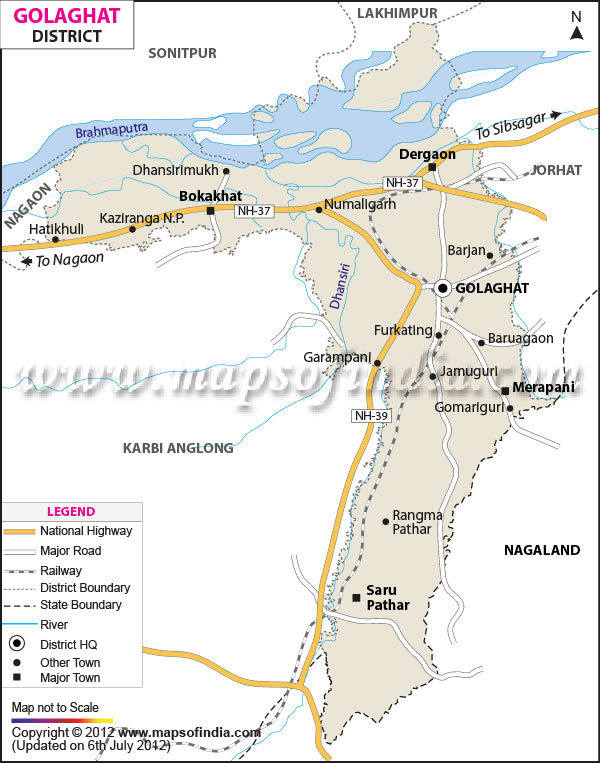
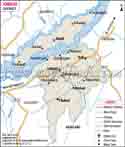
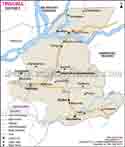
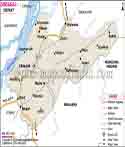
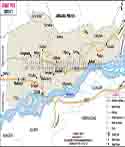
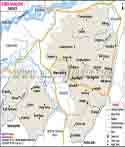
Golaghat is located in Upper Assam. Golaghat is a mix of plains, forests, rivers, tea plantations, farm areas and wildlife reserves. Also connected to Kaziranga National Park which is a famous tourist destination in Assam. Thus for farming, industry, wildlife tourism, trade and local services Golaghat is very important.
Golaghat has excellent connectivity to the rest of Assam. You can see National Highways 37 and 3 which connect the district to key towns. Also in the district are the railway stations of Furkating and Sarupathar. These networks in turn help in the movement of people, goods and visitors between Golaghat and the balance of the state.
In that district you can see a mix of rural and urban settings. In the villages you can find that agriculture is the mainstay which supports large numbers of families. As for the towns like Golaghat and others you can see that they are centers of trade, education, health care, banking, transport, and small scale business. This diversity is what puts Golaghat on the map in terms of the economy of Upper Assam.
History & Culture
Golaghat’s history is very old. At Nagajari Khanikar village in Sarupathar you can find rock inscriptions, old fort ruins, brick structures, temples and tanks which tell us of an ancient kingdom in the Doyang-Dhansiri valley. The area was ruled by Kachari before the Ahoms took over the valley in the 16th century.
The Ahom government introduced great change into that area. Officer in charge Morongi-Khowa Gohain ran the region. People from all over the Ahom kingdom settled in the area. This brought about a mixed social setting which saw many communities live near each other.
The Doyang-Dhansiri valley became a part of the Sibsagar district’s Golaghat subdivision in 1846. Later in 1987 on August 15th Golaghat broke away to become a separate district after which it was separated from Sibsagar district.
In the middle of the 19th century markets developed which gave rise to the name Golaghat. “Gola” is a market and “Ghat” is a river port. Thus the name of the place reflects its past in local trade and river transport.
Culture in Golaghat is that of Assamese traditions, village customs, religious events, handloom work, music and local food. Namghars and temples are at the core of community life. Festivals and religious gatherings see people from nearby villages and towns come together.
Religious sites are a large part of what makes up the story of Golaghat. At which also included Athkhelia Namghor, Negheriting Shiva Doul, and other vintage religious areas that still draw in local and out of town visitors. These places serve as a connection between present day Golaghat and the past of Assam.
Economy
The economy in Golaghat is based on agriculture, tea, oil and petroleum products, trade, transport, tourism and local services. Agriculture supports the large rural population. In different areas of the district you can see the growth of rice, vegetables, sugarcane, pulses, oilseeds, fruits and spices. Also of great importance is the tea crop.
Agriculture plays a large role in Golaghat. In terms of what is grown there are reports of rice, vegetables, sugarcane, pulses, oilseeds, fruits, spices and plantation crops in the district. Tea, rice and other farm produce supports rural families and local markets.
Government Sector
Government in Golaghat supports a great deal of what goes on in the district. The district administration runs into land records, public services, welfare programs, disaster response, local development and also other functions. Also in the district you will find the Agriculture, education, health, police, public works and social welfare departments which all provide services.
Government programs which support farmers also run out of the government offices. In each district there are agriculture subdivisions and development blocks which in turn see that government agriculture projects reach out to rural areas.
The public in Golaghat are served by the public education and health sectors. We see schools, colleges, hospitals and other public entities which also provide employment and day to day services.
Public Sector
The public sector plays a key role in the Golaghat economy. Agriculture still is a very important element in public sector support. At district agriculture offices farmers get information and support related to crops, farm methods, irrigation and government programs. From agriculture reports you can see a large area dedicated to rice production as well as to that of vegetables, fruits, spices and other crops.
The petroleum industry also plays a large role in our district. In Numaligarh and the surrounding areas you can see a great deal of industrial activity related to petroleum products. Also as a result there has been growth in the need for transport, maintenance, supply and related support services.
Services Sector
The services sector includes shops, hotels, restaurants, transport, banking, education, health care, tourism and small businesses. In Golaghat town you can see a key center for local trade. Also in Dergaon, Bokakhat, Sarupathar and Borpathar which in turn support the nearby villages.
Tourism is the driver which puts food on the tables of hotel and restaurant owners, which puts money in the pockets of drivers and guides, which fills the registers of shops and local vendors. Common Service Hubs which are a component of the local services economy. The district website reports 156 registered CSHs, out of which 110 are reported to be functional in the available district data. These hubs provide citizen services, bill payment, banking, insurance, pension support, education and tele-health services.
Transport is also a very important service in Golaghat. The district is connected via roads to Jorhat, Nagaon, Guwahati and other parts of Assam. Hotels, restaurants and shops which in turn benefit from tourism. In the Golaghat area of the park we see visitors to Kaziranga, also local and regional visitors which are drawn in by religious and historical sites.
Tourism
Tourism in Golaghat is of many types including wildlife, temples, archaeological sites, village locations and cultural places. In one district there are a variety of tourist options.
In the Golaghat region of Kaziranga you can get to wildlife areas near Bokakhat and Kohora. For bird watching, safari trips, and natural attractions tourists usually come.
Deopahar is a very important archaeological site which is near to Numaligarh. The site is a resource for guests to learn of the past in that area. Also Deopahar is near to forest which provides a natural setting to the visit.
In the hillock near Dergaon stands the Negheriting Shiva Doul. It is from the Kachari period which the original temple comes from. The present structure of the temple was put up by Ahom King Rajeswar Singha in 1765 which was built on the site of an earlier temple which had perished. The temple has deities of Shiva, Vishnu, Ganesha, Surya and Durga.
At the hilltop site, with ancient temple structures and rich in religious value, Negheriting Shiva Doul is a key player in Golaghat tourism.
Athkelia Namghor which is a famous religious site located at the confluence of the Ghiladhari, Matrang and Kakodonga rivers. King Gadapani of Ahom built the temple in 1681. During the month of Bhado large numbers of devotees visit. The area is very much a part of the Assamese religious culture. Also you will see the local river and village setting.
Birangana Sadhoni Kalakshetra is at a distance of 3 km from Golaghat town. It pays tribute to Sati Sadhani, the ultimate Chutiya queen. The site has a statue, an auditorium, open air auditorium, children’s park and boating lake.
Jugibari Beelpaar is a village tourism destination in Khumtai. The lake has views of the sunrise and sunset. During winter migratory birds visit. Local women’s self help groups and community members sell food and handicrafts to visitors.
Demographics
Golaghat saw a population of 1.066 million in 2011 according to the census. Also the district reported a literacy rate of 77.43%. The population in the district is a mix of a large number of towns and villages.
The Assam language is very much a part of their daily life. Also in many areas other languages and community languages are used. In religious places, at festivals, in food habits, music and village customs you will see the cultural diversity which they have in Golaghat.
Administration
Golaghat is in the Upper Assam division. Also it’s the district headquarter. At present the district profile includes three co-districts, six revenue circles, eight development blocks and 108 Gaon Panchayats.
The present district is made up of five towns and 622 villages as per the latest data. They have 12 police stations. The District Commissioner is the head of the district administration. At present Shri Biswajit Phukan, ACS, is the District Commissioner which is reported on the district’s website.
District administration is into a wide range of public services which include revenue matters, law and order, welfare programs, disaster response, development projects and public services. Also the district puts out a lot of online citizen services through e-District and Common Service Centres.
| Official Name | Golaghat District |
| Location | Assam |
| Capital | Dispur |
| Area | 3502 sq. km |
| Population | 1,066,888 (2011 Census) |
| Religion | Hinduism, Islam, Christianity and other faiths |
| Language | Assamese, Bengali, Hindi and other local languages |
FAQs
Q.1: What is Athkhelia Namghor?
Athkhelia Namghor is a famous pilgrimage site at the confluence of three rivers in Golaghat.
Q.2: Which places do you recommend for tourism in Golaghat?
Kaziranga National Park, in Deopahar which also includes Negheriting Shiva Doul, Athkhelia Namghor, Birangana Sadhoni Kalakshetra and Jugibari Beelpaar which are notable.
Q.3: What makes Golaghat important in Assam?
Golaghat is a district which has a mix of farming, tea plantations, industrial growth, wildlife and local trade. Also due to its proximity to Kaziranga it is a key element in the economy which includes tourism.
Q.4: What is Deopahar famous for?
Deopahar is home to ancient temples’ ruins, sculptures, coins, bricks and other archaeological finds.
Q.5: What is the primary economy in Golaghat?
Agriculture, tea, petroleum related industry, trade, transport, tourism and local services are large scale economic activities.
Q.6: Which river is important in Golaghat?
Dhansiri which is the primary river of Golaghat flows into the Brahmaputra.
Last Updated on : October 15, 2026
