

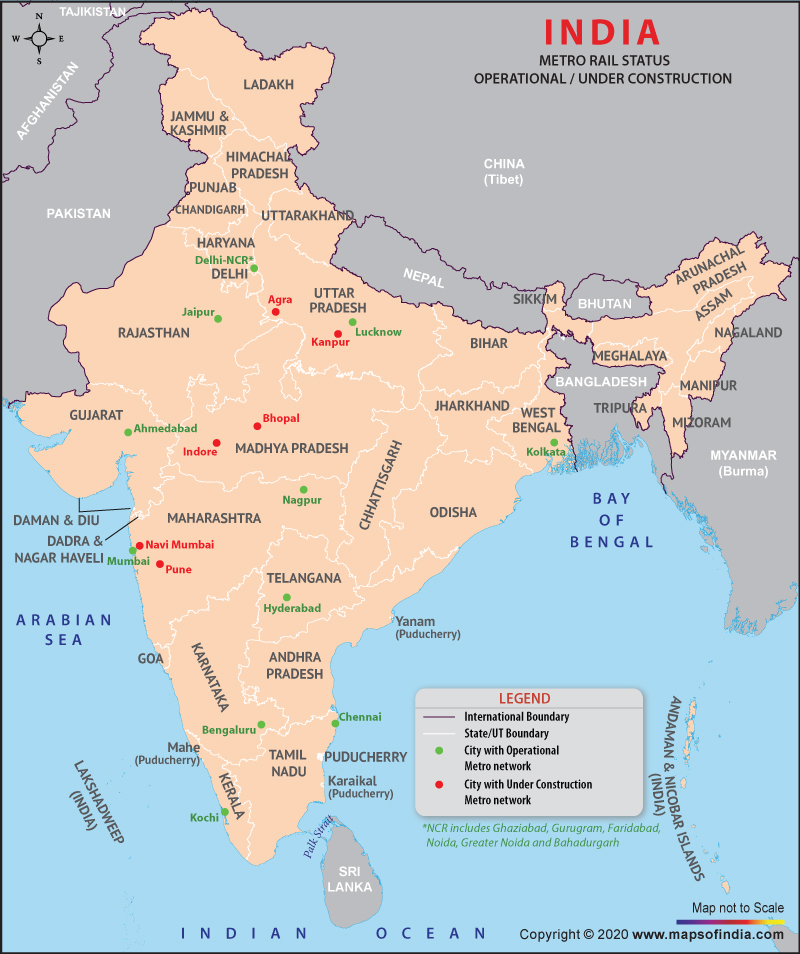





Metro rail networks are now integral to urban transport in major cities and metropolitan regions in India, offering high-capacity, efficient and high-speed public transport to urban travellers. The trains run on a dedicated right of way and are usually electric, with the exception of a few older lines. The alignment of a corridor within a metro system could be above ground, below ground or in the ground, depending on the service need and requirements of the city in question.
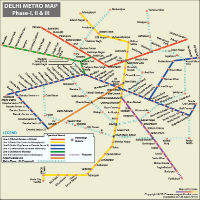
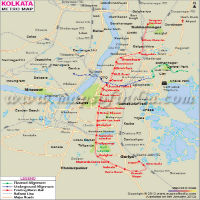
The journey of the metro in India started with Kolkata Metro in 1984. Metro-web has since spread throughout the country to several cities. The Delhi Metro began services in 2002 and is one of the biggest metro systems in India, linking Delhi with adjoining regions of Haryana and Uttar Pradesh.
The metros in India have seen a huge growth in the past 10 years. In 2025, there will be 1,095 km of rolling stock in five cities, up from 248km in 2014. By March 2026, India will boast of close to 1,155 km of operational metro systems across 26 cities, making it one of the world's largest metro networks.
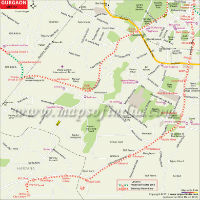
The Rapid Metro Gurgaon was thus India's first private metro rail system, put up and operated by the private sector, that commenced commercial operations in November 2013. It offers local connectivity within the city of Gurgaon and is connected with the Delhi Metro system.
Metro Rail Network in India
Metro services are now available in major cities like Delhi, Mumbai, Kolkata, Bengaluru, Chennai, Hyderabad, Jaipur, Kochi, Lucknow, Ahmedabad, Nagpur, Pune, Noida, Kanpur, Agra, Patna, Indore, Bhopal, Gurugram and Meerut etc, which are part of the expanding metro network in India. The integration of residential neighbourhoods with commercial areas, employment areas, educational institutions, railway stations, airports and other key points is facilitated by metro rail. It is capable of carrying a large number of passengers and may be a viable alternative to road transport in the case of urban areas with high population density.
List of Major Indian Cities with Metro Connectivity
| Metro System | City/Urban Region | State/UT |
|---|---|---|
| Delhi Metro | Delhi-NCR | Delhi, Haryana, Uttar Pradesh |
| Kolkata Metro | Kolkata | West Bengal |
| Chennai Metro | Chennai | Tamil Nadu |
| Namma Metro | Bengaluru | Karnataka |
| Mumbai Metro | Mumbai Metropolitan Region | Maharashtra |
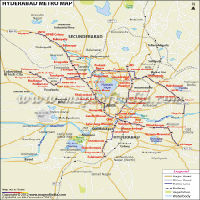
| Hyderabad Metro | Hyderabad | Telangana |
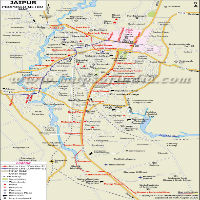
| Jaipur Metro | Jaipur | Rajasthan |
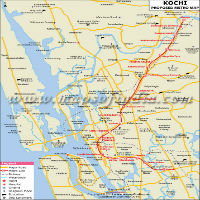
| Kochi Metro | Kochi | Kerala |
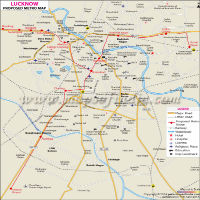
| Lucknow Metro | Lucknow | Uttar Pradesh |
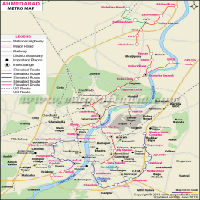
| Ahmedabad Metro | Ahmedabad-Gandhinagar | Gujarat |
| Nagpur Metro | Nagpur | Maharashtra |
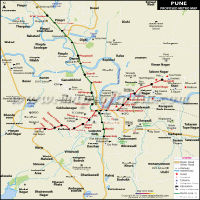
| Pune Metro | Pune | Maharashtra |
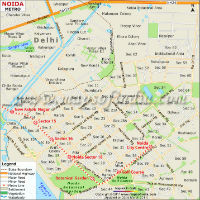
| Noida Metro | Noida-Greater Noida | Uttar Pradesh |
| Kanpur Metro | Kanpur | Uttar Pradesh |
| Agra Metro | Agra | Uttar Pradesh |
| Patna Metro | Patna | Bihar |
| Indore Metro | Indore | Madhya Pradesh |
| Bhopal Metro | Bhopal | Madhya Pradesh |
| Rapid Metro | Gurugram | Haryana |
| Meerut Metro | Meerut | Uttar Pradesh |
Note: Some metro networks extend beyond a single city or administrative boundary. Therefore, the number of metro systems and the number of cities receiving metro connectivity are not necessarily the same.
Meerut Metro and Delhi-Meerut Namo Bharat
Meerut Metro and the entire Delhi-Meerut Namo Bharat corridor were inaugurated in Meerut in February 2026, marking a significant step in the urban and regional transportation infrastructure of India.
Meerut Metro started its operations on 22 February 2026 between Meerut South and Modipuram. It functions on the same infrastructure as Namo Bharat and hence, an integrated urban & Regional transport network is established. The full journey of Meerut Metro takes approximately 30 minutes, with its fixed stops being made during the entire journey.
Delhi-Ghaziabad-Meerut Namo Bharat corridor has been declared as the first regional rapid transit system (RRTS) of India. The full stretch from Sarai Kale Khan (Delhi) to Modipuram (Meerut) opened on 22 February 2026. It has been built for quicker travel of inter-district passengers and offers high-speed regional connectivity from Delhi to Ghaziabad and Meerut.
If we consider Meerut to be a single corridor, Namo Bharat is distinct from Meerut Metro because it is a separate entity. Namo Bharat is a regional rapid transit system for long-distance rapid connectivity between major urban centres, and Meerut Metro is a local urban rapid transit system within Meerut. This is the first of its kind in India, which is based on the shared-infrastructure model.
What is Namo Bharat RRTS?
Namo Bharat is India's regional rapid transit system designed to provide fast and frequent connectivity between important urban centres in the National Capital Region. It differs from a traditional metro system that mostly operates shorter inter-urban distance trips within the city or metropolitan area.
The first Namo Bharat corridor is the Delhi-Ghaziabad-Meerut corridor, which runs from Sarai Kale Khan, in Delhi, to Modipuram, in Meerut. The 82.15-km stretch has 16 Namo Bharat stations, and it connects other metropolises like Meerut, Modinagar, Ghaziabad and Delhi. The system is designed with an operational speed of 180 kms per hour and will cut down the travel time between Delhi and Meerut to less than an hour.
The corridor is also connected to other modes of public transport, such as the Delhi Metro and the Indian Railways, which improve the mobility of the region.
Types of Metro Routes
It is found that the Metro corridors in India can be broadly categorized on the basis of their physical structure and development.
High-level metro corridors are built over the roads and other urban infrastructure. Widely used in the cities of India, as they can be designed to utilize the rail space without requiring too much surface space.
The underground metro corridors are tunnelled under roads, buildings and other structures. They are especially beneficial in urban settings where sites for a new building may be limited in the amount of vertical space available or in the amount of surface space available for a new building.
At-grade metro corridors are surface-running corridors where enough land is available. Rail can be elevated, at-grade or underground.
Another way of categorizing metro routes is by whether they are in development or already built. Corridors are used for operating trains, with under-construction corridors being built for future services. Proposed or planned corridors are at different stages of planning, approval and development and may change as projects progress.
Growth of Metro Rail in India
The expansion of metro rail has transformed urban mobility in India. In 2014, metro services were available in only five cities with about 248 km of operational network. By 2025, metro connectivity had expanded to 26 cities, with the operational network reaching about 1,095 km. The network increased further to approximately 1,155 km by March 2026.
Ridership has also been significantly rising with the growth of networks. The Government of India has estimated the ridership in metro cities to grow from approximately 28 lakh passengers per day in 2013-14 to over 1.15 crore a day by 2026.
The expansion has not been restricted to the big metropolises of India. Urban rail transport is becoming a significant mode of transport in emerging metro cities like Bhopal, Indore, Patna, Kanpur and Agra.
Important Metro Rail Developments in India
India's metro sector has witnessed several major infrastructure achievements in recent years. Kolkata Metro opened the country's first underwater metro tunnel beneath the Hooghly River in 2024. The project demonstrated the use of advanced tunnelling and engineering techniques for urban rail transportation.
The Water Metro is an integrated public transport system that uses water to transport passengers in Kochi, which complements the city's existing metro rail system. Worked out connectivity between islands, areas and Kochi with electric-hybrid boats.
Another major development is Namo Bharat and Meerut Metro to be integrated on a common platform in Meerut. This helps to integrate high-speed intercity and urban mobility within the same corridor.
Importance of Metro Rail in Indian Cities
Metro rail plays an important role in meeting the transportation requirements of India's rapidly growing urban population. It can carry large numbers of passengers efficiently and provide predictable journey times on dedicated corridors.
The major benefits of metro rail include:
- High passenger-carrying capacity
- Faster travel through congested urban areas
- Reduced dependence on private vehicles
- Better connectivity between different parts of cities
- Improved access to employment and educational centres
- Integration with railway, bus and airport networks
- Support for more sustainable urban transportation
- Reduced pressure on heavily congested roads
FAQs
Q1: Which was the first metro rail system in India?
The Kolkata Metro was India's first metro rail system. Commercial metro services began in 1984.
Q2: When did Delhi Metro start operations?
Delhi Metro began commercial operations in December 2002.
Q3: How many cities in India have operational metro services?
According to the Government of India, metro services were operational across 26 cities by 2025. The operational metro network reached approximately 1,155 km across 26 cities by March 2026.
Q4: Which is India's largest metro network?
The Delhi Metro network is India's largest metro network, serving Delhi and parts of the National Capital Region across Delhi, Haryana and Uttar Pradesh.
Q5: What is Namo Bharat?
Namo Bharat is India's Regional Rapid Transit System (RRTS), designed to provide fast regional connectivity between major urban centres. Its first corridor connects Delhi, Ghaziabad and Meerut.
Q6: Is Namo Bharat the same as a metro?
No. Namo Bharat is a regional rapid transit service, while metro rail is primarily designed for urban and metropolitan travel. The Delhi-Meerut corridor provides regional connectivity, whereas Meerut Metro provides local connectivity within Meerut.
Q7: When did Meerut Metro start?
Meerut Metro was inaugurated and began operations on 22 February 2026, providing services between Meerut South and Modipuram. It operates on the same infrastructure as the Delhi-Meerut Namo Bharat corridor.
Q8: Which was India's first privately developed and operated metro?
Rapid Metro Gurgaon was India's first privately developed and operated metro rail system. It began commercial operations in November 2013.

Last Updated on : July 28, 2026
