





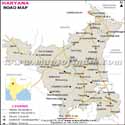
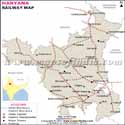
About
Haryana is an Indian state in the north of the country that has a prominent position in the country in terms of historical, cultural and economic context. It is situated close to the national capital and has developed rather quickly during the last several decades while preserving its traditions. The region is a mixture of the rural legacy and the urban industrial development, with its agricultural success, rich folk culture, and strategic presence. Haryana has fertile lands, vibrant towns and changing infrastructure to add to the development of India at large. The state has been mostly linked to the fact that it has a very agrarian foundation, good sports culture and unique traditions that still characterizes it in the modern world.
Haryana state came into existence, and this was a significant milestone in the reorganization of India after independence. Nowadays, it is an image of progress and still maintains its historical integrity. The fact that it is near Delhi has been central to developing its economic and social interactions, rendering it a key component of the National Capital Region.
History
The history of the state of Haryana is closely connected with the whole history of the north of the Indian subcontinent. The area has existed since times immemorial and was mentioned in various early writings and scriptures. It is a common opinion that it was a part of the ancient Vedic civilization, in which most of the important events of Indian history took place. Archaeological evidence has shown that settlements were present here in the Indus Valley Civilization and this has indicated that the area was a major centre of early human activity.
Haryana has one of the most significant historical connections with the Mahabharata. The great fight of Kurukshetra, which is recounted in the epic, is said to have happened in this part. This has ensured that the region has been a religious and cultural heritage site over the centuries. The region over a period of time fell under the control of different dynasties and empires that included the Mauryas, Guptas, and then the Delhi Sultanate and the Mughal Empire.
Haryana was marked by a lot of invasions because this was one of the regions that were at strategic locations along the major routes to Delhi. The political and social transformations were usually significant due to these invasions. The territory also contributed to the conflicts between the various empires over Northern India. It was a key administrative and agricultural region, which supplied the economy of the empire under the rule of the Mughals.
During the colonial times, Haryana was a territory of the Punjab Province under the British. The people of the region were also an active part in the struggle for freedom in India, participating in different movements against the colonial power. Following independence in 1947, the reorganization of the states was due to linguistic and administrative factors. Haryana was carved out of the former Punjab on 1 November 1966 under the Punjab Reorganisation Act, 1966, primarily on linguistic grounds, with Hindi-speaking areas forming the new state. In this reorganization, a new stage in its political and economic formation was the beginning of a new phase.
A lot of transformation has taken place in Haryana since its formation. It has advanced from being more or less an agricultural area to becoming an industrial and commercial centre. With metropolitan hubs such as Gurgaon (today Gurugram) being set up with corporate offices, several international and national enterprises have moved there, and because of this, the area’s development has boomed.
Culture
Haryana has a rich and vibrant culture that is based on traditions that have been maintained over the generations. It is a manifestation of how simple and strong its people are and how they have preserved some of their traditions to date, regardless of the process of modernization. The culture of the state is manifested in the form of its festivals, music, dancing, clothes, and social traditions.
Folk traditions are one of the most impressive features of the Haryana culture. There are folk songs and dances that are significant in social events and festivals. Famous dance styles like Loor, Khoria, Saang, Phag and Dhamal are used during festivals and other special events. Many of these dances describe the themes in day-to-day life, seasons and historical events with traditional musical instruments such as dholak and been.
There is a lot of enthusiasm for festivals in Haryana. Special local practices and rituals are followed in such events as Holi, Diwali, Teej and Baisakhi. Teej, especially, is of special interest to women, who celebrate it with swings, songs and traditional dress. Harvest festivals are also significant as the area is agrarian.
Haryana traditional wear is very basic but unique. Men wear dhoti-kurta with a turban, whereas women wear ghagra-choli or salwar-kameez, which is usually covered with colourful dupattas and traditional jewellery. The attire is not only practical, but also indicative of rural life and climate.
Haryana cuisine is unique, simple and nutritious. Wheat-based foods like roti and paratha are considered staple foods and are usually eaten with dairy products like butter, ghee, and curd. Foods like bajra khichdi, kadhi and churma are also preferred. This focus on dairy is due to the fact that the state is heavily centred around cattle rearing and producing milk.
The social structure in Haryana is customarily community-based, where the value of family and making decisions collectively are major priorities. Village councils, or panchayats as they are referred to, are really important in ensuring social order and solving disputes. Rural life still continues to be affected by these traditional systems even after modernisation.
Language
Haryana has diverse languages which are influenced by history. Hindi is the official language, while Punjabi is the second official language in the state. Haryanvi is the most widely spoken regional dialect. Nevertheless, in real life, the spoken language in regions of the state tends to differ. The commonly spoken language among the local population is the Haryanvi dialect of Hindi.
Even Haryanvi has variations in itself with different districts and communities. It is distinguished by a unique pronunciation, words and sayings, giving it a distinct identity. The dialect has the essence of countryside life, and it is commonly used in folk songs and the local theatre.
Other languages and dialects are also present in specific regions including: Punjabi, Urdu, Bagri and on top is Haryanvi. All these languages are the products of historical migrations and cultural interplay. Migration and globalization have made urban centers more diverse in linguistic terms, and the English language is widely used in business and education.
The language in Haryana does not simply play the role of communication, but is also an important part of the culture. The local dialects are used to preserve folk literature, proverbs, and oral tradition, which offers an insight into the values, beliefs, and experiences of the people. In recent years, some efforts have also been taken in order to encourage and maintain Haryanvi literature, media, and cultural programs.
Geography
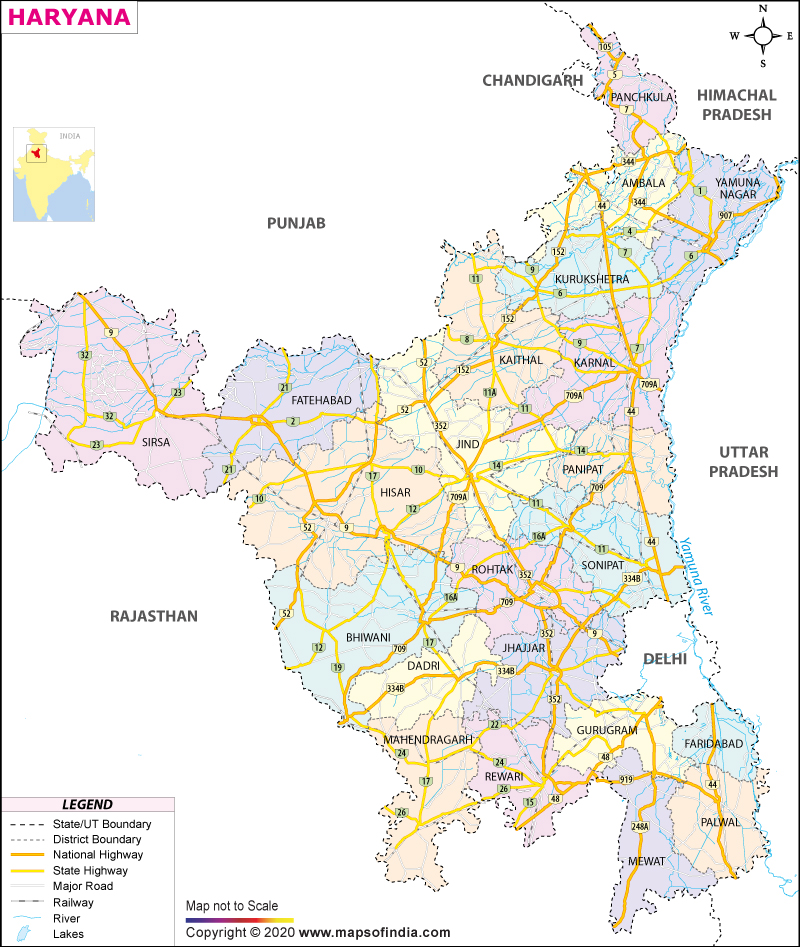
Haryana has a varied geography that has been instrumental in determining its economy, way of life and patterns of settlement. The state is in the northern part of India and shares borders with Punjab, Himachal Pradesh, Uttar Pradesh and Rajasthan, while the National Capital Territory of Delhi lies on three sides of the state. Chandigarh serves as the shared capital of Haryana and Punjab.
The topography of Haryana is similar to that of flat plains, and it is an agricultural land. It grows wheat, rice, sugarcane and cotton because of the fertile alluvial soil, which is coupled with a vast irrigation system. The state even contributes greatly to food grain production in India, and it is commonly known to be one of the breadbaskets of the country.
Yamuna River is the eastern border of Haryana, and it is a primary source of water used for both irrigation and domestic consumption. In addition to the Yamuna, a number of canals and irrigation canals have been constructed to facilitate sufficient water to all parts of the state. Such systems have been critical in increasing agricultural productivity.
Haryana is basically a semi-arid region having hot summers, cool temperatures in winters and receives most of its rainfall during the southwest monsoon (July–September). The shift in temperature could be dramatic, where the summers tend to be hot whereas the winters could be bitterly cold. The climatic conditions determine the cropping patterns in the area.
Aravalli- The Aravalli range is one of the oldest mountain ranges in the world, which extends to the southern area of Haryana. Though they are not that high in the state, these hills enrich the ecology of the area. They also serve as a natural barrier, which affects the weather and provides habitat to several plant and animal species.
In the past few years, urbanization has changed the face of Haryana's geography in great ways. Cities such as Gurugram and Faridabad have become big industrial and commercial centres, and they are attracting investments and labour force throughout the nation. This growth has resulted in alteration of land use, growth of infrastructure and environmental issues.
However, even after urbanization, much of Haryana is still rural, and villages constitute the largest part of the social and economic organization of Haryana. The interaction between the country and the city provides an interesting environment in which the old and new are interacting. The geography of the state still determines its flow of development, combining the tradition of agriculture with the development of industry.
Haryana State Information | |
|---|---|
| Capital | Chandigarh |
| Date of formation | 01/11/66 |
| Governor | Prof. Ashim Kumar Ghosh |
| Chief Minister | Shri Nayab Singh Saini |
| Tourist attractions | Sultanpur National Park, Damdama Lake, Pinjore Gardens, Kurukshetra and Brahma Sarovar. |
| Festivals | Gugga Naumi, Lohri Basant Panchmi |
| Major dance and music forms | Sarangi/Ras Leela, Phag Dance |
| Arts and crafts | Shoes called tilla or kasuri juttis are made from buffalo and goat hide; panja dhurries |
| Languages | Hindi, Haryanvi, Punjabi, Sanskrit, Ahirwati, English |
| Size | 44,212 km2 (17,070 sq mi) |
| Population (Census 2011) | 25,351,462 |
| Rivers | Yamuna, Sarasvati, Ghaggar, Markanda, and many more |
| Forests and wildlife sanctuaries | Sultanpur NP, Kalesar NP, and others |
| State animal | Blackbuck |
| State bird | Black francolin |
| State flower | Lotus |
| State tree | Peepal |
| Major crops | Sugarcane, groundnut, paddy, maize |
| Factoids | Kurukshetra in Haryana is traditionally associated with the Mahabharata and the Bhagavad Gita. |
| Gugga Naumi is a festival that is observed by both Hindus and Muslims. It honours Gugga Pit who could cure snake bites. | |
| No. of District | 22 |
Maps in Other Regional Languages
MOI.AB.19.01.17
FAQs
1. Where is Haryana located?
Haryana is a state in northern India. It shares borders with Punjab, Himachal Pradesh, Rajasthan, and Uttar Pradesh, while the National Capital Territory of Delhi surrounds much of its eastern and southern boundaries.
2. What is the capital of Haryana?
Chandigarh is the capital of Haryana. It also serves as the shared capital of the neighbouring state of Punjab.
3. When was Haryana formed?
Haryana was formed on 1 November 1966 after the reorganization of the former state of Punjab under the Punjab Reorganisation Act, 1966.
4. What is Haryana famous for?
Haryana is known for its agricultural productivity, sports achievements, rich cultural heritage, the historic city of Kurukshetra, and major industrial and IT hubs such as Gurugram and Faridabad.
5. How many districts are there in Haryana?
Haryana has 22 districts, which are divided into administrative subdivisions for efficient governance and public administration.
6. Which languages are spoken in Haryana?
Hindi is the official language of Haryana, while Punjabi is the second official language. Haryanvi, a regional dialect of Hindi, is widely spoken across the state.
7. Which are the top tourist places in Haryana?
Some of Haryana's most popular tourist attractions include Kurukshetra, Sultanpur National Park, Morni Hills, Pinjore Gardens (Yadavindra Gardens), Surajkund, Brahma Sarovar, and Badkhal Lake.
Last Updated on : October 14, 2026
