

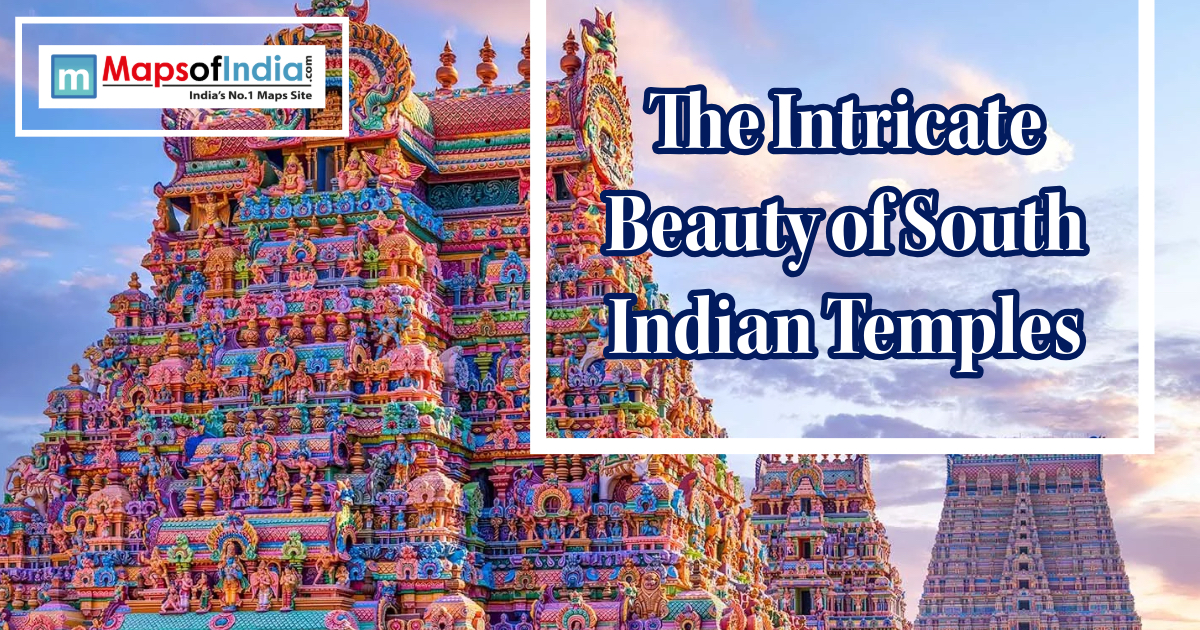
Stone hymns stand where south winds meet prayer. Skyward gates wear crowds of carved souls on their shoulders. Columns wake with gods mid-step, tails twining, petals unfolding. Above, tiny worlds spin in hidden ceilings. Legends stitch through every surface, old wars, divine tricks, village truths. The walls breathe rhythm, shaped by time and hand. Centuries of vision shaped by Chola, Pallava, Vijayanagara, and then Nayaka rulers filled these holy places. Dravidian architecture grew slowly over more than a thousand years. Still, no two temples are ever quite alike. What stands out lives in small things, a flicker in a carved dancer’s eyes, the bend of a flower edge, how an elephant’s nose seems ready to move. Almost like silence shaped into form, built from rock and belief.
The Tall Towers of South Indian Temples
Towering above each large temple in southern India, gopurams shape the view. The higher they rise compared to the main shrine within. During the Chola era, these gateways kept a simpler grace. With the Vijayanagara rulers came greater height and detail. Up high, the Nayaka rulers took things further than before. Standing in Madurai, the Meenakshi Temple wears fourteen tall gopurams like crowns. Covered head to toe, each one shows thousands of stucco shapes in vivid colours. From gods to demons, plus dancers and strange beasts, they rise as if reaching skyward. Stories shift floor by floor, never repeating the same tale twice. Fierce guardian gods appear at the top levels. Upright, they resemble massive tales telling of holiness inside.
Intricate Stone Carvings On Pillars
Rock becomes motion under the chisel of South Indian artisans. From one slab, Chola hands shaped gods mid-leap. At Chidambaram’s Nataraja hall, stillness holds eighty-one steps from an ancient dance code. Stone remembers a muscle twist, a gesture caught breathless. Creatures part lion, part beast-trunk guard later eras on column curves. Horses leap into the air, carrying their riders. Right in the middle of a note, musicians keep playing. During the Nayaka era, artists began carving deeper layers. Shapes push forward from solid rock, almost free-standing. Hidden hinges let certain columns spin slowly. Under temple eaves, frozen music moves without sound.
Beautiful Ceiling Art and Carvings
Temple ceilings are the canvases of some of the most exquisite works of art. The ceiling of Virupaksha Temple in Hampi illustrates various episodes from the Ramayana. The colours of the paintings have not faded even after centuries. Many ceilings of Chola temples are decorated with lotus mandalas. Nayakas artists created their paintings of whole epics on the upper surfaces. The Soundararaja Perumal temple in Thadikombu is an example of a site where changes in the universe are depicted. Characters are flying in the sky alongside the stars and the planets. Stone ceilings usually have geometric designs. There are layers of lotus flowers blooming in the lotus patterns. It is like viewing the painted skies in the heavenly areas of the temples.
Sacred Shapes Meeting Equal Form
At the core of a South Indian temple rests the inner room. Extending from it, covered halls run out in even alignment. Paths channel steps with silent accuracy. Patterns rule each piece, hidden yet firm. Rising over the sacred space, the spire ascends in measured form. Out there, portals echo the symmetry only grander. Taken as a whole, the site sketches a sacred design across the earth. People walk its paths, circling clockwise, one foot ahead of the next. With every round, it’s as if an idea shapes itself through walking. Moving here is like being inside a shape made real, painted calm.
Bronze Icons and Chola Metalwork
Some of the best metal statues ever made come from the Chola period. Craftsmen shaped wax first, adding tiny details by hand. Once carved, the wax melted away after being covered in clay. Liquid bronze poured into the hardened mould slowly. When cool, workers broke open the outer layer to reveal the form beneath. Each piece was then filed down and smoothed out using stones. Finally, a soft glow emerged through careful rubbing. Shiva spins through space in bronze form, caught mid-dance. One gesture at a time, each arm tells an old idea. Fire flickers in his palm, and endless turning begins there. Half man, half woman fused down the centerline. Stillness holds within motion when metal remembers breath.
Temple Tanks and Water Architecture
Big temples often have wide pools called teppakulam. Down stepped paths go into still water. People wash themselves before stepping into holy rooms. Because these basins hold meaning while also being useful. Purity lives in the liquid, along with energy that drives living things. Still water carries blooming lotus flowers. Through certain tanks, fish move slowly. On rafts during yearly floats, the gods rest. Sky and temple towers show clearly in the pool. Mirrors made of water hold sacred images just right.
The Living Tradition of Temple Rituals
Still today, South Indian temples pulse with living faith. Each morning begins the same way, with rituals carried out by priests, never skipped. Deities get bathed during abhishekam, drenched in milk, honey, and sandalwood paste. Then comes alankaram: silk robes wrap them, jewels follow after. Festivals bring sound into every corner of the space. From nadaswaram and tavil comes an old melody, passed down slowly. Vibhuti, along with kumkum goes hand in hand among those who come close. Centuries fold one into another, yet the beat stays fixed. Stone walls hold what breath cannot faith made motion.
Keeping Traditions Alive Around the World
Nowadays, urban expansion and pollution are a threat to many temples. Major monuments are under the care of the ASI. Apart from preserving the temples, the temple trusts also look after the temple worship on a daily basis. When it’s time to restore, they still use traditional materials. The new generations of artisans are being trained in the ancient handicraft techniques. There are hundreds of temples worldwide that have been inscribed on UNESCO’s World Heritage List. Global scholars have taken the time to study the intricacies of Dravidian architecture.
South Indian Temples Stand Apart
What makes them different Its size, precision, and ongoing practice together. Beauty never comes at the cost of function; each piece must earn its place. Sky and faith shape the design, not just stone. Stories live in the grooves of rock, voices speaking even now. Still alive with quiet devotion, the temples stand apart. Not frozen in time, but breathing through centuries, much like structures built to last choose to remain awake.