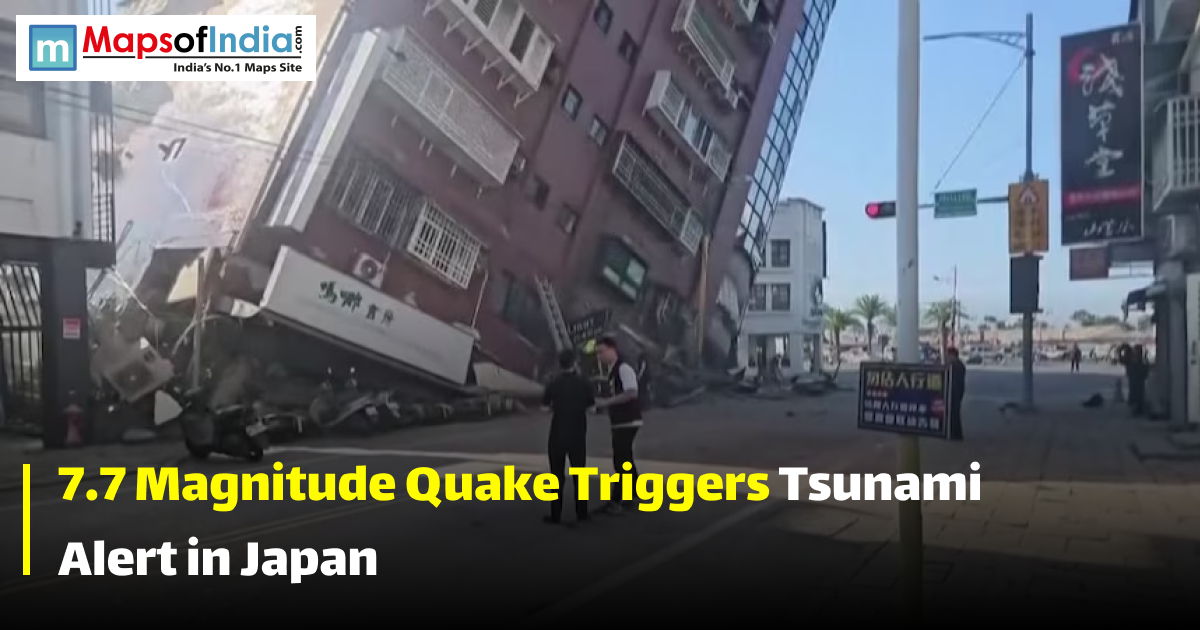
A Powerful Earthquake Strikes Japan
The earthquake was off the northeastern coast of Japan, which had a history of earthquakes. The earthquake was so powerful that it was felt in various areas, even in remote cities. Houses tilted, transport systems were shut down, and emergency procedures were promptly switched on. Japan sits along the Pacific Ring of Fire, an area where a number of tectonic plates converge. This renders the country one of the most prone to earthquakes in the world. Due to this, even the shortest of time shakes can prompt mass reactions on the part of authorities.Why a Tsunami Alert Was Issued
After the quake, the Japan Meteorological Agency had declared a tsunami warning for the coastal regions. In case of an earthquake that takes place under the ocean floor, it may cause enormous displacement of water that may create harmful tsunami waves. Officials cautioned that the waves would be several meters tall and ordered evacuations. People along the coast were instructed to evacuate to higher locations, and sirens and emergency broadcasts were put into effect in at-risk areas. The prompt release of the alert is indicative of the high level of disaster preparedness that exists in Japan and is geared towards responding within minutes of an earthquake event happening.Evacuations and Immediate Impact
To be on the safe side, more than 100,000 people living on the coast were evacuated. Safe measures were taken by closing the public transportation systems, such as trains and highways. The situation was also closely monitored by airports, although there were no significant disruptions. In spite of the power of the quake, the first reports showed there was not much structural damage, and there were no massive casualties. This is greatly because Japan has stringent building codes, and therefore the infrastructure is in a position to withstand even powerful earthquakes. Emergency services were sent to the impacted areas, and the authorities were carrying out a quick risk assessment of essential infrastructure, such as power plants, bridges, and communication systems.Tsunami Threat Turns Out to Be Limited
Luckily, the dreaded tsunami did not occur at the anticipated magnitude. Some coastal regions had some small waves, but they were much less than what had been forecasted. This enabled the officials to reduce the tsunami alert and even lift it in several hours. The rapid re-evaluation helped to avoid unnecessary panic, and, still, people were safe within the critical period after the quake.Understanding the “Megaquake” Concern
Following the earthquake, scientists cautioned that there would be a marginally greater threat of a bigger seismic occurrence, commonly known as a megaquake. Although this does not imply that a larger earthquake is inevitable, it shows that there is a lot of seismic activity in the area. The devastating megaquakes in Japan have occurred in the past, and the 2011 disaster caused a massive tsunami and nuclear crisis. This has made authorities wary and vigilant in keeping an eye on aftershocks.Japan’s Preparedness Stands Out
The most notable thing about this incident is the effectiveness with which Japan managed the situation. Disaster preparedness of the country encompasses:- Early warning systems, which detect earthquakes in a few seconds.
- Restrictive building codes aimed at reducing damage.
- Awareness and drills among the population so that they are aware of how to react.
- State-of-the-art tracking units that deliver real-time reports.