
Unity in Diversity: The Core of Indian Festivals
India marks more than 50 big celebrations each year. Everyone ties back to a unique faith, tongue, or area. Still, together they build up shared pride in being Indian. Diwali, then Holi, followed by Eid, Ganesh Chaturthi slips in next. After that comes Onam. Pongal warms things later on. Baisakhi swings through spring. Durga Puja fills streets with rhythm. Christmas brings quiet joy. Then Buddha Purnima closes loops under full moons. Each gets its spot on the Indian calendar. What sets India apart is how these different traditions are celebrated together.
Festivals as Living History
Each celebration holds many generations of stories behind it. When Rama came back following fourteen years away, that’s what Diwali honours. The tale of Prahlad surviving fire while Holika didn’t, which shapes how people see Holi. After Muslims complete a full lunar month without food during daylight, Eid al-Fitr starts. Back in 1893, Tilak launched Ganesh Chaturthi as a way to unite Indians during colonial times. Onam honours King Mahabali, who returns to Kerala yearly. Because of such tales, the past stays part of everyday living.
Social Equality in Celebration
Festivals sometimes tear down social barriers. At Holi, folks throw colours at strangers and neighbours alike. The wealthy join hands with those who have less. For Durga Puja, public tents open doors no matter who you are. On Gurpurab, temple kitchens feed countless people, no questions asked. Ramadan evening meals bring locals together. During Ganesh Chaturthi parades, wealthy folks join the poorest, moving in rhythm with shared music.
Economic Backbone of the Nation
Festivals make up around 8 to 10% of India’s yearly retail sales. During Diwali, companies rake in more than 2 lakh crore rupees annually. Sweets sellers, gold traders, cloth stores, cracker factories, along gift makers all count on this time. Potters, weavers, local artists, plus skilled workers get most of their income when festivals come round. In villages, markets, and fairs keep the economy running through these seasons.
Culinary Identity Through Festivals
Indian food shifts every 200 km. Holidays spread local dishes across the country. In Gujarat, people eat undhiyu when celebrating Uttarayan. Meanwhile, Tamil Nadu cooks pongal for its harvest festival. Bengal whips up tons of sweets when Durga Puja rolls around. In Maharashtra, folks go for puran poli once Ganesh Chaturthi hits. Down in Kerala, Onam means a big spread of 26 items served together. Up north, Holi’s all about gujiya alongside chilled thandai. Each celebration shows Indians what their region really likes to eat.
Music, Dance and Art Come Alive
No Indian celebration ever goes quietly. Yet in Gujarat, Dandiya plus Garba light up Navratri evenings. Meanwhile, across Maharashtra, Lavani dances pop up during Ganeshotsav shows. While in Assam, Bihu kicks off the fresh year with rhythm. Giddha plus Bhangra brighten Punjab when Baisakhi or Lohri rolls around. In Kerala, rituals like Theyyam team up with Mohiniyattam at temple events. Chennai hosts classical gigs back-to-back each December right when folks gear up for Pongal. These celebrations. That’s what keeps live performance alive.
Family and Community Bonding
Celebrations are the major reasons that families get together again. Diwali or Chhath brings the kids home from metros. Brothers during Bhai Dooj or Raksha Bandhan take the road to see their sisters. Entire villages get together to witness Jallikattu or Ramlila. Localities battle during festivals for the best pandal or rangoli. One after another, these small pleasures become the way of kids’ childhoods in India.
Seasonal and Agricultural Rhythm
Almost all the Indian festivals are dependent on the crop cycles. After the harvest, Pongal praises the sun as well as the animals of the farm. In Punjab, Baisakhi starts when the wheat is harvested. Simultaneously, Onam is a festival that comes after the rice harvest in Kerala. Lohri is the festival that is celebrated all over the north of India with the arrival of the new harvest. Makar Sankranti, the end of winter, is accompanied by kites flying in the air. The festival of Bihu is a result of the first rice harvest and a reason to celebrate. People living in towns are not exceptions; they too find their origins in the earth during these days.
Women at the Heart of Celebration
Women handle nearly every part of getting ready for festivals. From creating rangoli to tidying houses, they take care of it all. Cooking festive meals comes next, followed by fasting and prayer. Festivals like Karva Chauth, Teej, or Savitri Vrat centre around women’s roles. When Navratri arrives, families honour little girls as living goddesses. In Bengal, ladies take part in Sindoor Khela during Vijayadashami. Yet celebrations offer Indian women a stronger voice and presence.
Visual Identity of India
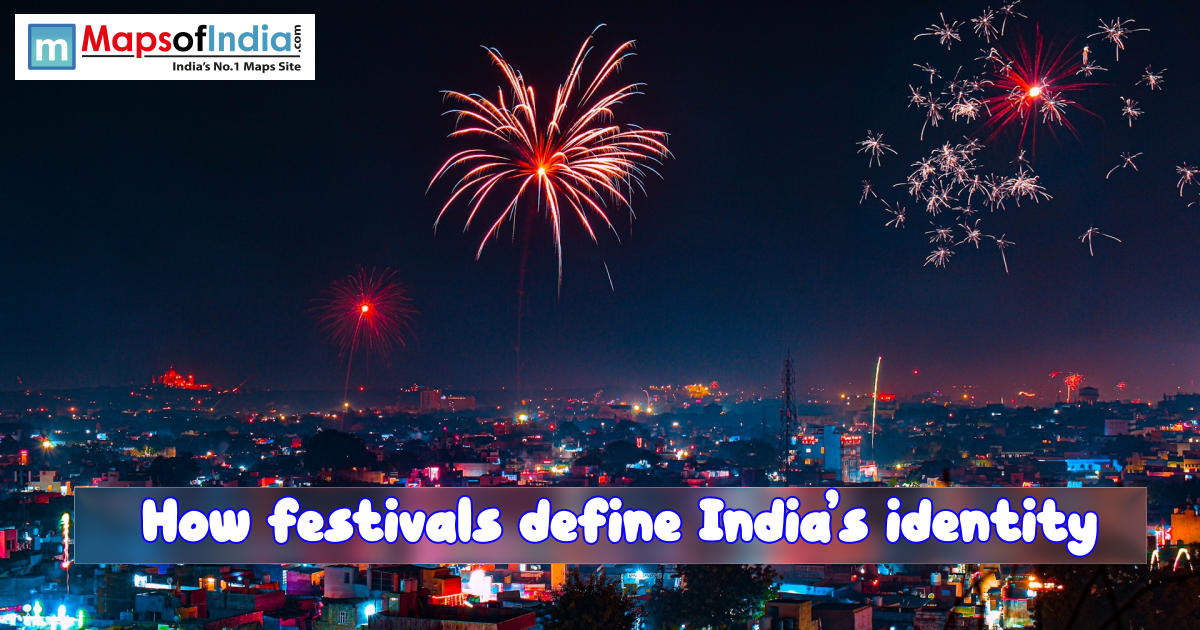
The world sees India in snapshots of its festivals. Lights blazing in markets when Diwali hits. Faces splashed with colour at Holi parties. Huge statues of Ganesh rising in Mumbai streets. Art-filled tents for Durga Puja across Kolkata. Camels gathering in Pushkar under desert skies. Parades dancing through Goa like a burst of fire. Elephants marching loudly in Thrissur’s Pooram show. Magazines everywhere run these scenes each season. Celebrations give India quite an influence that no speech can match.
Religious Harmony on Display
India’s festivals show how different religions live side by side. During Ganesh visarjan in Mumbai, Muslim neighbours take part. On Christmas, Hindu friends bring candles to church services. At Eid, Sikh families hand out treats to everyone nearby. In Gujarat, Christian groups join Garba dances without hesitation. Jains hold big parades on Mahavir Jayanti, but still give food to birds while they fast. Such a daily balance catches people off guard.
Youth and Modern Evolution
Young folks in India celebrate traditions differently now. Online platforms overflow with clips of Holi fun or tips on decorating for Diwali. At campuses, students run big Dandiya events. New businesses offer planet-safe festive items. DJs blend old aarti tunes with electronic beats at Ganesh Chaturthi. Meanwhile, streaming sites drop new shows tied to the celebration. Yet customs keep shifting just more gently than before.
Global Indian Identity
Indians move somewhere, and celebrations soon pop up. In the UK, Leicester lights up like a small Diwali. Over in New Jersey, streets shut down when Ganesh marches through. Down under, Sydney paints itself wild during Holi. Meanwhile, Toronto pulls off the biggest Khalsa parade beyond Punjab. Dubai’s shopping centres light up for Onam. Celebrations from India now show up worldwide.
Healing Power After Crisis
Festivals lift India when times are rough. After the 2004 tsunami hit, folks in Tamil Nadu marked Pongal with more spirit than ever. Following 26/11, Mumbai poured heart into Ganesh visarjan like never before. When the pandemic struck, people sparked lights from their balconies after a call by the PM just before Ram Navami. These moments bring strength, especially when nothing else seems to work.