
Diversity Rooted in Culture and Climate
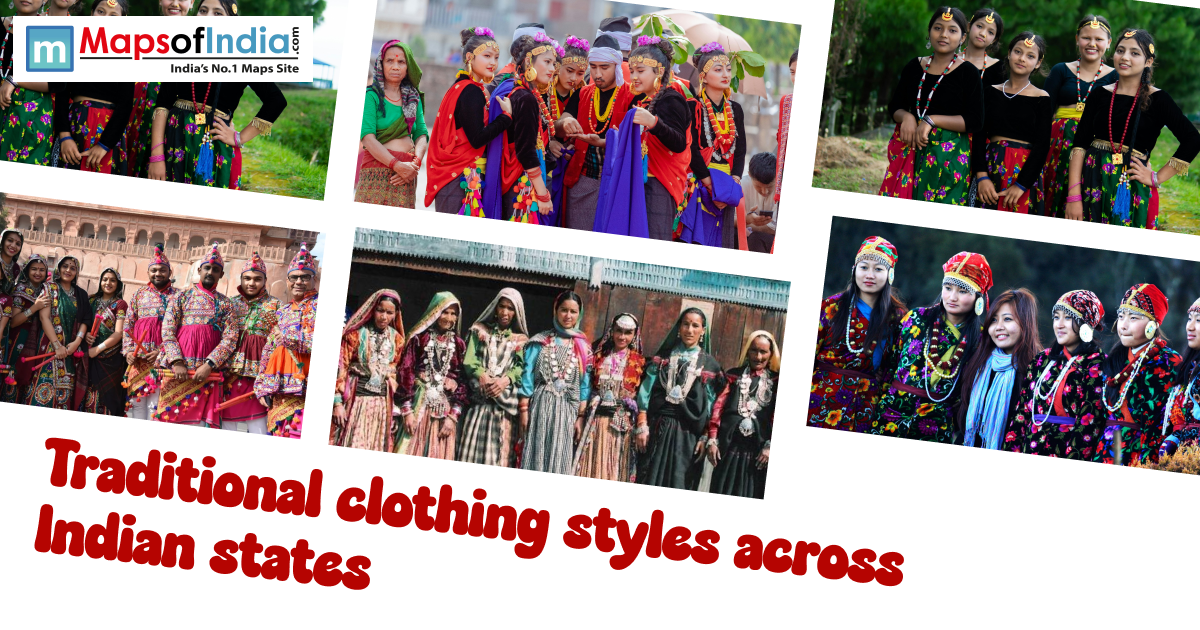
India shows off its variety with pride. Each region boasts distinct clothes born from local traditions, terrain, weather patterns, or historical shifts. Materials, shades, ways of wrapping, along with stitching details, reflect tales of kings, clans, old market trails, sometimes all at once. Whether in icy Himalayan villages or humid southern coasts, outfits shift depending on temperature or events.
Jammu and Kashmir – Elegance in Wool and Embroidery
Men put on the pheran a roomy tunic that goes down to their knees. While women go for a like-style pheran, they team it up with a headpiece known as taranga. Shawls from Kashmir, crafted using pashmina, shahtoosh, or soft wool, still hold global fame. For weddings, pherans get dressed up with Tilla stitching done in golden or silvery thread. As for shoes, folks used to slip into poots and mujiv, both built from straw or leather.
Himachal Pradesh – Warm Layers and Wool
Women wrap themselves in a dhaalu, a lengthy gown worn above a blouse, then throw on shawls. While men go for chola paired with kurta and pyjamas, they cap it off with Himachali hats trimmed in velvet plus floral bits. Instead of plain designs, Kinnauri scarves and Kulluvi caps boast detailed shapes made from woven lines. Since the hills bring harsh winters, wool stays the top pick. To spice things up, silver ornaments give outfits a lively glow.
Uttarakhand – Simple Yet Striking
Pahadi ladies drape the pichora red and yellow fabric covered in swastikas or flowers. In Garhwal, you’ll still see ghagracholi outfits around town. Instead of suits, men go for kurtas with loose pants, tossing on wool coats when it gets cold. For big celebrations like weddings, they switch to rangwali versions of the pichora. When snow hits, thick caps plus handmade socks keep their heads and feet warm.
Rajasthan – Royalty in Every Fold
The typical attire of women is a ghagracholi which they coordinate with an odhni made from bandhani, leheriya, or printed fabric. The glittering mirrors on the bright sun are very prominent because of the intricate Gottapatti stitching. Men choose angarkha tops, which they combine with dhotis or tight-fitting breeches. The bright colours of their safas give a bold look to the traditional garments. These fashions were commonly seen in the luxurious milieus of the past such as the classic Jodhpur-style bandhgala suit. A heavy silver pendant with a strong finish is the ultimate accessory that a woman can wear to her outfit.
Maharashtra – Nine Yards of Tradition
Maharashtrian women go for the nauvari saree, nine yards wrapped like a dhoti. Peshwai styles come with golden edges that stand out. During festivals, men prefer kurtas paired with dhotis and pheta caps on their heads. Kolhapuri sandals, along with nath piercings, show local pride. Bright nauvaris plus bold jewellery are what Lavani performers pick.
Goa – Blend of Indian and Portuguese
Goan ladies go for pano bhaju, flowing like old Portuguese dresses. Tribal women pick the Kunbi saree, often with bold red edges. Guys usually stick to shirts paired with shorts or full formal outfits. At Carnival time, females show up in Western-style gowns. But when it comes to folk dancing, classic clothes make their way back.
Madhya Pradesh – Tribal and Royal Mix
Women here rock the lugda, a compact saree paired with an odhni. Meanwhile, Bagh and Chanderi styles shine through delicate handprinted patterns. Over in Maheshwar, folks go for silky or cotton Maheshwari drapes that catch the light. On the men’s side, you’ll spot safas wrapped tight along with snug bandi tops. Tribal communities like the Gond and Bhil keep it basic with plain dhotis, spicing things up with bright headwear.
Uttar Pradesh – Timeless Chikankari
Lucknowi chikankari kurtas, plus sarees, stay popular choices. Women go for angrakhastyle kurtas, sometimes pick ghararas. Sherwanis, Men like them, also pathani suits. At weddings, Banarasi silk sarees come with zari details. Layered outfits show Awadhi roots, along with thick dupattas.
Bihar – Simplicity in Cotton
Women go for light jewellery when wearing sarees every day. Saree edges often take ideas from Madhubani art. Guys usually pick dhotikurta combos with a gamcha on the shoulder. Bright yellow sarees come out during Chhath celebrations. Bhagalpur’s Tussar silk gives plain wraps a rich feel.
West Bengal – Grace in Cotton and Silk
Bengali ladies use cotton tant sarees every day, while picking Baluchari or Kantha silk ones for special events. Married women often go for redbordered sarees, sort of a quiet signal. Gents usually pair a dhuti with a panjabi, adding a topper on the head when it’s wedding time. When Durga Puja rolls around, flashier picks like Kanjeevaram or Jamdani take over.
Northeast India – Tribal Weaves and Colours
Assam ladies go for mekhela chadors made from shiny muga silk. On top, they layer a riha along with a tongali. Up north, Naga clans wrap up in patterned shawls unique to each tribe. Meanwhile, women in Manipur tie phaneks paired under soft innaphis. Arunachal groups wear vivid woollen wraps. Every clan shows distinct hues or patterns with beads.
Odisha – Dance and Temple Influence
Odia women often choose sambalpuri sarees made with ikat weaving. Yet, Bomkai designs or even Pasapalli ones carry hidden tales. Instead, men go for a dhoti paired with a loose kurta. Meanwhile, Odissi performers shine in outfits inspired by silver filigree work. Then again, pattachitra paintings shape how saree ends are decorated.
Jharkhand – Tribal Heritage
Santhali ladies drape themselves in panchi along with pariastyle sarees. Guys, go for bhagwan, basically a small piece of cloth tied around. Bead-and-bone jewellery pops everywhere among tribes. Tussar fabric, handmade on looms, shows off plain stripes now and then. When festivals hit, bold shades come alive.
Karnataka – Silk Capital of India
Mysore silk sarees shine with gold zari work, still a favourite pick. Ilkal styles stand out because of their special tope teni on the pallu. Young girls often go for the Davani half saree look. Guys usually pair a panche with a jubba for traditional vibes. Udupi designs. They’re known for weaving in temple-inspired patterns.
Tamil Nadu – Temple of Sarees
Kanjeevaram silk sarees are a top pick at weddings. Yet Chettinad cotton ones bring ease through the day. Meanwhile, men drape a veshti along with an angavastram for events. Instead, a lungi works better for everyday use. Likewise, Bharatanatyam performers go for vivid silks paired with bold jewellery.
Kerala – Pure White and Gold
Women go for the mundum neriyathum white, two-piece, gold-edged. During Onam, kasavu styles light up the scene. Guys, pick a mundu. Some add a top, others don’t. For Christian weddings, the set saree keeps roots alive. Clean lines, no fuss, stand out.