
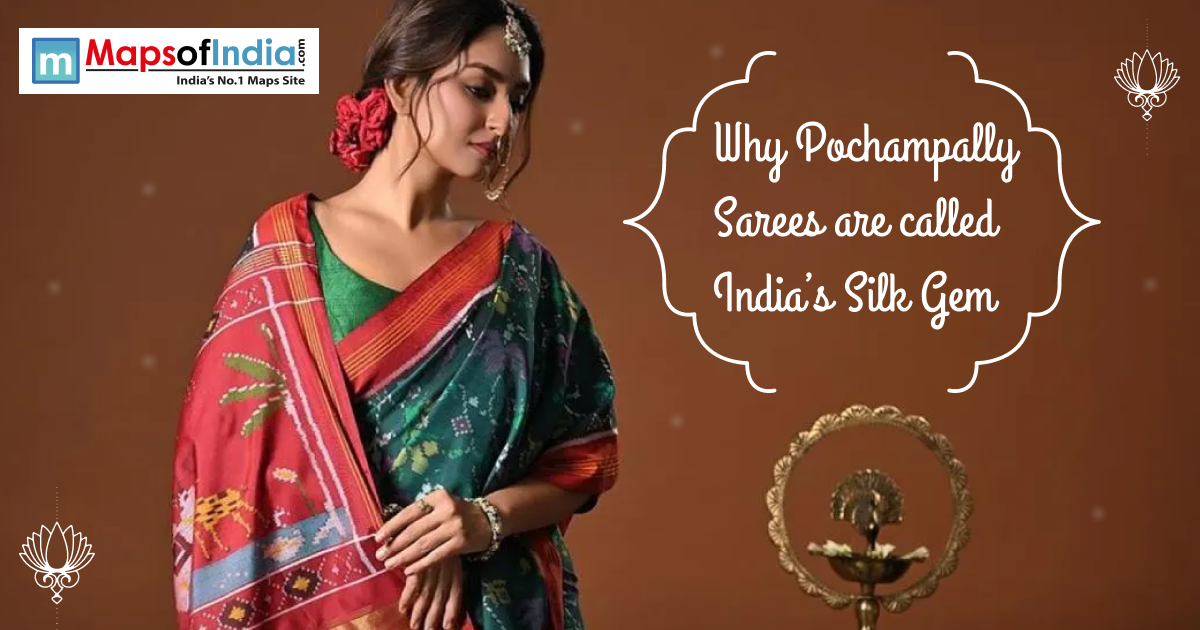
Pochampally sarees have a subtle charm that works like a quiet brilliance. These works of art are sourced from the weaving heartland of Telangana. Each thread is a narrative of the co-existence of patience and precision. The cloth is ultra-light, yet it has a rich texture when it drapes. The Ikat designs display the perfection of sharpness and symmetry. Each saree is a unique piece of art. The colors of the natural dyes become more delicate as they are used. Moreover, zari borders play with the light as if they were stars that have been caught. Women put on these dresses at their weddings and other festive occasions. Till now, the saree continues to be the most fashionable and stylish choice. It is a perfect match between tradition and effortless charm. Pochampally is entitled to its name in the right way, just like the silk, which is a carrier of the skills of a hundred years in every fold.
The Old Origins of Pochampally Cloth Making
Long ago, more than eight centuries behind us now, hands began weaving here. People who made cloth moved from coastal Andhra, bringing skills with them. Their new home became Bhoodan Pochampally when they put down roots long before modern maps existed. Fields around offered plenty of cotton, along with mulberry growth thick and steady. Threads of silk were born nearby thanks to small farms raising silkworms. From the start, weaving happened on basic looms set into the ground. Designs came from old temple walls, along with things seen outside, trees, birds, and rivers. Kings began supporting the work when Kakatiya rulers held power, then again under Qutub Shahi rule. Fine sarees made their way to royal homes in Hyderabad and forts like Golconda. Much like a tradition that never really left the land of Telangana.
The Quiet Craft of Double Ikat Weaving
Still today, double ikat defines Pochampally’s craft. Not just one thread changes colour, both warp and weft are dyed first. Where resist threads bind the yarn, shapes emerge front and back alike. Getting it right needs eyes sharper than instinct. One slip, even a tiny one, breaks the whole design. Only hands that have counted each loop for decades can trust their rhythm. Fresh indigo, mixed with madder root, colours the cloth. Dipping again and again brings out deeper tones. Each round adds weight to the shade. Threads form something close to quiet calculation.
Traditional Patterns And What They Mean
Out of nowhere, tiny symbols rise in Pochampally cloth, everyone carrying a hush of purpose. Light jumps across fabric, hinting at fortune yet cradling dreams beneath. Heavy beasts in soft gray step forward, wearing old-time thrones like second skins. Sudden flashes of green wings murmur about closeness, paired with what comes after silence. Up above, temple spires stretch into the sky. Petals weave through forms like whispers. These soft curves carry a calm kind of grace. Even when hues stay scarce, dark beside light holds steady across years. Festivity stirs without announcement. Hints of old ways move through each shade, speaking softly like memories passing by.
Natural Dyeing And Eco-Friendly Practices
From plants they know well, traditional dyers draw colour slowly. Deep blues come through indigo leaves soaked just right. Soft browns appear using nothing more than onion skins left to simmer. Greenish shades emerge if pomegranate peels sit too long in the pot. Only clean materials meet the fibre. Through each rinse, water gets another turn in the vats. What remains after weaving feeds the soil again. New loom artists slowly test plant-based colours. As if seasons dipped their fingers in thread.
The Three-Phase Weaving Process
Starting off, warp gets ready before anything else. Tight across the frame go the silk strands. To block colour, tie-dye steps in early. Onto shuttles, each colored thread is placed slowly. Plain weave forms what comes next on the body. Not quite a week, sometimes months. Threads lock into place over time. A shuttle slides with raw silk inside. Others weave metallic strands along edges. Movements repeat without rush. This is how fabric grows slowly, hand meets thread.
Gi Tag And Protection Of Authenticity
One year after four hundred fifty came the official recognition for Pochampally sarees. Woven strictly within a defined area, they carry a unique identity. What sets them apart is the intricate double ikat method, always required. The metallic thread used has to pass strict quality checks. A handloom symbol marks those that are truly authentic. A stamp tells buyers it’s genuine. Because tradition earns a legal shield over time. Only registered versions hold the mark history watches closely.
Modern Changes And Today’s Interest
Suddenly, new makers are reshaping Pochampally with bold ideas. Not just lightweight clothes fit modern life more closely these days. Instead, gentle colours grow popular bit by bit with shoppers. Because ready-made pieces show up stitched ahead of time for comfort. Surprisingly, familiar routines start looking different overnight. Websites let people everywhere buy what they find online. When something gets popular, news travels quickly. Traditional methods shift, yet somehow stay steady.
The Weaving Communities Of Pochampally
In the Padmasali community, weaving has always been part of their life. Certain patterns and designs are the property of specific family lines only, passed down as if they were secret treasures. Boys absorb the knowledge of the elders gradually, little by little, over the years. Girls start preparing for the work early, their fingers moving through the steps with confidence and skill. Even now, the hands seem to caress the daily tasks with great care. Close by, electric machines are so loud that they almost drown out tradition. No words have ever been necessary to hand down each beat or pattern; they simply get passed on.
Economic And Social Impact
Weaving by hand feeds countless families. Before threads meet the loom, women shape much of the process. Visitors spending time here lifts business across towns. Support comes through state programs designed with craftworkers in mind. Shared groups handle selling, so makers aren’t left alone. Facing higher prices for thread. Much like old ways of making fabric, stuck where keeping things alive meets moving ahead.
Wearing And Caring For Pochampally Sarees
Pochampally sarees, every time, get perfectly draped. Only folding tightly needs care because they are so light. Silk has a natural cooling effect and is quite comfortable to wear even in hot weather. Only dry clean to preserve the sheen of the metallic threads. While storing, tuck neem leaves to prevent moth damage. Occasionally, give it an airing for a little while. It is just like a treasured antique that requires gentle handling.