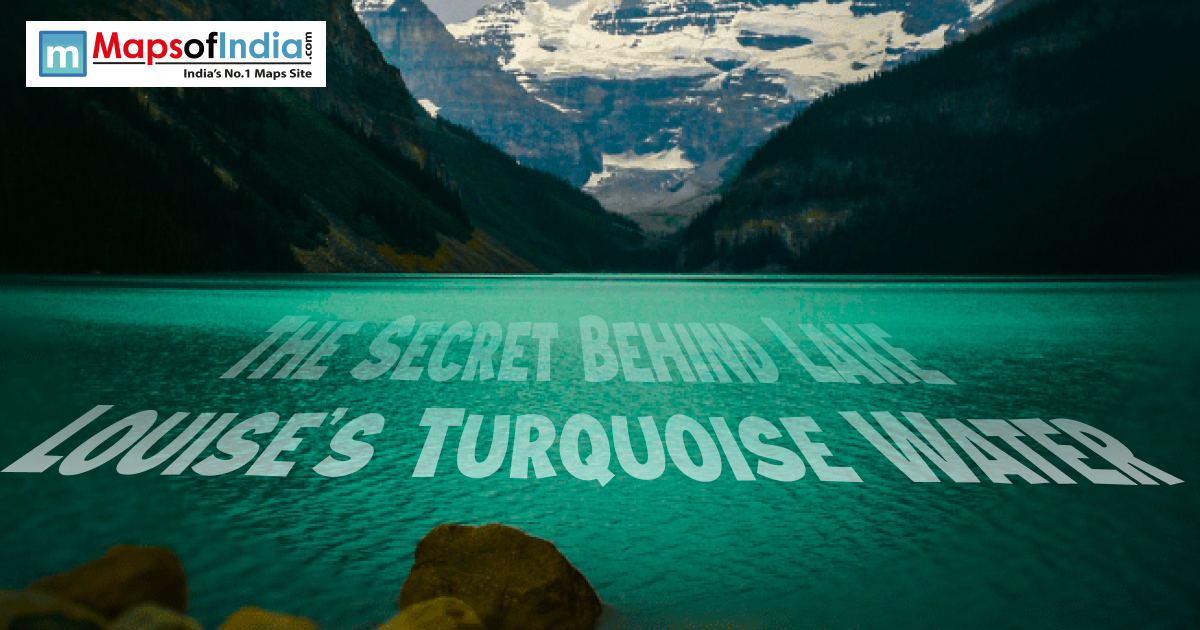
Turquoise spills across the mountains, pooling right where you’d least expect it. This hue grabs hold of eyes without asking permission. Even when skies hang low and grey, that glow refuses to fade. Reality needs no touch-ups here. Season after season, the shade holds firm, unnaturally bright, always present. Onlookers freeze near the edge, unsure what to do with their hands. Shutters snap nonstop, trying to keep up. Still, behind that shade lies something quiet but strange. It is glacial flour doing the work. Water holds bits of crushed stone so fine they float. These specks bend daylight in odd ways. Each glance at the lake shows a new face. Shifts in brightness remake it every moment. As if earth stirred colours here alone and kept the recipe hidden.
The Beautiful Place in Banff National Park
Up high in Banff National Park, Lake Louise rests at 1,750 meters. Around it rise the sharp summits of the Canadian Rockies, crowding in on three sides. The valley simply stops below the frozen bulk of Victoria Glacier. Without warning, cliffs leap into the sky. Near the shoreline, evergreens crowd tight against the water. Stretching out, the lake covers two point four kilometres from end to end. Not even half a kilometre wide, the water stays narrow. Formed long ago, a bowl-like dip came from piled glacial debris. Always filling, runoff from snow and melting ice feeds it steadily. No big rivers enter or leave its edges. Far off, the lake remains unchanged by time. Held close through ages, shielded by peaks that rose before memory.
Glacial Flour and Its Place in Nature
Sunlight plays off tiny grains born from ice scraping stone. Those minuscule fragments float through runoff without settling fast. Ice movement creates a dust finer than sand by far. The hue emerges because short blue waves bounce around more. You see that clear, bright tint only when light meets floating grit just right. Water bounces back green light quite well. Yet red and yellow vanish fast beneath the surface. This mix gives birth to a sharp turquoise glow. As depth increases, blue deepens into shadow. Near shore, where it's thin, green takes over. Almost as if Earth quietly holds colored mist below.
Seasonal Shifts in Colour
Bright blue shifts hue as the months pass. As early summer comes, runoff carries heavy silt into the basin. This makes the water glow most intensely. Near season's end, transparency creeps back. One after another, particles drift downward. Into the colour comes a touch of blue. Once autumn empties out, movement in the water slows almost completely. Ice locks down the scene during colder stretches. Trapped bubbles give it a light, frosty look close to old windowpanes. Fresh colours appear quickly when winter fades. Each season seems to breathe different hues into the water.
How This Turquoise Lake Stacks Up Against Others
Near Moraine Lake, water shines a bright turquoise. Still, its colours usually feel stronger than those at Louise. From up high, Peyto Lake looks like sharp aqua glass. However, Louise gets visited more, seen more in pictures. Close behind comes Emerald Lake in Yoyo National Park. Glaciers shaped each of these lakes, leaving tiny particles suspended in the water. What sets them apart is how deep their basins are, along with how clear the liquid appears. Easy reach boosts Lake Louise, paired with towering peaks looming nearby. Nature made many wonders, but placed just one under such striking light.
Rock Type and Minerals Matter
Close to Lake Louise, minerals glitter under the sunlight. Limestone is visible as if it is ground into a fine stone powder. There is a minuscule amount of dolomite in the mix, which gives a hint of green. Particles containing a lot of bounces make the whole scene look stunning. The water tastes slightly alkaline because of a very minute creep to the alkaline side. The turquoise colour has remained unchanged due to this equilibrium.
People Influence Water Clarity
Foggy water shows up once in a while, tied to visitors passing through. Sometimes, boats push sediment into the air from the bottom floor. At shorelines, footsteps chip away at dirt over time. Yet most days stay clear enough to see through. Guards make sure motors can’t enter these zones. Floating is off limits, but at the same time, clarity sticks around. Right near the border, construction is still going on. Water checks repeat, cycle after cycle. Visitors flood in, still the sparkle does not fade. When guidelines stand firm, wild things refuse to let go.
When and How Colours Show Up
Turquoise hits its strongest shade between mid-June and mid-September. Brightest tones appear when July rolls into August. Harsh shadows fade if you arrive just after sunrise. The glow peaks under full overhead sunlight. As the day ends, golden pink washes across the surface. Paddling across the water means you see more up close. Paths through the trees lead to higher ground where sightlines open wide. A ride high above shifts how everything looks down below. Walking on a frozen surface changes what you notice beneath your feet. Just like the lake wears a new look each time the year turns.
How to Photograph Turquoise Water
Glare fades fast when polarizers get involved. The best light shows up right after sunrise or just before sunset. Scenes stretch wide when wide-angle glass takes over. Steady shots happen only if tripods hold things still. Depth is built by blending several shots together using HDR. Things near the front give a sense of size. Still water at dawn mirrors everything it touches. Floating above, cameras catch hues most miss.
Protecting Nature and Living Sustainably
Parks Canada exercises a lot of control over the activities. The water stays clear because people do not swim in it. Trails only maintain their shape if everyone strictly follows them. Visitors get to experience guided educational sessions as a way of learning. Daily water samples are collected for analysis to determine how clean the water is kept. Just like silent guardians making sure the blue glow never fades.
Lake Louise Keeps Its Place
Water shines bright blue against sharp cliffs, a pairing nothing else matches. Easy to get here means crowds arrive by the million. Still, the place holds onto its raw edge. That shade hits harder when seen live. Awe comes every single time, without fail. Cameras point nonstop, drawn like magnets. As if Earth were designed just one flawless image meant to last forever.