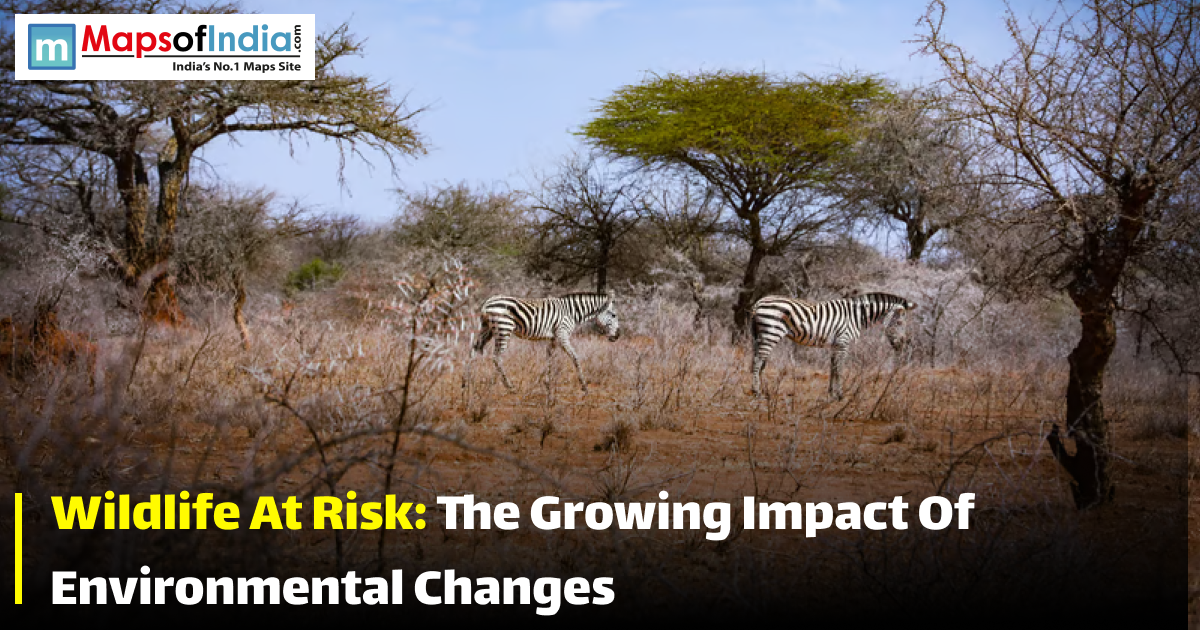
Wildlife At Risk: The Growing Impact Of Environmental Changes
Abhishree Sharma April 29, 2026
Life outdoors holds steady because of hidden links between creatures. One animal eats another, while also needing safe places to rest and raise young. Trees, water marshes, seas and open fields do more than look wide, they pulse with activity day after night. Shifts arrive too fast sometimes, shaking how things have fit together for long stretches. Years of evolution mean little when change arrives in mere decades. As temperatures rise, animals face new dangers: poisoned air, vanished homes, and growing cities. One loss leads to another; what harms nature harms us, too. Life tightens at every edge, fraying the balance we rely on without thinking. Saving wild creatures isn’t kindness; it’s keeping the ground beneath our feet.
Climate Change And Shifting Survival Patterns
Climate change is the main threat to the animal world. The growth of temperature is causing changes in breeding cycles, migration routes, and the availability of food. Polar species live in ice habitats, tropical species face heat stress, and water scarcity. Birds that migrate seasonally often arrive too early or too late because weather patterns have changed. Marine life also suffers as ocean temperatures rise and coral reefs bleach. Animals depend on predictable seasons, but climate instability removes that certainty. Those species that are not able to adapt in a short time will face population decline. Climate change cannot be seen as only a problem of the future. It is already changing the way wildlife can survive in different parts of the world.
Habitat Loss Through Urban Expansion
Out here, cities grow fast, chewing up wild places. Trees vanish, roads need space, factories go up, homes rise, and crops take root. Marshes dry out when water gets pulled away. Rivers twist new paths, steered by pipes and canals. Creatures wander, searching for food, finding less each time, pushed into patches of land that shrink year after year. Competition grows sharper when space shrinks. Elephants, leopards, tigers, and other creatures that move across wide lands find paths cut off, so they appear near homes. Losing wild areas doesn’t just mean fewer animals. It tears apart how hunters hunt, and green things depend on one another. When those links snap, putting them back together feels nearly impossible.
Deforestation And Disappearing Forest Species
Trees house countless living things across our planet. When forests vanish, so do complex webs of life that depend on them. Homes disappear fast for winged creatures, many-legged ones, scaled kinds, and furry animals alike. Species packed into tropical woods have no backup homes if these places fall. Places such as the Western Ghats or corners of northeastern India bear steady hits from cutting, digging, and building work. Falling tree cover shifts how rain moves through the air, while dirt slowly loses strength with each change, pushing nature out of balance. When trees stand tall, animals gain shelter they cannot find elsewhere since roots hold whole worlds together underground.
Pollution And Invisible Threats To Survival
Hidden harm strikes creatures when pollution builds up slowly. Oceans and rivers collect plastic, which animals then swallow, thinking it is a meal. Factory runoff, along with farm poisons, seeps into the earth and streams. Breathing gets harder for birds; underwater life fights low oxygen and dirty surroundings. Sounds from traffic, vessels, and machines scramble animal signals across distances. Out in the ocean, whales and dolphins feel the weight of noise beneath the waves. Over months or years, that constant hum chips away at their chance to thrive, fewer young are born, and weaker bodies survive. Though unseen, the damage digs deep, slowing life where it matters most.
Water Scarcity And The Collapse Of Natural Habitats
Animals rely on water bodies such as ponds, rivers, lakes and wetlands to survive. But such habitats are getting lost rapidly due to glacial melt, less rainfall and reduced subterranean water reserves. As a result, animals have to move far just to find water, thereby getting closer to potential threats. Besides, these water bodies act as nurseries where new life forms start. Thus, when these wetlands decrease, birds have fewer safe places to breed, and frogs and salamanders die off due to a lack of moisture. People use more water as rain becomes scarce, which in turn leaves animals with very little to survive on. Also, as the distribution of plants changes due to less availability of water, herbivores move or die, after which predators also follow. The damage accumulates gradually as a habitat dries up.
Illegal Wildlife Trade And Exploitation
Heavy pressure on nature grows sharper alongside poaching and animal trading. Skins, horns, and bones pull animals into black markets for pets or remedies. Traffickers go after pangolins, turtles, big cats, and even birds with bright feathers. Laws exist, yet guards do not always act. Losing grown creatures who can reproduce slows rebuilding of struggling groups. Out in the shadows, animals get treated like goods on a shelf instead of creatures in nature. When patrols step up and people start paying attention, that old pattern can finally stall.
The Role Of Indigenous Knowledge In Conservation
For many years, communities living in harmony with nature have been the main keepers of forests. Due to their careful observation of the changing of seasons, their knowledge about the medicinal properties of plants continually deepens. They also notice very subtle changes in the behaviour of animals that are overlooked by others. However, nowadays, the conservation measures to protect natural habitats mostly disregard the knowledge of indigenous peoples. Incorporating the knowledge of local people is community engagement and invariably leads to better conservation planning and implementation. When people living in or around forests, rivers, or coastlines are part of conservation planning, the success rate of conservation increases significantly. Combining scientific research with the wisdom gained through time from local people results in a more significant change. This is the way a better stewardship of nature is accomplished.
The Future Depends On Ecological Responsibility
Out there, animals are vanishing not because nature decided so. Human decisions shape what happens next. When landscapes shift too fast, balance wobbles. Still, healing isn’t out of reach. Forests need guarding, marshes rebuilt, toxins cut, and laws that back wildlife help tilt things back. Life out there in the wild hangs on steady care, not quick fixes. What happens to nature's variety shapes what waits for people down the road. Protecting animals isn’t about kindness handed out like coins. It’s part of staying alive when the ground shifts beneath us.