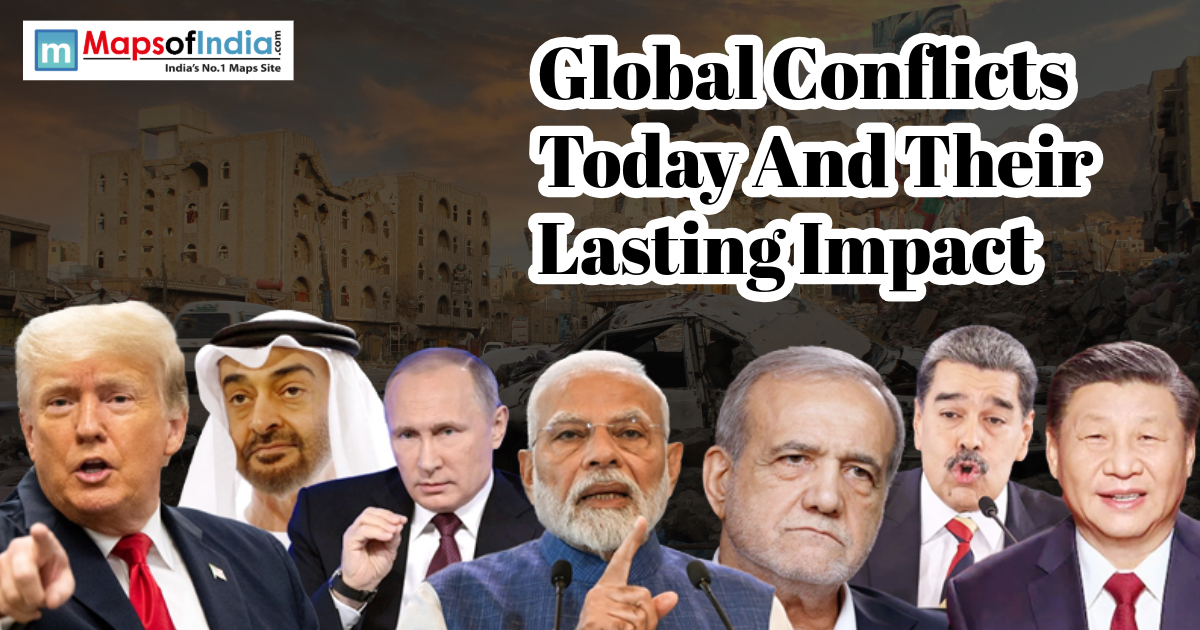
Missiles fired far away push fuel costs higher overnight. Across oceans, people flee borders that suddenly close. Hospitals go dark when digital strikes hit without warning. Trade routes twist under new financial penalties. Generations are split apart, never regaining what was lost. Conflict spreads faster than any map can show. Borders blur while markets tremble at distant explosions. Beyond the front lines, war reshapes entire societies. Economies sicken under their weight, global relationships crack, and recovery drags on for generations. Unlike the wars of the 1940s, current clashes blur the rules. Not just soldiers, now rebel groups, remote-controlled weapons, false narratives, and financial threats all twist together. Still, the pain felt by people feels painfully close. What comes next looks at key wars now burning through 2025, along with scars they leave behind. Though quiet, the weight lingers long after headlines fade.
Russia-Ukraine War: Europe's Longest Conventional Conflict Since World War Two
February 2022 saw Russia launch a full-on assault on Ukraine. The fight drags into year four, with no finish line in sight. About one-fifth of Ukraine's land sits under Russian control. Gains made by Kyiv came after pushing back, yet losses piled high. Countless soldiers have fallen or been hurt, from both armies. Still on the move, millions of Ukrainians live away from home, some within their country, others overseas. Power systems face constant threat as Russian missiles and drones hit again and again. From across the border, Ukrainian forces strike back deep into Russian territory. This conflict drags forward, less about sudden wins, more about who can last longer. Supplies from Western nations help keep Ukraine’s resistance going. War machines grind day after day. Every day, fresh soldiers feed into the conflict, caught in a grinding crawl of war. Moscow keeps going, powered by shells from Pyongyang and pilotless planes built in Iran.
Israel-Hamas Conflict Spreads Across The Region
That day in early October 2023 changed everything when Hamas launched an assault, claiming nearly 1,200 Israeli lives while capturing more than 250 people. Following that moment, Gaza faced overwhelming force. Official data from the Gaza Health Ministry shows a death toll surpassing 40,000 by the middle of 2025. Homes there now stand broken alongside shattered clinics, wrecked classrooms, and pipes once carrying clean water now twisted metal. Whole neighbourhoods starve under skies often darkened by dust rather than clouds. From Lebanon, Hezbollah moves alongside Iraqi and Syrian groups backed by Iran. Then come the strikes between Israel and Iran, first one year, then another. Ships reroute after Houthi attacks ripple through Red Sea trade lanes. Now battles unfold on many edges at once. Fires catch fast when flames find kindling nearby.
Sudan Civil War Worlds Biggest Humanitarian Emergency
Fighting started in Sudan when soldiers split apart in April 2023. Over ten million now move within the country, pushed by gunfire and smoke. Two million crossed borders instead, walking into neighbouring lands. Khartoum burns often, while Darfur and Kordofan crack under constant strikes. Each group points fingers, yet both leave trails of pain behind them. Famine now hits multiple regions of Darfur. Once more, people are being driven out by force along ethnic lines. This situation draws little global attention despite its scale. Weapons flow in from foreign powers, each backing separate factions without public explanation. Among those involved: UAE, Egypt, Russia, Turkey, and Iran. Aid groups struggle to reach survivors amid ongoing violence. The UN labels it the biggest aid emergency on Earth right now. Only arms traders seem to gain anything from the chaos unfolding there.
Myanmar Civil War Expands Across Multiple Regions
Out of nowhere, soldiers seized power in 2021, toppling Aung San Suu Kyi’s leadership, sparking protests across cities. Held together by shared defiance, rebel groups and civilian fighters now hold vast stretches of land by 2025. More than six out of every ten regions no longer answer to military rule. Clashes still echo through villages in Sagaing, where gunfire breaks mornings; meanwhile, hills in Chin state hide supply routes. Further east, the Karenni people resist in the forests, while boats move weapons along Rakhine's coast. Shan territory splits under pressure; some parts are quiet, others flare at dusk. Cities crack under bombs, shells hitting homes. Not just war zones but markets too feel the blast. Week by week, orders mean less outside city limits. Rebellions link up across the mountain passes quietly. Authority frays at every edge. This is how strongmen start losing ground they thought was theirs.
Haiti Under Gang Control State Failing
Out past the capital’s edge, authority fades fast. Port-au-Prince: Nearly nine out of ten streets are patrolled by armed crews. Shops pay just to stay open, no choice really. People get taken, held until money shows up. Roads shut without warning, cutting off supply lines. Close to three-quarters of a million have left their homes behind. What once felt like stability now hangs by a thread. Equipment shortages slow response efforts on the ground. A coalition led by Kenyan forces faces steep challenges in bringing calm. Locals take up blades and old guns when help does not come. Streets resemble a map redrawn by violence.
Yemen War Keeps Going Unnoticed
One decade turned eleven in Yemen by 2025, the war still burning. From Sanaa, Houthi grip spreads across the northwest. Down south, Aden stands under a different rule, claimed by the government that others accept. Bombs fall now and then, dropped by planes led by Saudi Arabia. Out there, ships can’t move freely because of Houthi strikes in the Red Sea. Because of this, supplies across the world face delays. More than 21 million people in Yemen are waiting for food, medicine, and shelter. Hunger never really leaves; it just lingers, day after day. A conflict once loud now hums faintly, though pain stays sharp for those living it.
Lasting Global Effects of These Conflicts
Worldwide ripples follow each big fight now. Energy costs jumped, food too, because of Ukraine. Anger at Western nations grows through Muslim regions as Gaza burns. People flee Sudan and the Sahel, heading north toward Europe. Ships can’t move freely in the Red Sea while Yemen is at war. Famine spreads faster when fighting never stops. While drought tightens its grip on war-torn regions. Aid money runs shorter every season. Weapons trade grows fatter under two suns rising at once. Pools ripple apart until one wave lifts the next.