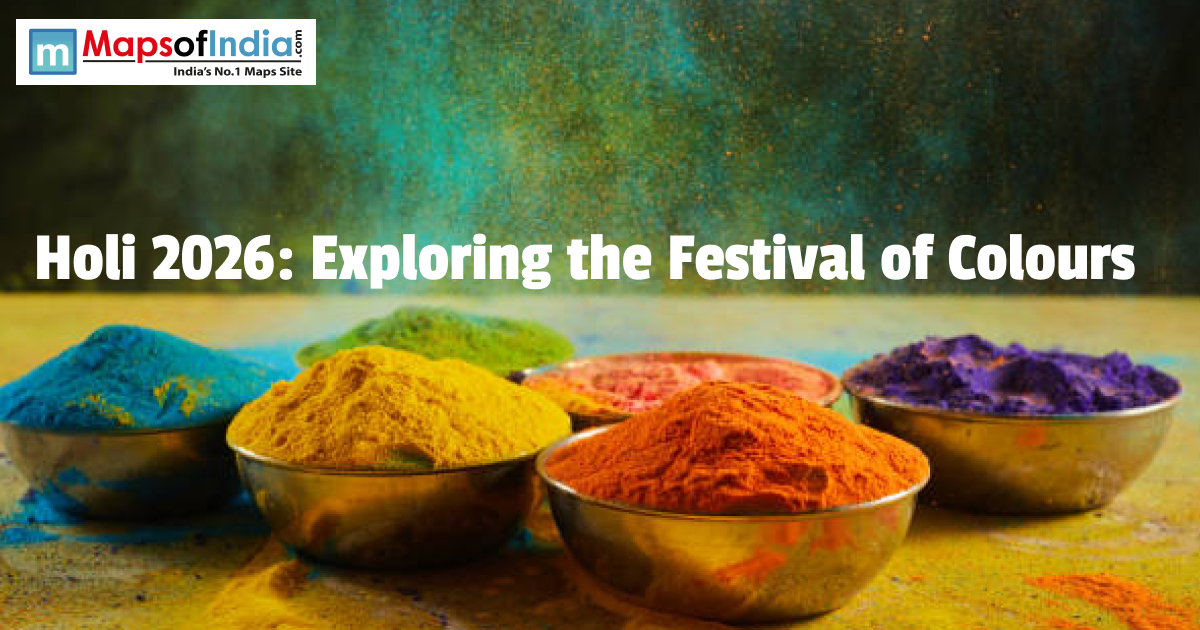
Holi 2026 is bound to come along with a rainbow of colours, fun, and unity as millions of people in India and other parts of the world anticipate Holi as one of the most colourful festivals in the Hindu calendar. The festival of colours, Holi, celebrates the spring, the victory of good over evil, and love and unity. There is much more than splashing around with gulal and water balloons, as this is a festival with a strong sense of history and mythology, and even cultural tradition.The end of winter and the beginning of spring allow us to forget about the negative moments, forgive the old and start new lives with the help of Holi. The Holi spirit will make the streets, homes and hearts canvases of happiness again in 2026.
The Mythological Roots of Holi
The history of Holi is connected with the ancient Hindu mythology. The story of Prahlad and Holika is one of the most famous legends. Prahlad was a staunch believer in Lord Vishnu, and this fact was so disliked by his father, the demon king Hiranyakashipu. The king was determined to ensure that his son was punished because of his unswerving faith, and to this end, he enlisted the services of his sister Holika, who happened to have a magical cloak that shielded her against fire.Holika was sitting along with Prahlad on a flaming pyre, so that he could kill him. But thanks to Prahlad and his piety, he was unscathed, and Holika was burnt out by fire. Such triumph of good and faith over evil is celebrated by the Holika Dahan, a ritual bonfire that is lit on the eve of Holi.The other legend, which is widely accepted, links Holi with Krishna and Radha. Even folklore tells that young Krishna, concerned with his black complexion, teeter-tottered on the face of Radha. The practice is thought to have influenced the happy tradition of using colours on loved ones. Gradually, this jocular action came to be the wild-flogging of today.
Holika Dahan: The Night Before
The festival starts with the Holika Dahan, which is celebrated on the full moon day of the Hindu month Phalguna. Societies congregate around huge bonfires that represent burning the evil and the negative. Individuals pray, make rituals and go around the fire as an indication of cleansing and revival.This ritual is not just symbolic; it makes people think and make a conscious choice to get rid of destructive thoughts and behaviour. The higher the flames, the higher the hope of positive and prosperity next year.
Rangwali Holi: A Riot of Colors
Rangwali Holi is the most expected part of the celebration as it follows the day after the Holika Dahan. The streets are crowded with joyous people as they spread colored powders on the faces of each other and pour water on each other. The customary welcoming of Holi is heard in the streets, with its trademark music, dancing and snacks.Holi is a social equalizer in both towns and cities. The social, status and age differences are forgotten temporarily as all people indulge in the party. The colours are bright, which represent happiness, multiculturalism and the beauty of life itself. Red is the colour of love and fertility, yellow is the colour of prosperity, happiness, blue is the colour of divine energy, and green is the colour of new beginnings.
Regional Flavors of Holi
Although the nature of Holi has been retained, its celebrations differ in different parts of India. Holi celebrations may take up to many days in the Braj region of Uttar Pradesh, and they have special traditions like the Lathmar Holi, where women get to play with men using sticks. Royal procession and cultural programs enhance the festival in the state of Rajasthan. West Bengal celebrates its Holi at the same time as Dol Jatra that is a festival of dedicated songs and rituals.The festival brings out the incredible cultural diversity in India, with each region contributing its flavour, music, food, and traditions to the festival. However, the hidden theme of peace and rejoicing brings them together.
The Role of Food and Music
There is no Indian celebration that lacks tasty food, and Holi is no exception. Sweets such as gujiya, malpua and laddoos are common in houses with their perfume. Salty snacks and refreshing beverages are also made to welcome the visitors and ensure that the energy levels are maintained all day long.Music and dance are as well necessary. Traditional folk songs, as well as contemporary hits of Bollywood, give the effect of excitement on Holi playlists. Dancing in the streets, water fights and cozy meetings enforce friendship between friends and families.
Holi Beyond India
Holi has gone across geographical boundaries over the years. The Indian communities in foreign countries also celebrate it with the same enthusiasm and spread the festival to new people across the world. Holi-based festivals have become a trendy cultural event where many people of various backgrounds gather to embrace the magic of colours in most countries.It is a world-renowned festival that shows how universal Holi can be. Its spirit of togetherness, affection, and happiness cuts across cultures and societies, and therefore it is not only a religious celebration, but a festival of the human spirit.
Eco-Friendly Holi in 2026
With the increased awareness of environmental conservation, a number of people are opting to celebrate Holi in a responsible manner. Chemical-based powders are being substituted with natural and organic colours derived from flowers and herbs. Water saving campaigns promote waterless Holi celebrations or lower consumption of water.Societies are also holding post-celebration clean-up campaigns to ensure that people's areas are clean. Holi 2026 is the chance to be sustainable and keep the festival in its lively mood.
The Deeper Meaning of Holi
However, there is something more than fun and festivities. Holi is a lesson of forgiveness, acceptance and renewal. It is a reminder that hard times may be defeated with faith and optimism, just like winter turns into spring. The very process of colour application is an indicator of trust and affection, strengthening relationships and forming new ones.Holi is an influential affirmation of diversity in the very fast world that tends to be separated by time and space. One day Laughter holds the place of battle, Colors tear the boundaries that divide us. It is an exaltation of life in all its happiest manifestations.
Preparing for Holi 2026
It starts preparing long before Holi 2026. There are vibrant powders, festivities and decorations filling the markets. The families organize meetings, cook traditional foods and organize parties with friends and neighbours.Common measures like using old clothes, using oil to cover the skin and using safe colours would make them have a happy and safe experience. By thinking ahead, anyone can concentrate on the nature of the festival, which was to share happiness.
Conclusion
Holi 2026 will be a colorful event that is full of music, food, and emotional relationships. Based on ancient myths and filled with local customs, the festival remains in the process of development, preserving its main message of optimism and togetherness.With colors spreading in the air and us laughing in the streets, Holi teaches us to be open-armed towards life. It makes us release the past and embrace the present and anticipate a future that is painted in hope and harmony. Shedding a million-and-a-thousand-year-old festival in a tiny village or in an urban centre, Holi still unites people in the most attractive manner possible, the mere pleasure of color.