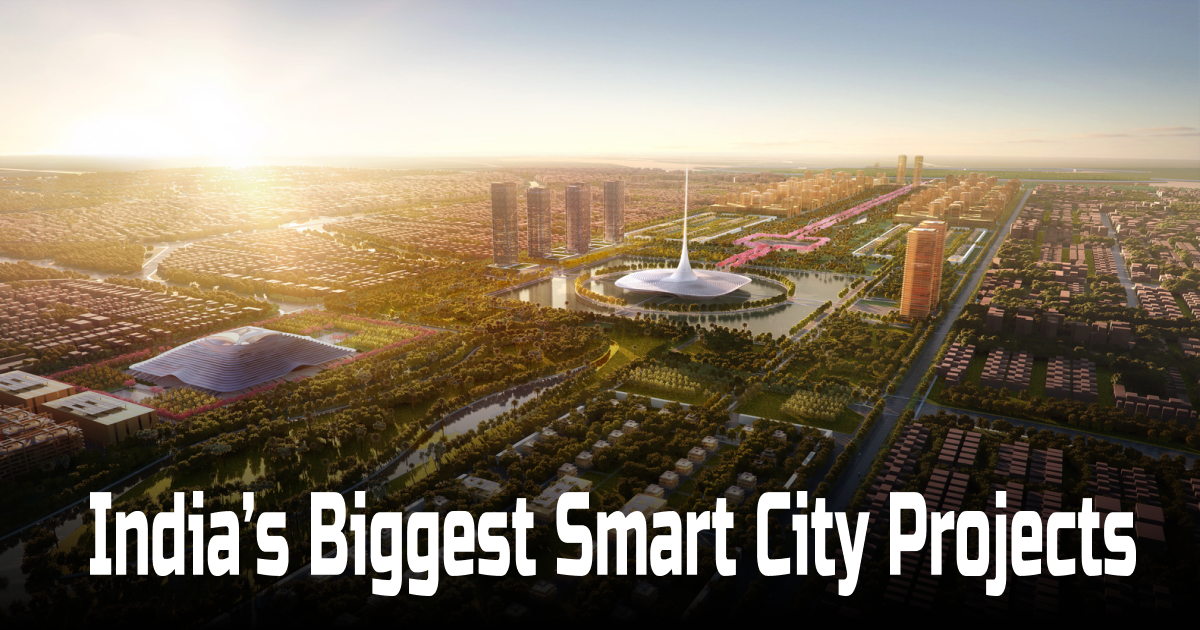
India is rolling out one of the world's largest urban transformation initiatives in its Smart Cities Mission. Started in 2015, the scheme plans to make 100 cities 'smart' equipped with state-of-the-art infrastructure, sustainable measures, efficient management and better quality of life. The smart cities in India are implementing tech, data and innovation to address the urban challenges such as "city influx congestion traffic pollution Water management, sewerage and waste management, etc."
Ahmedabad, Gujarat
Ahmedabad is one of the early pickers in Gujarat for the Smart City drive in India. Intelligent traffic signals and live traffic monitoring have improved traffic flow. Digital meters are used to track water usage with accuracy in homes. Data from multiple services is aggregated to a central hub for guidance and routine activities. Incorporating established ways of collection and segregation of waste makes the process smoother. Since the establishment of BRTS, the buses have become easier and more convenient for commuters. In the Sabarmati, the old riverbanks were redesigned as open spaces that are used by people. But here, life in the city took a turn for the mundane. Here, decision-making is done online. Step into one future-forward spot in Gujarat where traditional culture and modern technology coexist peacefully.
Pune, Maharashtra
Located in Maharashtra, Pune has emerged as a bright spot in India's smart city initiative. This is a better place to drive because traffic lights react to real-time information. E-governance is embedded in the system and helps to make daily life easier via the internet. Waste is collected from households and then taken to an appropriate waste control centre, where it is processed intelligently. Riding bikes is now safer because of the lanes placed next to the bus improvements. One app at a time, people find getting help easier now. Like classrooms wired for speed, the whole place takes a gradual, slow learning curve in breathing data.
Surat, Gujarat
Surat, from the south of Gujarat, is an unobtrusive influence on the ways cities can work smarter. A more responsive and quicker warning system now provides flood alerts. Trash collection is done on data-driven routes and timed tracking rather than the traditional approach. A central hub monitors road, bin and emergency movements in real time and is connected. Streetlights are powered by LED lights, which help to save energy and improve night visibility. Better networks that have been optimized over the years mean more consistent water flow. Here industry hums, yes, and there is a system that's changing the definition of city life.
Indore, Madhya Pradesh
Indore has also been awarded as India's cleanest city many times, but it has little noise. No waste accumulates here; all homes have daily pickup, and each type of waste is hand-sorted. Trucks roll out that are tagged and monitored live in control rooms, thus eliminating the guesswork. Street lights turn off on their own when LED lights know when people pass. Cameras can adjust signals during traffic to make the roads flow more smoothly. Citizens talk directly to apps, influencing the way things go block-by-block. Highly engaged citizens are influencing decisions, as well as excellent local leaders. Imagine clean streets and regular garbage collection, steady management, quiet wins.
Bhopal, Madhya Pradesh
In addition to being the capital of Madhya Pradesh, Bhopal also surrounds itself with the picturesque Upper Lake. Control hubs sprang up, overseeing the day-to-day operations, due to the sudden changes in urban planning. New systems that are optimized for instant feedback are giving traffic greater direction into which lane it should steer. Governance is based on digital tools that are strong enough to sustain the demand. The water bodies here are well taken care of and are not neglected in the times of modern developments. The sun is used to power more functions than before, along with flow tracking. The learning spaces were transformed quietly, and they were set up without much fanfare. Upgrades are underway under the smoother route of riding across town.
Visakhapatnam, Andhra Pradesh
Visakhapatnam is quietly transforming on the east coast of India. In place of the old process, it has now instituted live digital oversight for its ports. Sensors react in real time to the traffic flow to improve traffic. The automated alert network allows warnings to reach people faster for cyclones. Garbage collection follows routes fine-tuned by data patterns. New walkways, lighting, and stronger barriers to the shoreline. Visitor numbers increase without impacting natural attractions plans are environmentally considerate. Near cleaner energy setups, factories are being built, and emission checks are being tightened. This is the feeling you have when tech doesn't just serve as a progress, but a place of change.
Kochi, Kerala
Kochi is a city that strives to achieve more on the coast of Kerala, a place that is one of the southernmost states in India. Instead of growing fast, it decided on more intelligent actions in terms of everyday needs. Today, pipes are used to transport more than water; they transport data, too, and contribute to the ability to monitor consumption and diagnose leaks at an early stage. In boats, digital tracking blends in with tradition, moving silently along backwaters. Households are segregated for waste before it is collected effectively by trucks. Forms that were sent online years ago don't line up anymore, and officials respond quickly. So old trees still stand, lining the streets where fishing boats still dock at dawn.
Jaipur, Rajasthan
Under the desert sun, pink walls shine, and Jaipur moulds itself in silence. Traffic is now smoother, as sensors steer the way instead of signals. Parking Spaces communicate with apps to prevent drivers from circling and circling. Systems are monitored by a central point, a nerve centre. Old buildings come back to life with digital scans and restoration. Litter is reduced in bazaars by warning collectors to pick up the bins when they are full. Lane visitors discover palaces that are set in time. Here, tradition does not go out of style; it evolves, gradually, over the years. The contemporary tools fit in with the ancient streets without infringing on the flow. So cities grow, progressing continuously, unnoticed, with roots growing and strong arms reaching.
Hyderabad, Telangana
Telangana's capital, Hyderabad, is identified as a new smart city nationwide. Like leading information cities, Hyderabad has a SMART application system, which includes the newest transportation system, intelligent garbage processing stations, as well as a well-established e-government platform. For this purpose, it is engaged in projects related to sustainable development and water management, such as the revitalisation of lakes. The city's well-established IT business is a strong investment core, enabling the city to incorporate the latest SMART solutions into the urban development plan.