The Perfume Capital: How Kannauj Bottles the Monsoon
Vidyut Vardhan February 21, 2026
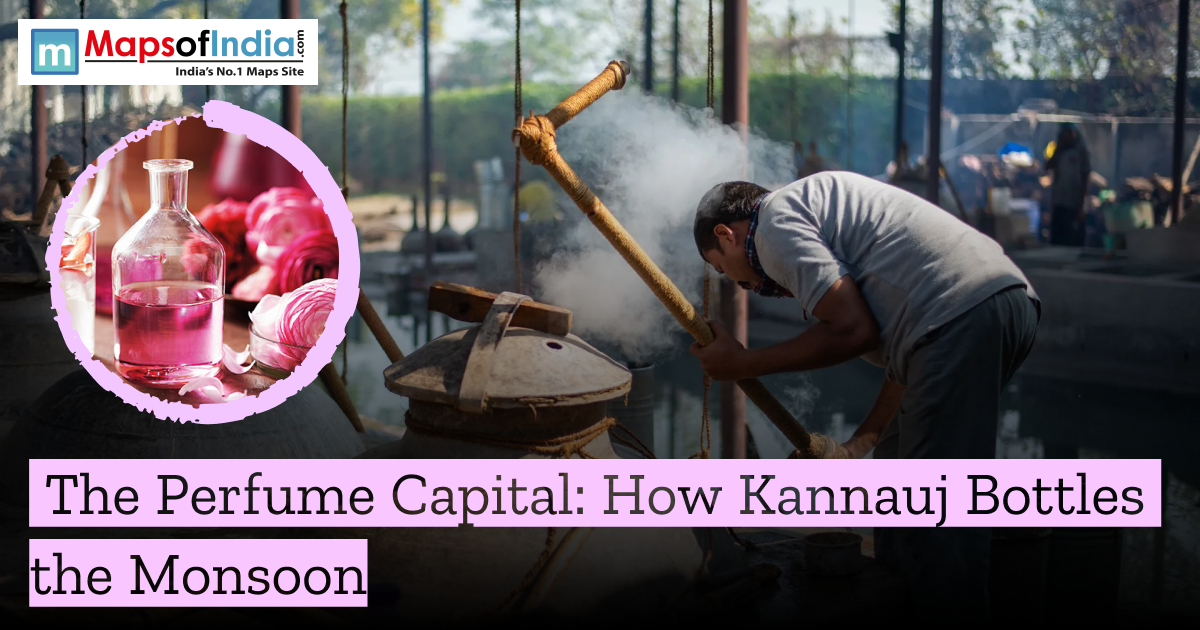
Fog hangs low as Kannauj stirs in the half-light. From rooftops, wisps rise off copper stills, warming slowly. Between alley walls, damp soil mixes with early jasmine; its breath lingers. Locals call that scent mitti attar. Smell hits you earthy, sharp, the moment rain touches cracked ground. Overnight blooms now lean low, heavy with colour, waiting where they stand. Petals glisten under droplets clinging at dawn. Heat rises. The still begins its hum before noon. Drop after drop, heat gently pulls the core away. For centuries now, Kannauj has held the quiet role of trapping scents in glass. Even today, it leads India’s fragrance craft, never shouting about it. New factories follow routines unchanged through time. Each bottle feels as if rain had been caught mid-fall and sealed tight.
Ancient Origins of Kannauj Perfume Making
Back then, under Gupta rule, folks in Kannauj started crafting perfumes. By the seventh century, King Harshavardhana governed those lands. From faraway China came a traveller named Xuanzang who jotted down notes on their fragrant oils. Afterwards, Mughal royalty couldn’t get enough of the ittar made in that town. Old books keep traces of long-ago blooms. Through hushed corridors, rose mist moved, held by unseen palms. Behind it came kewra, stitched into routine without pause. Under the emperor's gaze, craft rooms buzzed, written bare in Ain-i-Akbari. Soap carried habits pulled through daily water, fabric brushed slowly by steady hands. From childhood on, those who formed it never left the craft behind. Years moved forward, and still certain traces held their ground.
The Monsoon Magic of Mitti Attar
After the first rain, people gather a certain kind of damp soil. That earth smell Mitti attar holds it tight. A slow bake follows, just enough to dry out the clumps. Once cooled, it breaks into dust. This powder joins up with sandalwood oil in silence. Not quite a drip, slow drops pull out the scent. Smell hits just like first rains crack open thirsty earth. Nothing man-made comes near that rich weight. Each summer storm brings more people looking. A jar holding what memory recalls too faintly.
Traditional Deg-Bhapka Distillation
A lone petal floats across quiet water inside an old copper bowl. When steam loses warmth, it glides down into the rounded glass trap underneath. Inside the outer layer, fire stays lit without flicker, shielded from gusts. Warmth creeps through sand and earth, stored tight as a held sigh. Silence climbs out of the bamboo container. Sliding slowly, steam moves without sound. As water pulls back, oil rises patiently. Each turn takes close to twelve hours. The fire gets fed by hands that stay put. Old knowledge breathes here, warm, watching.
Rose Gulab Attar from Kannauj
Spring whispers its brief arrival, then the Rosa damascena blooms unfold. Just as light breaks, workers step quietly into the rows. One full kilogram of petals yields almost nothing, just traces of oil. Slowly, over hours, scent slips into sandalwood base, molecule by fragile molecule. Heating it again makes the smell bolder. Through the glass, a fragrance from Kannauj drifts, unhurried. People claim it glimmers, secreted inside petals. April lives in every drop, paused gently. Those who find it take hold, softly, without doubt.
Kewra Pandanus Fragrance Mastery
After the rains pass, kewra flowers open slowly. From slender green blades comes a warm scent with earthy edges. Steam pulls that fragrance out drop by drop. In old recipes, it flavours sugared treats or laces dried leaf bundles. Today’s fragrances rely on their concentrated oil form. Fine fragrances rise from Kannauj, known for unmatched craftsmanship. A scent like summer rain held still.
Shamama and Mukhallat Blends
Something about Shamama starts with many parts mixed slowly. Scents stack one after another on purpose. From musk, along with ambergris, comes the deep hold. Rose brings flower power while jasmine lifts it higher. Spices mix into the woods to build something thicker underneath. A mukhallat pulls different attars together in quiet balance. A secret lives inside every kitchen, passed down like an heirloom. Much like a scent built slowly through time with care.
Traditional Family Roles
For instance, the Ansari family is one of those whose lifestyle is a reflection of the entire trade. Over time, oral communication, work, and passing on the knowledge to the next generation through practice have been the ways to keep the tradition alive. Even small children are familiar with the concept of distillation, though they may not fully understand what is going on. To each family, the way they keep their secret is tantamount to sharing it with their nearest and dearest only. Slowly, year after year, trust is built by walking in the shadows. However, new demands are forcing changes contrary to the usual ways. Nevertheless, changes happen gradually.
Modern Problems and Lasting Solutions
Fewer blooms appear these days, yet those that remain struggle to survive due to shifting weather patterns. Without enough rain, gathering plant essences grows harder by the year. Handmade scents made in studios slowly take centre stage instead of botanical extracts. Cheap lab-made perfumes quietly shape what buyers choose off the shelf. Nowadays, keeping traditions alive feels like trying to light a damp match, possible, yet tricky without steady help. Control over place-based product labels has grown stricter, step by slow step.
Worldwide Acceptance and Shipping
From Kannauj, fragrant oils now flow into France as well as Arab nations. Big names in scent turn to plant-based essences instead of synthetics. In 2014, with a special geographic label, it got recognition. Shipments abroad climb without sudden spikes. Perfume makers from overseas often arrive throughout the year. Old methods charm fresh audiences across continents. Still, roots remain deep in Indian soil.
Discover the Tradition of Kannauj Perfumes
At the end of winding paths are houses where families create spirits. The people who manage the places are nice and cordial to visitors. You can take a slow tour of the deg, bhapka process just like that without even realising. Along with natural freshness, the air is filled with flower scents and also those from beautiful glass bottles. Getting a tiny vial is tantamount to bringing a memory home. It is very much like going through an olfactory history that is still alive.
Future of Kannauj Perfumery
Starting fresh, young founders mix old ways with new ideas. Across borders, digital shops connect to buyers far away. Earth-friendly scents rise in demand across continents. Caring for nature now shapes choices more than before. This historic town shifts slowly without losing its soul. Much like a scent that lingers, changing quietly but staying true.