Once upon a time, stones began telling stories in Karnataka, a place called Hampi. Scattered among rugged slopes and riverside curves lie what remains of the Vijayanagara days. By 1986, after long thought, UNESCO named these structures a World Heritage Site. Their worth, seen through timeless craftsmanship and layered pasts, spoke too loudly to ignore. Sixteen hundred relics remain upright, whispering echoes of an empire built on stone and sky. Stone by stone, Hampi speaks of kings, faith, and of a city sharp with life from the 1300s to the 1500s. Scattered across land like forgotten pages, each rock, each shrine murmuring echoes of triumph, loss.
Historical Significance As The Capital Of Vijayanagara
Once upon a time, Hampi became the heart of the Vijayanagara Empire, the final mighty Hindu realm across southern India. Starting life in 1336, greatness was found when Krishna Deva Raya ruled during the 1500s. Bustling with merchants, art, and soldiers, the place pulsed like few others. Visitors from distant lands called it dazzling, packed with wealth beyond belief. Sitting close to the Tungabhadra River gave it strength, turning stone and soil into something grand. In today's time, the remains in this palace have echoes of a time when the kings ruled here. This city still stands tall in this new era, holding its head high.
Architecture Blends With Nature
What makes Hampi stand out to UNESCO is how seamlessly buildings fit within the rugged stone terrain. The architecture wonder here are touching the sky. Huge rock formations shape the skyline. The city was designed to shape the city to follow the land, not fight it. On elevated ground, temples claim the peaks. Lower zones held courts and homes for rulers. Beauty comes from this balance between earth and architecture. Out of the hills comes a shape that feels both built and grown. As if the ground shaped the idea, not just held it.
Dravidian Temple Architecture Stands Out
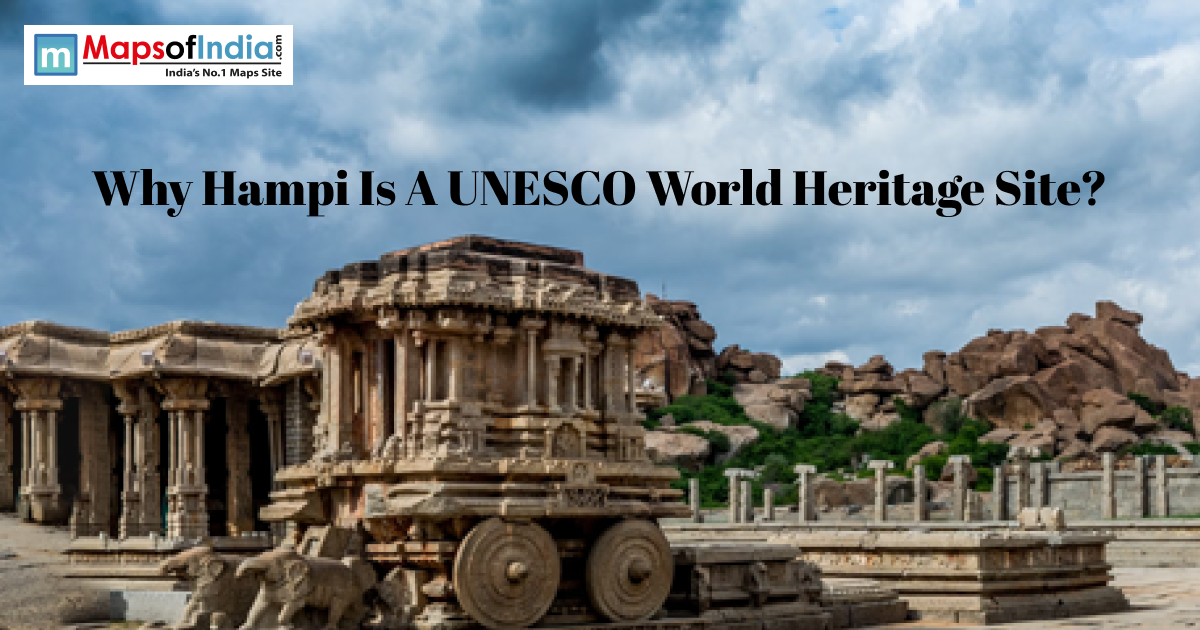
Among India's ancient ruins, Hampi holds standout pieces of Dravidian design. Rising through centuries, the Virupaksha Temple pulses with daily worship even now. Not far away sits the Vittala Temple, known for the stone that sings when struck and a chariot carved fully from rock. Story flows across walls at the Hazara Rama Temple, where scenes from the Ramayana take shape in fine detail. Worship once echoed strongly within the Krishna Temple, too. Each building breathes skill: sharp lines cut into stone, figures curled in motion, gateways stretching skyward. Standing tall through time, these temples show a people devoted to their Hindu deities. Built long ago, yet still stirring wonder today because of how well they were made.
Witness To A Lost Civilization
Once full of life and energy, Hampi today is very much a silent place, only able to retain the faintest sounds from the forgotten Vijayanagara era. The damaged walls, besides the sacred zones with their respective temples, also show the locations of the grand residences of the rulers, the communal halls, horse stables, water channels, and lively market areas. Rules had an impact on people's lives here as the streets were arranged according to a plan, and water was circulated with the help of a design. People of various faiths and origins were able to coexist in these confines. Growing food, transporting, and beautifying all these things each supported the other, just like regular breathing. It's the reason why the site has been inscribed on the UNESCO list with Criterion (iii). Similar to an open book presenting all the chapters of a powerful kingdom, which has finally faded away.
Historical Event Example
One morning long ago, stones began telling stories of collapse. That year, 1565, changed everything when warring kingdoms stormed through Vijayanagara. After Talikota fell, fire followed gold, then silence. Still, prayers did not stop inside certain shrines. Though walls cracked under smoke and time, belief stayed standing. What remains now shows power once rising high, then vanishing fast. This place feels like history paused mid-step, showing grand designs alongside quiet ruins. Hampi stands out clearly within UNESCO's fourth guideline because of it.
Smart City Design And Systems
Down came water, channelled by aqueducts into holding pools scattered through the town. Cracked rock reveals traces of deliberate road layouts beneath. Royal eyes watched walls rise high; at the same time, holy ground was marked off for ceremonies. One zone hummed with buying and selling, another echoed prayers, while power stayed tucked away elsewhere. Stone paths curled gently through the site, linking shrines to doorsteps and hearths. Not far off, irrigation ditches cut across the land, quiet signs of planning during harsh seasons. Homes doubled as temples, kitchens, and shelters, all shaped under single roofs. Trade happened in open spots now marked by broken walls, while workshops hummed beside sleeping corners tucked into stone. Order here felt different somehow, sharper than nearby villages from those days. Each feature settled into place as it had always belonged, laid down with quiet purpose.
Rich Sculptural Art Stone Work
Hampi's ruins, one stone after another, disclose the highly accurate carvings. Besides the grand myths and everyday village activities, the characters are not only sculpted on the walls but also in our minds. A temple has a chariot which, although stationary, seems to be so lively that it wants to move. The pillars sound melodious when they are hit, as they were designed so that each impact will produce a clear note. Stories are still living under every arch, written slowly, with the intention of being eternal. Stone is the medium through which stories are told by the hands of people who have been gone for ages. Each carving stands silently, having been created under these skies many centuries ago. It is not just a piece of stone, but a memory that has been frozen in a physical shape. A mere murmur of the greatness of one's craft that the world has since lost the memory of its ability to do it again.
Hampi Recognized by UNESCO
Back in 1986, Hampi made it onto UNESCO’s World Heritage List by meeting three key cultural standards. Not just buildings standing apart, its structures blend with natural landscapes in a way few places do. What remains speaks loudly about a society that once thrived but is now gone. Scattered remnants across the land show moments frozen from history. Over time, efforts to care for the area have gotten stronger. Nowhere else feels quite like Hampi, holding pieces of India's deep past. Much more than stone ruins, it’s a place protected by UNESCO, seen as vital across nations.