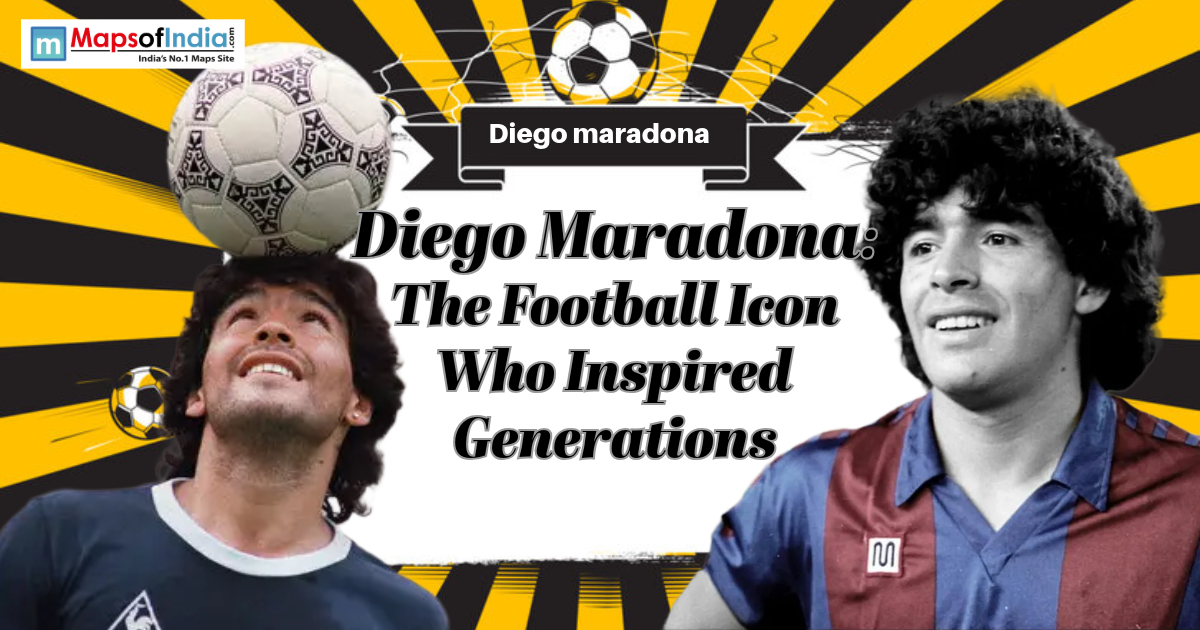
Diego Maradona: The Football Icon Who Inspired Generations
Vidyut Vardhan March 26, 2026
Diego Maradona is still one of the most polarizing but at the same time universally admired figures by many people in sports history. Born in a Buenos Aires slum in 1960, he rose from poverty to become a global legend. That left foot, a trickster's wand, conjuring plays that look fake even today. By June ’86, he wasn’t just playing; he was rewriting what one player could do. While others shared the load, he dragged Argentina forward through sheer will. Victory arrived not in pieces but whole, shaped entirely by him. Joy lit up Maradona’s game, yet fury drove it just as hard. Some saw holiness in his steps, treating him like something sent from above. Others pointed out mistakes, calling out chaos and risk. Neither side was wrong. Triumph danced close to sorrow throughout his days, each shaping the other. A flash in the night, blazing fast, carving a path no one can erase.
Childhood in Buenos Aires Shantytowns
Fifth child in a family of eight, Diego Armando Maradona spent his early years in Villa Fiorito, a struggling corner of Buenos Aires. A cramped home held everyone, parents included, with power and clean water showing up when they could. While his dad clocked hours at a factory, his mom took on cleaning jobs around town. At three years old, football started as a way out. When he was bouncing a ball without missing once, someone from a nearby club noticed. By the time he turned ten, he had stepped into the youth squad of Argentinos Juniors. Each day meant spending hours on buses just to get there. Because of his wild curls, those who trained him nicknamed him “Pelusa”. Still, his dribbling seemed impossible. A kid from dusty alleys, balancing a country’s hopes on his toes long before age fourteen arrived.
The Prodigy Years And The First Taste Of Stardom
That first match came in 1976, just past his fifteenth birthday, wearing the jersey of Argentinos Juniors. A short time later, the net rippled from his boot, and his opening goal arrived fast. Before turning eighteen, he pulled on the national shirt for Argentina's top squad. Voices rose wherever he played; crowds roared his name like thunder before the storm. That year, 1981, brought him to Boca Juniors. Victory followed his footsteps, lifting the club to a league crown. Fans roared so loud the stands at La Bombonera trembled beneath their joy. Each time he scored, his lips met the emblem stitched on his chest. A deep connection grew between him and the Boca supporters, one that lasted years. Moving to Barcelona happened in 1982, part of a transfer that broke every record at the time. Problems came fast, hurts kept piling up, and disagreements with coaches added more weight. Still, now and then, moments sparkled through, bright like sudden sunlight. A youngster learning power, restless but raw, pacing just before everything changes.
The 1986 World Cup's Highest Moment
One moment defines Mexico 1986 Maradona's show. Argentina lifted the trophy, carried by its force. In the match with England, two goals burned into memory. A sly hand sent the ball over Shilton. That one sparked chaos. Then came what some call perfection, a run starting near the centre, weaving through five defenders. From deep in his half, he glided, untouched, until the net rippled. All by himself, he tore through Belgium during the semi-final match. When facing West Germany in the last game, his moves shaped Argentina’s win. With the leader’s band around his arm, he raised the prize high. As if just one player had reshaped how the whole event unfolded.
The Hand Of God And The Goal Of The Century
On June twenty second, nineteen eighty six, at Azteca Stadium, Argentina faced England. Due to the conflict happening in the Falklands, emotions were already high. Four minutes apart, Maradona found the net two times. One goal started with a handball of his own. Up soared he, clashing with Shilton, swatting the ball through. Overlooked by the ref. It counted. Víctor Hugo Morales roared “Gooooool,” voice cracking nonstop past sixty seconds. Carved forever into football’s memory, they stand. A question mark hangs over one. The other floats above criticism. A single mind, shaping brilliance through sharp tricks. Heaven appears one moment, then a grin twists the next.
Napoli Rising From Rejection To Reverence
Back in 1984, Maradona arrived at Napoli. Before that moment, the team hadn’t claimed a single Serie A title. Life down south carried extra weight. Naples ranked lowest in Italy’s pecking order. Taunts rained in nonstop from supporters up north. A boy from nothing turned into a symbol. Impossible goals came from his feet like stories made real. Naples found glory when he lifted trophies first in 87, then again in 90. Victory followed in Europe by ’89. People looked at him as if light poured through cracked walls. Painted faces of him stared down from buildings. Parents chose their son's name for their son without second thoughts. D10S, that’s what they called him: ten on the back, god in the soul. From dirt lanes rose someone who let a whole city stand taller.
The 1990 World Cup and Its Final Dispute
Argentina reached the 1990 World Cup final under Maradona's leadership. Through sheer will, he pushed a modest squad past exhaustion and into penalty shootouts. When facing Italy in the semifinal, emotions ran high in Naples. Choosing roots over region, he urged locals to back his national side instead of the home team. In the end, Italy fell when shots were missed during penalties. When it ended, West Germany took the win after a hotly debated penalty call. Tears streamed down Maradona’s face without restraint. Much like someone fierce who fights till breath runs out still walks away with nothing.
Life Beyond the Game and Worldwide Fame
After playing for Boca plus Newell's Old Boys, Maradona stepped away in 1997. Health troubles followed him through the years. Argentina reached the 2010 World Cup quarter-finals under his guidance. A gastric bypass procedure changed part of his daily life. Even then, his heart kept giving him trouble. It was November 25, 2020, when he died. Around the world, people felt it deeply. In Argentina, they set aside three days to mourn. Paintings of him showed up suddenly on the walls. Thousands came to say goodbye at his funeral. A player so loved, his loss brought everyone together.
A Legacy Beyond the Game
Genius took a new shape when he stepped onto the field. Around the world, young players grew up watching his moves. Lionel Messi once said nobody played like him. Football was never just a game after Maradona arrived. Out of the alleyways came his genius. A single person lifted an entire country on his back. Mistakes kept him real. Skill turned him into something lasting. Brighter than most, though cracked like old glass.