






About
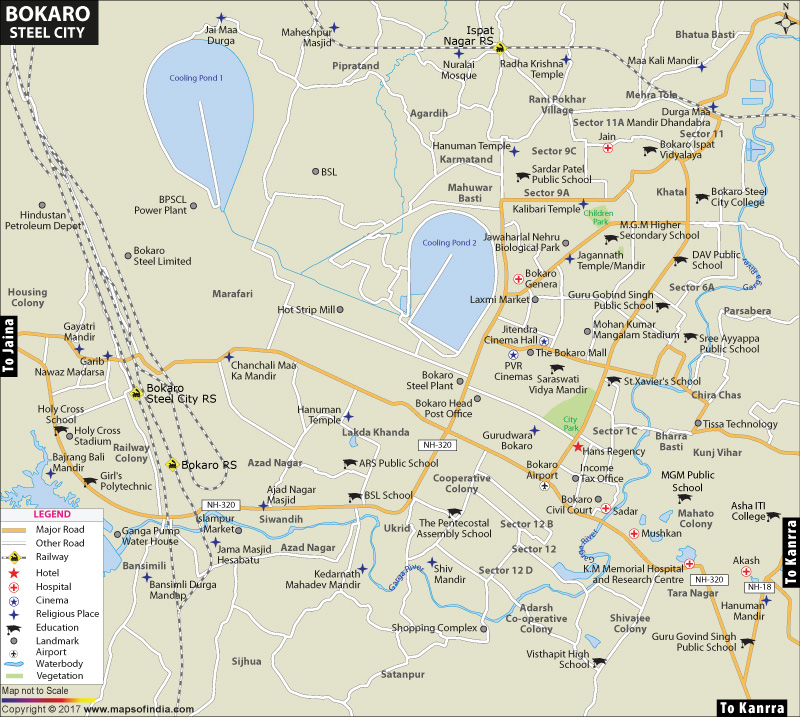
In eastern India, Bokaro sits within Jharkhand and holds major industrial significance - earning it the nickname "Steel City of India." Built around the vast Bokaro Steel Plant, its foundation ties closely to one of India's boldest post-1947 industrial ambitions. While historic towns grew slowly via commerce or monarchy, this place took shape quickly, driven instead by steel, design, and national progress goals. Because of planned infrastructure and factory-centered living, it became a new kind of urban space.
Perched atop the Chota Nagpur Plateau, Bokaro lies amid lands abundant in minerals - fueling mines and factories for decades. Because of its central position, linked by rail lines while sitting close to vital resources like coal and iron ore, planners picked it as a core hub when building India’s industrial backbone after 1947. Though previously underdeveloped, this stretch of land shifted dramatically once construction began on the Bokaro Steel Plant - a project shaped through cooperation with Soviet engineers. Over time, furnaces rising here turned quiet villages into zones of constant industrial motion.
History and Culture
Built alongside steel beams rather than palaces, Bokaro tells a different kind of Indian origin tale. While older towns grew beside rivers or kings’ halls, this place gained shape only once national leaders turned toward factories and furnaces. Independence brought new priorities - factories first, then homes. Where fields, trees, and scattered hamlets once stood untouched, planners saw potential for smokestacks and housing blocks.
Change arrived in the 1960s as Bokaro won selection for a massive new steel plant. Ideal conditions drew planners - nearby coal fields, rail networks, water access, and mineral zones across eastern India played their part. Help from the Soviet Union made construction possible; what followed ranked among India’s boldest industrial moves. Life shifted fast once operations started. New roads cut through old landscapes while housing areas took shape nearby. Education centers opened alongside medical facilities, drawing families from distant states who sought jobs, stability, fresh beginnings. Movement into the town grew steady, reshaping its character piece by piece.
Built slowly on farmland, Bokoko took shape as a structured urban hub meant for heavy industry. Along came engineers alongside technicians, laborers from steel plants, educators, civil servants - each bringing households shaped by different roots. Migration transformed it quietly - not through force but flow - from homogeneity toward variety. Speech patterns shifted, meals carried new spices, rituals crossed neighborhoods, merging without effort into common routines. What emerged was neither sudden nor staged - it simply grew, layer after layer.
Though Bokaro carries a strong industrial image, signs of its earlier tribal roots linger in villages and smaller settlements close by. Away from city growth, native groups maintain dances, music, rituals, and celebrations tied closely to seasons and land. Even as towns spread outward, these deep-rooted traditions have held their place without drawing much attention. What remains today reflects quiet endurance rather than loud presence.
Across Bokaro, traditions blend with urban rhythms in quiet but visible ways. Celebration finds strong expression during festivals, uniting people through shared moments. Dominant among these is Durga Puja - its scale shaped by the presence of many Bengalis. Festivals like Diwali, Holi, Eid, Christmas, or Saraswati Puja also see broad observance across the city. Events pop up regularly through schools, local groups, even housing areas - drawing attendees regardless of origin. What stands out is how these moments blend into daily life, shaping a key part of what the community feels like here.
Over time, learning and athletics began shaping how people live in Bokaro. Schools here, along with prep centers, draw young minds from surrounding areas. Where fields meet neighborhoods, game spaces spark interest - not just in cricket or football but also badminton and local events. Though quiet at first glance, the city pulses with team spirit after school hours.
Economy
Steel shapes much of Bokaro's financial life, standing tall among eastern India’s key industrial hubs. Though home to varied activity, its core strength lies in manufacturing weighty goods, handling commerce, alongside growing service roles. Central to it all sits the Bokaro Steel Plant - run by SAIL - a facility ranked among India’s most significant. Since opening, this site has pulled the town toward rapid growth while anchoring job markets near and far. With time, factories around it expanded too, feeding off the demand it sparked.
Heavy industry shapes much of the regional economic landscape. From transport networks to makers of goods, operations tie closely to steel output. Technical schools have grown alongside factories, adapting to workforce needs. Jobs in maintenance and building sectors often trace back to industrial demand. Even supply routes evolve around factory requirements. Training programs emerge where mills stand, preparing workers for hands-on roles.
Most jobs in Bokaro tie back to the public sector, mainly due to the presence of the SAIL-run Bokaro Steel Plant. Education centres run by the government, medical facilities, residential area management, together with worker support networks tied to the plant, remain central features of daily living. Though times change, these institutions still influence how the city functions.
Years of steady expansion mark Bokaro's services industry. From shops to eateries, movement networks to tutoring spots, each piece adds weight to the economy. Hospitals, financial offices, inns, and sprawling plazas play their part too. Because planning shaped the town early, trade found room - malls rose, stores multiplied, small enterprises settled into daily life.
Nowhere is growth more visible than in classrooms, where learners travel from surrounding areas drawn by Bokaro’s learning centers. Because people live here in greater numbers, clinics and hospitals serve more patients each year. Industrial jobs bring workers - those same workers need medical care. Schools adapt to rising demand just as clinics do. What once served locals now supports a broader community. Learning spaces grow alongside treatment rooms. With every new factory, both education and health infrastructures shift subtly.
Tourism
Besides factories and steel plants, Bokaro holds quiet corners where trees line pathways and water reflects sky. Where industry dominates, parks offer breath, spacing out concrete with grass and shade. Temples sit at bends in roads, reached by footpaths worn smooth. Lakes draw visitors without needing grand announcements. Layouts made long ago still guide how people move today. Green belts do more than decorate - they shape daily comfort. Even a short walk here can shift the mood, subtly. Not everything hums with machinery; some places simply rest.
Though quiet most days, the Jagannath Temple in Bokaro draws crowds when rituals grow lively. Its design speaks as much to faith as to craftsmanship, pulling people close without loud claims. When festival time arrives, shared joy fills the space - singing, gathering, moving together. What stands out is how belief shapes daily rhythm, not just special dates.
Perched close to the urban edge, Garga Dam offers calm waters framed by greenery. While industry hums elsewhere, visitors arrive quietly - drawn by stillness more than sightseeing. Nature here unfolds without rush, appealing to those stepping back from crowded routines.
Demographics
Decades of movement for factory jobs built Bokaro’s varied community. Workers arrived slowly, coming from places like Jharkhand, Bihar, and West Bengal. Over the years, folks also moved in from Odisha, Uttar Pradesh, then later from Punjab, along with families from southern regions. The mix grew quietly, shaped by work, not force. Lives intertwined through shifts at plants, shared housing, common routines. Migration did not stop; it settled into streets, schools, speech patterns. Each group brought habits, yet adapted without losing core traits. The presence of many cultures now defines daily life there.
Despite being in eastern India, Bokaro stands out with stronger reading and writing skills among its people, largely because of improved schools and city planning. Because learning centers are more accessible here, education levels climbed faster than in nearby regions. Though rural areas still face challenges, classrooms equipped for modern teaching helped shift outcomes over time. Since training facilities opened doors to skilled jobs, families began valuing schooling more deeply. While progress remains uneven, steady investment in buildings and teachers changed how communities view knowledge.
Among those living in the city are students alongside civil servants, while entrepreneurs appear next to laborers. Professionals form part of this mix, appearing between shifts or lectures. Each group brings different routines, shaping daily life in distinct ways. Together, they make up an urban landscape marked by social range.
Administration
Bokaro town lies within Bokaro district of Jharkhand, operating under both municipal and district governance structures. Urban management in Bokaro Steel City rests with local authorities overseeing essential facilities - sanitation, road networks, water distribution, alongside general public amenities. Inside the urban layout, neighborhoods follow a structured pattern - each includes spaces for shopping, learning, green areas, alongside shared services. What stands out in Bokaro’s governance is how these zones shape daily administration.
From city upkeep to daily operations, government bodies shape how things run. Oversight by industry regulators adds another layer of control. Public agencies manage resources while handling community needs. Each part connects - yet works on its own rhythm.
Besides its industrial strengths, the city connects well by rail and highway to places like Ranchi, Dhanbad, Kolkata, and Patna. Reaching neighboring urban centers becomes easier thanks to these transport links. Major hubs are within practical travel distance due to consistent infrastructure investment. Movement of goods and people gains efficiency through these routes. Accessibility improves steadily as networks expand gradually over time.
| Facts of Bokaro City | |
|---|---|
| Official Name | Bokaro City |
| Location | Jharkhand |
| Area (km2) | 2883 |
| Population | 2062330 |
| Language | Hindi |
FAQs
Q1: How many villages are there in the district?
Bokaro district has more than 800 villages spread across its administrative blocks and rural areas.
Q2: What is the population of the district?
It has a population of around 20 lakh according to Census 2011.
Q3: What is this district famous for?
It is famous for the Bokaro Steel Plant, its planned township, industrial development, and its identity as the “Steel City of India.”
Last Updated on : May 11, 2026
