

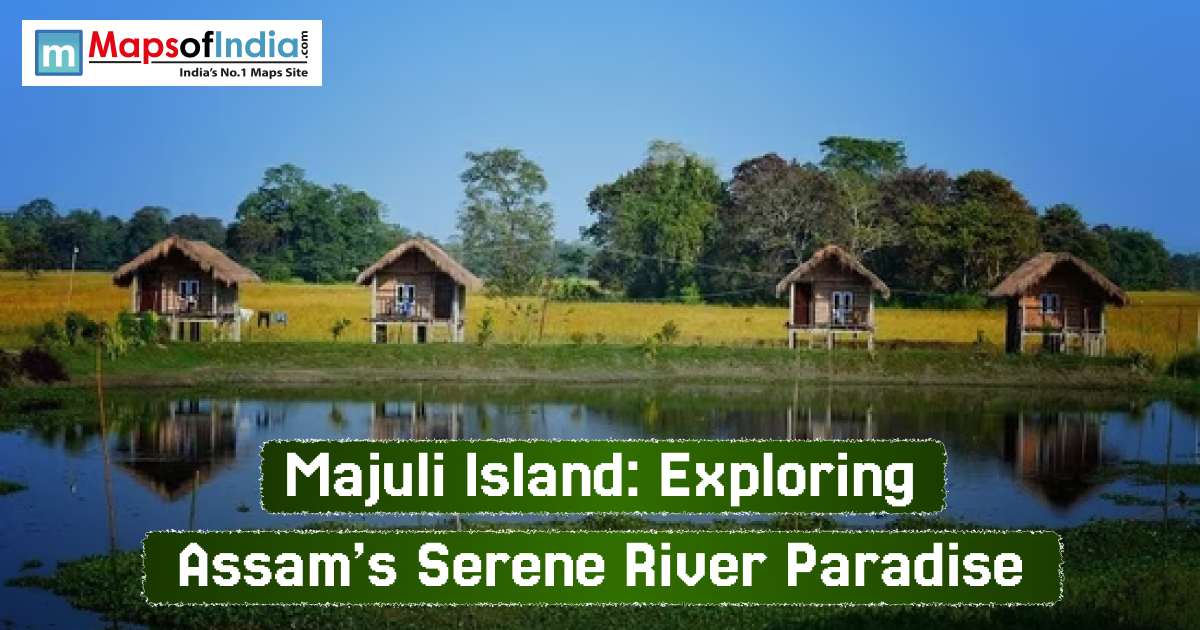
Majuli is a river island located in the middle of the Brahmaputra River. It is completely surrounded by water and forest. The whole island comes to a little over 350 square kilometres in total. Majuli Island is ranked as one of the most interesting and tranquil places of the Indian subcontinent. The largest river island in the world can be found in the powerful Brahmaputra River in Assam.
A Glimpse into Majuli’s History
This island is really old. This part of land was once part of mainland Assam, but with frequent massive floods in the Brahmaputra River, it became an island. With time, this island has become an important part of Vaishnavism. It is the Hindu tradition, spread by saint Srimanta Sankardev. The island has now become a hub of religious studies, art, and cultural activities. The monasteries or Satras of the island which not only make up the historical heritage but are also the living tradition of the island.
The Cultural Heartbeat of Majuli
The Satras are the monasteries that were set up by the disciples of Srimanta Sankardev. These monasteries constitute the very core of Majuli’s cultural life. They are committed to the ideologies of love, faith, and accord. There are more than twenty Satras dotted all over the island, and each one has its own customs. Both Kamalabari Satra and Auniati Satra are famous among others. They impart education in dance, drama, music, and religious philosophy. The monks or Bhakats, as they are called, live a life of simplicity and are devoted to art and faith.
The Indigenous Tribes of Majuli
The majority of settlers in Majuli are ethnic groups such as the Mishings, Deoris, and Sonowal Kachari tribes. They have spent most of the last years living with nature in their communities. Inevitably, these tribes dwell in a peaceful way by nature and are not the first to think of transforming the natural Dordure into an urban or suburban lifestyle. Their bamboo homes, locally called Chang Ghar, are traditionally made on raised platforms so that they can be protected from the coming floods. Their living styles go to show their commitment towards the conservation of nature and their reverence for her divine power. They also take pride in providing beautiful textiles, traditional music, and dishes that would impress anybody. Tourists generally find their warm welcome to be most cordial and genuine.
Majuli’s Natural Beauty and Ecology
The natural splendour which Majuli has is simply breathtaking. Majuli is encircled by the river Brahmaputra and is a paradise for nature lovers. The island is blessed with vast wetlands, lakes and paddy fields. As far as fauna is concerned, it is teeming with migratory birds that primarily visit during winter. To see pelicans, storks, and ducks along with their companions visiting to pass the winter days at Majuli is indeed an eye charm. The Majuli people are strong supporters of environmental modes of living. Their practice of using bamboo, clay, and natural fibres as materials in building and crafting their own work is a good manifestation of how much they love and respect nature.
Challenges Faced by the Island
Majuli, as lovely as it may be, has serious environmental issues. The erosion brought about by the Brahmaputra River has consumed a good part of the island every year. In addition to that, climate change and flooding are ever-present dangers to its existence. Quite a number of the residents have been forced to relocate because of land loss. The government and environmental bodies are attempting to preserve the island with their initiatives in embankments, reforestation, and sustainable development initiatives. The survival of Majuli is crucial for its cultural and environmental significance to be preserved.
Majuli’s Connection with Religion and Spirituality
Spirituality is one of the core elements of Majuli’s lifestyle. The widely believed teachings of Srimanta Sankardev, which mainly talked about devotion, simplicity, and the common good, are very well represented on the island. What the Satras offer in terms of prayers, dances, and plays is not only the rites. They are also the manifestation of spiritual delight and oneness. First-time visitors describe the island as a place where peace and confidence in God are the natural ways of life.
Agriculture and Traditional Livelihood
The main source of livelihood for the people is agriculture. Most of the islanders are engaged in farming and fishing. Rice is the main crop of this island, but at the same time, mustard and vegetables are also grown here. People here also do cattle farming and handloom weaving. They follow traditional farming ways here. People live in a community here. This keeps the bond of togetherness alive here. They help each other during harvest and festivals.
Best Time to Visit Majuli
Just one of the best times to be in Majuli could be considered as being from the month of October till March, when the weather is nice. At this time, the water levels are optimal, and there is a great deal of festivity going on. It is in the cold period also when the migratory birds find their way, thus making the island even more beautiful. It is better to keep away from the monsoon season because of the possibility of floods and the river’s current being hard to predict.
Sustainable Practices and Eco Awareness
Majuli sets an example for others to follow in terms of sustainable living. The people living there take good care of nature and do not waste resources. Some of the things the island does to protect the environment are organic farming, low impact on the environment through waste management, and traditional building methods. Visitors are also provided with the means to go green during their stay. The close relationship between humans and nature is one of the few merits of the island.
Preserving the Heritage of Majuli
Saving Majuli’s cultural and natural heritage is vital for future generations. There are many activities going on,such as recording traditions, taking care of Satras, and stopping erosion. The young artists and monks are still being taught by their forefathers, and thus the island is not losing its face.
Conclusion
Combining the main aspects of culture, spirituality and nature, this island is a radiant example of it. Majuli’s Satras, Festivals, wetlands, and traditional homes are all centred around peace and authenticity. Coming to this island,it is as if entering a different world where time is governed by the river flow. The river island of Majuli is India’s river haven and is a narrative of India’s varied and ancient heritage.