
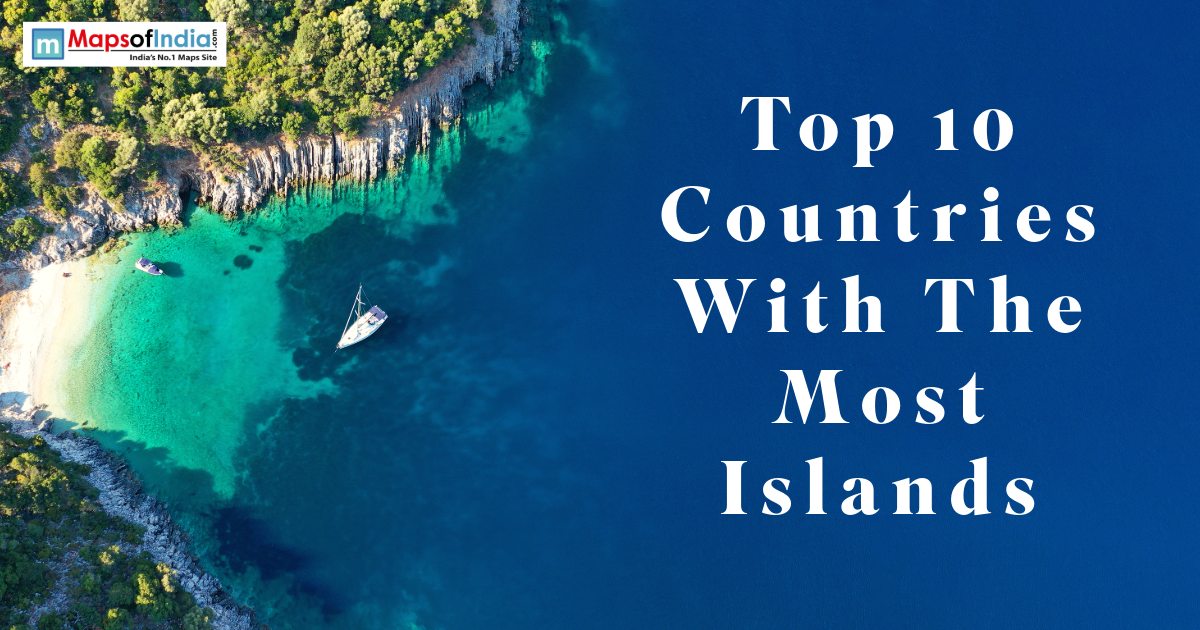
Islands have long been a place of interest for people, a place to be alone, free from nature, and other customs. On Earth, there are only a few locations that contain a lot of numbers; numbers that are almost up to a million spread out like stones in the ocean. These countries are not one landmass, but they are spread by water in clusters, creating their way of living, building, and how they see themselves. Each group provides their own beat, from cold Northern platters to hot Strings in the South. There are many different patterns and rich plants and animals that depend on the travel trade, sea harvests, and many other elements of life.
Sweden
The islandlets are scattered around the shores, in thousands around the shorelines of Sweden, which has more than any other country (approximately 267,570). Its coastline, in Northern Europe, extends in island clusters, such as the Stockholm Archipelago with approximately 30 thousand islands. Many of these land forms remain unaltered, untouched except for stone edges and dense pine forests and old red cabins perched among the trees. People come back here each warm season to boats, weekend getaways and long hikes through wild areas, and the habits that are developed here are the habits of life on the water. The islands of Sweden are surrounded by water, peaceful places that are accessible only by slow ferry. Consider it a Northern fantasy where sea and rock intertwine in meshed perspectives that never cease.
Norway
Norway is in second place with about 239,057 islands dotted along its jagged coastline and deep fjords. It is in Scandinavia where it is found and gives rise to towering peaks that plunge straight into cold waters. The Lofoten chain is one of them, it’s well known for its spectacular sights, historic fishing villages and dancing auroras overhead. The seafood industry is a lifeline on these islands, and the experience of a wild outdoor adventure is attractive to visitors. Imagine a land made of water and rock, with nature’s power everywhere in the cliffs and currents.
Finland
The northern scenery in Finland is dominated by endless lakes rising up around 178,947 islands. Although compact, they all feed into the country’s extensive network of waterways. Its position in Northern Europe holds a record as the planet’s biggest island group by count. The Åland Islands are a group of small islands, self-governing and with their own native population speaking Swedish, far away from the sea. It’s a place where visitors can find peace and tranquillity amidst the remnants of old sailing days and tranquil shores. In place of crowds, you have slow mornings, wooden saunas and paddles cutting through still bays. Here, every object is a reflection of the water, and the islands are one after another, without end.
Canada
The Canadian islands are spread throughout the frozen northern waters and rugged shorelines of the Earth, with one in every nine islands being located within Canadian borders. Baffin Island is wide, second only in size to Greenland, and nearby Ellesmere has jagged peaks covered in snow all year round. Whether you are wandering through forests with fog on the sea breeze coast or along endless tracts of tundra in the far north, the scenery along the way changes radically between the two extremes. For centuries, people have depended on these lands just as much as do the polar bears, caribou or migratory birds.
Indonesia
The majority of the lands are located in the warm waters of the intercontinental zone. Some grow with jungles, some have deserts by the sea. Every region has its own rhythmic movement in accordance with the various sun cycles. Well-known locations attract people not only with sand, but also with life forms that are not found elsewhere. Under the trees, there are hidden peaks that rumble. Colours fade and below waves, reefs pulse. Through dance, fabric, and belief, people talk in old ways. Not all shorelines are alike. In nature, surprises take place one after the other without effort.
Japan
Japan consists of approximately 14,125 islands scattered in East Asia. Of these, Honshu, Hokkaido, Kyushu, and Shikoku are prominent, with tiny neighbours filling the spaces. Snowy peaks dance amongst the blooming cherries, and even palm-lined shores appear down south. On these isles, food is a reminder of rituals that are influenced by sea and soil. Come to a location where old-fashioned meets innovative thinking, and that is united by water and history.
Greece
More than six thousand islands dot the Mediterranean off Greece’s shores. Bright sunshine shines on white houses, next to clear water; you can see through it. Then Santorini, Mykonos, Crete, wide, Corfu, green. Ancient rocks rise from the ground, with stories older than many nations. Out-of-towners flock in the thousands, for reasons they do not know. Beauty is not like the shout here; it waits, it lingers in your mind long after. This time is different near these shores, waves, and old ways fashion it.
United Kingdom
Among its many lands surrounded by sea, the UK holds thousands of islands. Scotland makes up more than nine hundred on its own. Orkney is near Shetland, and the Isle of Skye is with the Isle of Wight. Each opens up rugged landscapes, layers of stories from long ago, and differences in ways of life forged by time. It is a northern country with salt-sprayed, wild isles that are spread out.
New Zealand
New Zealand‘s land is divided among the over 700 islands in the South Pacific. There are a few standout examples, but dozens of very small ones scattered about the sea between the North and South Islands, Stewart Island, the Chathams, and a few less popular ones. Stony cliffs plunge down into the sea, and mist ascends on peaks far from the sea, views not duplicated anywhere else. This distant but colourful land has wild seashores, ancient woodlands, and tranquil bays where few tread.
These Countries Are Different
Ten countries are scattered across oceans where they are at the forefront of the island thing. Each one in turn displays unique scenery, culture, and lifestyle. An image of frozen chains around Norway, and then some warmer waters around Indonesia. Every cluster of land masses has an impact on people’s lives, work, and community building. Travel to the islands here, and stay grounded in character. Beauty is like a corner that has not yet been touched by time. Where the water meets the land, nature grows, grows, grows. Together, they illustrate Earth’s diversity in ways that appear to be separate.