
In India, there are various ways of telling stories. In the forests of Madhya Pradesh, the Gond tribe lives. Their culture and art are both really rich. The art they practice there is not just about decoration. This craft carries memory with cultural significance. Every mark of this art tells an old story, showing how deeply humans are connected to the soil.
Roots of Gond Art
The Gondi people, a tribal group of central India, are the source of Gond art. They have been dwelling in the forested areas for a very long time. Their art initially was on the walls of their mud houses, which were decorated during festivals and rituals. The designs were thought to attract good luck and ward off evil spirits. Eventually, these murals were transferred to paper and canvas, and thus, they became one of the most popular tribal art forms of India.
A Visual Language of Nature
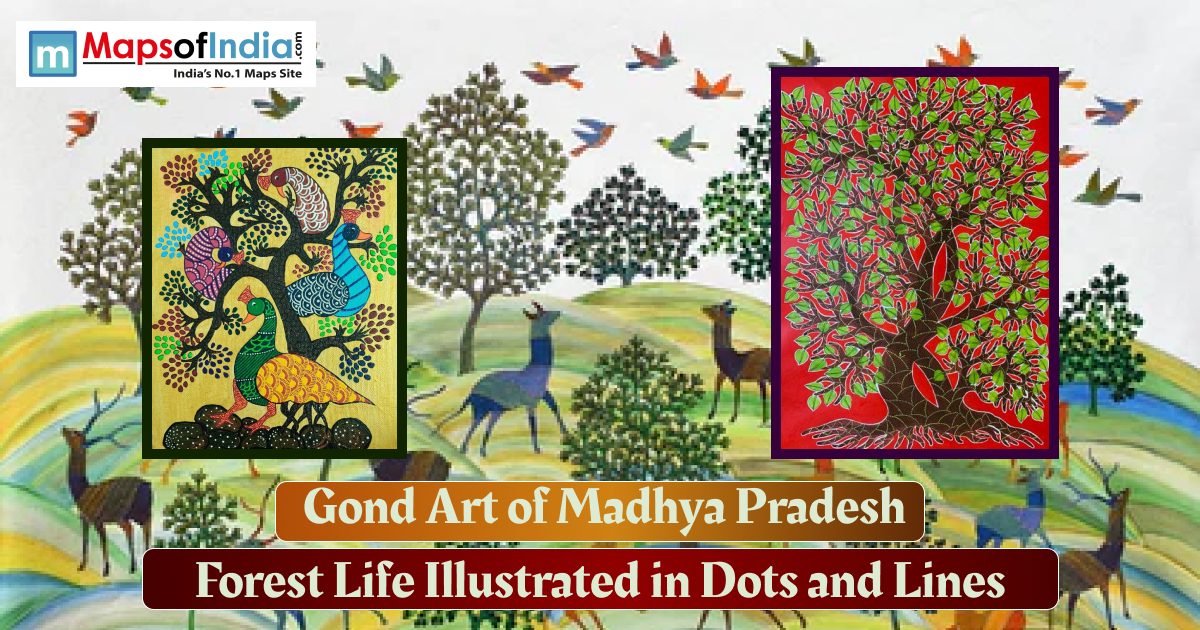
According to the Gond painters, nature is a living being. Trees, animals, and even rocks have spirits. This idea is the basis of their art. One art piece is enough to demonstrate the life of the forest – birds flying, fish swimming, and trees talking. To show the motion and relation, the artists take advantage of vibrant colours and detailed patterns. Thus, the image becomes a living thing with the rhythm and harmony it is full of.
The Signature Dots and Lines
The highlight of the Gond art is its dots and lines. Artists employ them to brighten figures and bring out the grain. Dots are for lightness, whereas lines are for smoothness and strength. When combined, they produce a feeling of movement that leads the viewer from one corner of the painting to another. These patterns are not without intention. They correspond to the artist’s tempo, just like in music. Every line, arc, and dot is aimed at turning simple figures into vibrant fables.
Colours of the Earth
Long ago, Gond artists painted with shades from dirt, plants, or blossoms. Besides that, they got yellow from cow poop, white from crushed rock, red from ground soil, along with black from burnt wood. These days, plenty use plastic-based colours instead of natural ones; yet, their usual tones stay close to the land. Their art shows energy in village life, plus the surroundings out in the wild. Even when new gadgets show up, what drives their hues comes straight from nature.
From Walls to Canvases
It was a dramatic change when Gond art moved from murals to canvases. In the 1980s, the change was brought about by artists such as Jangarh Singh Shyam, who made Gond art known to city people. He was the first one to use paper and canvas for telling these tribal stories. His triumph led many others from the same community to follow his path, thus helping Gond art to become recognised both nationally and internationally. Now their works are available in exhibitions worldwide, yet they retain the same straightforwardness and genuineness of their tribal origin.
Storytelling Through Art
Each Gond painting is a narrative. Such narratives are mostly based on myths, folklore, and the common life. Artists draw what is in front of their eyes and what exists in their minds. Thus, a tiger may be illustrated as dancing, a tree may be given the feature of having eyes, and the moon may be smiling. These components represent the way the Gond people understand the world full of magic and meaning. The works of art become the link between the tangible and the spiritual, thereby transforming the ordinary into trademarks that stand for the deeper truths.
Connection to the Forest
The woods aren’t just where the Gond folks live. They’re also what sparks most of their ideas. From trees and plants come meals, roofs, and tales told around fires. Each creature or leaf fits into a kind of big kin group. That deep bond is why their artwork feels so close to the heart. These creators don’t stand back watching nature. They’re part of it. These folks live right there. Their artwork’s like a picture language of thanks, paying respect to the land that keeps them going.
Art as Livelihood
Art now brings money to lots of Gond households. Because of local groups and state efforts, tribal painters can sell what they make. Online spaces, along with nonprofit groups, boost their reach too. Lives of the native people have changed with the rise of this art, and the younger generation is more keen on keeping the craft alive. Still, keeping things real isn’t easy. With more people wanting it, there’s a worry that too much business might weaken what made the art special in the first place.
Gond Art in Modern Spaces
In recent years, with the rise of Gond art worldwide, it has become famous around the globe. You can see the Gond patterns on various art pieces, with novels, fabrics, or online drawings. Places in the cities, like streets, lodges, and open spaces, are getting colored in this art style. Pulling native artwork into the mainstream.
Preserving an Ancient Heritage
People are trying hard to save real Gond art from fading away. In Madhya Pradesh, training sessions and learning spots pass down old methods to kids who paint. Events celebrating culture give the artwork more space to shine, so it stays woven into how India lives today. Right now, the big task is holding on to its soul even as new ideas come in. Backing up hometown creators by getting their pieces straight from hand keeps the practice going strong.
A Living Tradition of the Forest
The Gond art from Madhya Pradesh isn’t only shapes and shades – instead, it mirrors existence: flowing, alive, full of inner meaning. With tiny marks and strokes, tales stretch across time. Stories are passed down through these details. Art holds memory, shares who we are, while tying people to the land around them. When you look at the Gond artwork, it is more than just visuals. This is their own cultural identity. This is being carried forward by the native people of this tribe.
A Story in Every Stroke
From village shelters to urban galleries across the globe, Gond art tells a deep story. Created by forest materials and ancestral thought, its core keeps step with natural cycles. Each line, each stroke suggests honesty, belief, quiet, never loud, just sensed. Beyond paint on cloth or wood, it pulls you close to look past clutter, notice what quietly sings underneath, and walk slowly through days.