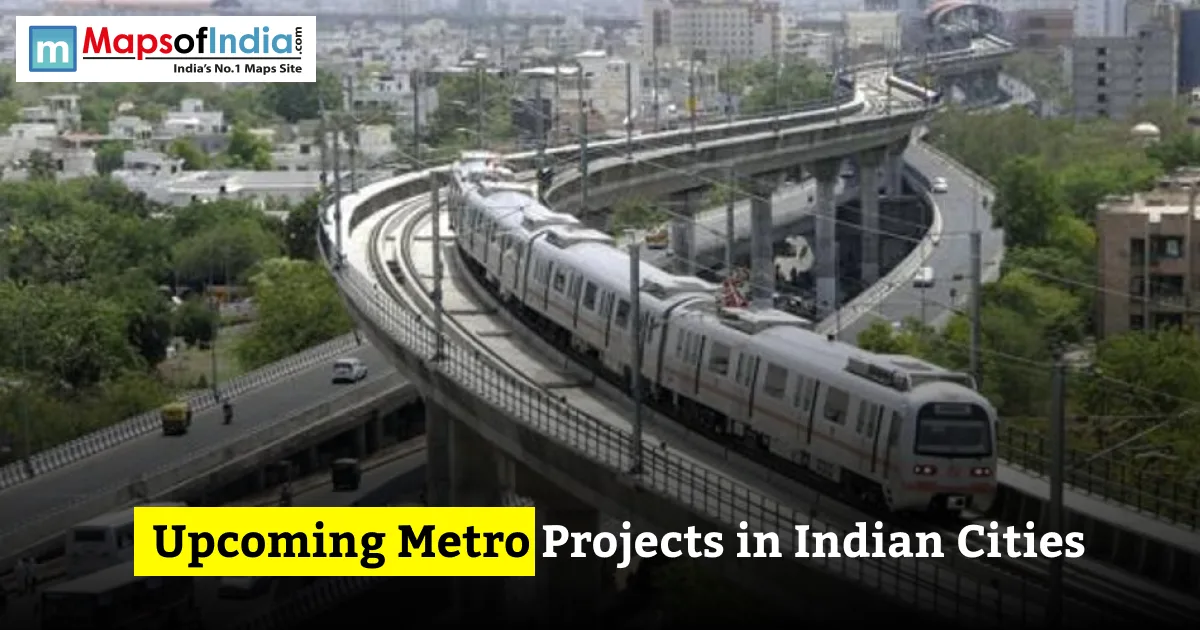
Metro rail has transformed the way people move in cities. In the past ten years, the Metro network has expanded rapidly, reaching many neighbourhoods, both large and small. It has become one of the largest Metro systems in the world. This article examines Metro lines that are already operational, those under construction and many new lines that have just received approval. When these Metro lines open, people will travel more easily, traffic will reduce, and cities will feel a little greener.
Let us look closer. Whether you ride the Metro daily, follow city planning updates or simply wish to know what comes next, this list will help. You will see the information on Delhi Metro Phase 4, Chennai Metro Phase 2, Mumbai’s expanding lines, Bengaluru’s Phase 3 and many more. We will also cover approved corridors in cities aiming for a Metro map, MetroLite and Metro Neo projects and updates on the Namo Bharat (RRTS) network.
India’s Metro Network at a Glance (2026)
By 2026, the Indian Metro system will span 1,076 km across 26 cities, with 1,000 km under construction. All this new concrete and steel will transform city travel. Make life easier for millions.
| Metric | Details |
| Operational Metro Network | 1076 km |
| Under construction | 1000 km (approx.) |
| Cities with Operational Metro | 26 |
| Global Ranking | 3rd Largest Metro Network |
Metro Projects Under Construction
Delhi Metro Phase 4
Delhi Metro Phase 4 is one of India’s largest ongoing Metro projects. New routes will reach Kundli and Saket G Block, and existing lines will also be extended. The goal of this Metro project is to make travel easier across Delhi, open neighbourhoods, and reduce traffic. Construction proceeds in stages, and sections of the Metro line will open over the coming years.
Chennai Metro Phase 2
Chennai Metro Phase 2 will extend the Metro system by 118.9 km across three corridors. It will link Madhavaram, Sholinganallur, SIPCOT, Poonamalee and the Chennai Trade Centre. Parts of the Metro line will open above ground while underground work continues.
Mumbai Metro (Lines 2B, 4, 5, 6, 9, 12)
Mumbai’s Metro lines focus on east‑west flow and on giving suburbs more service. With lines 2B, 4, 5, and others, Metro rides will be easier, and pressure on roads and suburban rail will lessen. Construction is ongoing, with some Metro openings phased.
Bengaluru Metro Phases 2, 2A, 2B, 3
Bengaluru’s Namma Metro expands to connect tech hubs, homes and Kempegowda International Airport. Timelines shift; digging and building continue. When finished, Metro traffic will ease, and public transport will be more reliable.
Pune Metro Phase 2 & Line 3
Pune invests heavily in its Metro network. Phase 2 and Line 3 will link suburbs like Vanaz, Chandani Chowk and Wagholi. Run straight to Hinjawadi IT Park. Faster Metro rides, less traffic and better links will shape Pune’s future.
Kolkata Metro Line 6 (Orange/Yellow extensions)
Kolkata’s Metro network expands. Orange Line (Line 6) will connect New Garia to the airport, passing EM Bypass and New Town. Yellow Line heads to Barasat. Expect airport trips and better city links.
Kochi Metro Phase 2
Kochi Metro expands to reach neighbouring areas and main transport hubs. Phase 2 pushes the Metro system outward while future plans (such as an airport line) are already underway.
Ahmedabad Metro Phase 2A
Ahmedabad’s Metro 2A is a line linking Koteshwar Road and the airport. When finished, Metro trips to the airport will be smoother. The city’s Metro network will strengthen.
Newly Approved Metro Projects (Pre‑Construction Stage)
The government has just approved new Metro lines, but now it is planning—finalizing designs, handling land, and clearing red tape. When construction starts, these new Metro routes will connect people, especially in fast‑growing cities.
| Project | City | Length | Approval year | Current status |
| Jaipur Metro phase 2 | Jaipur | 41 km | 2026 | Approved by the Union Cabinet; preconstruction activities underway |
| Delhi Metro Phase V(A) | Delhi | 16.08 km | 2026 | Approved; detailed planning and initial works in progress before full-scale construction |
| Mumbai Metro Line 8 | Mumbai Metropolitan region | 34.9 km | 2026 | Approved; pre-construction work underway for airport connectivity corridor |
Proposed / Planned Metro Cities (DPR Stage)
A number of cities are drafting plans and feasibility studies, preparing Detailed Project Reports (DPRs). No construction yet, but cities like Ludhiana, Mysuru and Dehradun want a Metro. This shows how people everywhere in growing cities desire better, greener travel.
| City | Project Status | Current Stage |
| Chandigarh | Proposed Metro | DPR under preparation |
| Ludhiana | Proposed Metro | DPR/feasibility stage |
| Amritsar | Proposed MRTS/ Metro | Feasibility study and DPR planning |
| Ranchi | Proposed Metro | DPR under consideration |
| Jabalpur | Proposed Metro | Feasibility and planning stage |
| Mysuru | Proposed Metro | DPR Stage |
| Dehradun | Metro Neo/ MetroLite proposal | DPR Stage |
| Bareilly | Proposed Metro | Feasibility Study/ DPR Stage |
| Gwalior | Proposed Metro | DPR Stage |
| Mangaluru | Proposed Metro | DPR under consideration |
MetroLite & Metro Neo Projects
For smaller and mid‑size cities, full Metro systems are expensive. MetroLite and Metro Neo are solutions. They work best where crowds are smaller, but a good train system will still help a lot.
MetroLite
MetroLite is a rail system that uses trains and simpler tracks, perfect for medium‑size cities.
Metro Neo
Metro Neo is a system that runs on rubber tyres and guided tracks. It is cheaper to build, very flexible and ideal for fast‑growing towns that have passenger numbers.
With these, more cities gain transit without draining their budgets.
Namo Bharat (RRTS) and Regional Rapid Transit Expansion
Metro lines mainly serve city travel. Namo Bharat is India’s attempt at high‑speed rail. The Delhi‑Ghaziabad‑Meerut line runs 82 km long. Cuts travel time. More routes are coming: Delhi to Panipat, Alwar, Bawal and Noida airport. These RRTS projects will make the city-to-city commute quickly, and spark growth. Offer a greener way to travel in the NCR region.
Key Trends Shaping India’s Metro Expansion
More focus appears on transit in smaller cities and on linking everything with buses and other transport. Funding comes from money, international loans and public‑private deals. MetroLite and Metro Neo help bring transit to towns. This is part of India’s vision for 2030.
Conclusion
Every year the Indian Metro network grows, connecting cities and suburbs through lines and regional transit. What is already. What is still on the drawing board promises city life: easier commutes, fewer traffic jams and a push toward sustainability. Once these projects are finished, Metro will make travel faster, safer and more convenient.
FAQs
1. Which Indian cities are expected to get a Metro?
Cities like Chandigarh, Ludhiana, Amritsar, Ranchi, Mysuru, Dehradun, Bareilly, Gwalior and Mangaluru are in the DPR/planning stage for Metro, MetroLite and Metro Neo projects.
2. How much of the Metro network is under construction currently?
As of 2026, over 1,000 km of Metro lines are under construction across cities—on top of the 1,076 km that are already running.
3. What’s India’s first underwater Metro tunnel?
That would be in Kolkata, part of the Metro’s corridor. It is built under the Hooghly River, linking Howrah Maidan with Esplanade—a leap for Indian Metro technology.
4. When will Delhi Metro Phase 4 finish?
Phase 4 opens in parts. Priority routes should be up and running by the end of 2026. Some sections approved later will take time.
5. What is MetroLite?
MetroLite is a rail system for Tier‑2 and medium‑size cities—best where heavy full‑scale Metro lines aren’t needed.
6. What is Metro Neo?
Metro Neo is a rubber‑tyred rail system— cheaper than a big Metro but still pretty fast and efficient for growing towns.
7. What is Namo Bharat (RRTS)?
Namo Bharat, also known as the Regional Rapid Transit System (RRTS), is a high‑speed rail network meant to connect cities in the region so people can travel between them faster than normal Metro lines.
8. Why are MetroLite and Metro Neo important for Tier‑2 cities?
They are affordable and sustainable. They can scale up as the city grows. This way, more people get transport without the massive costs of a big Metro.