






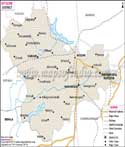
About
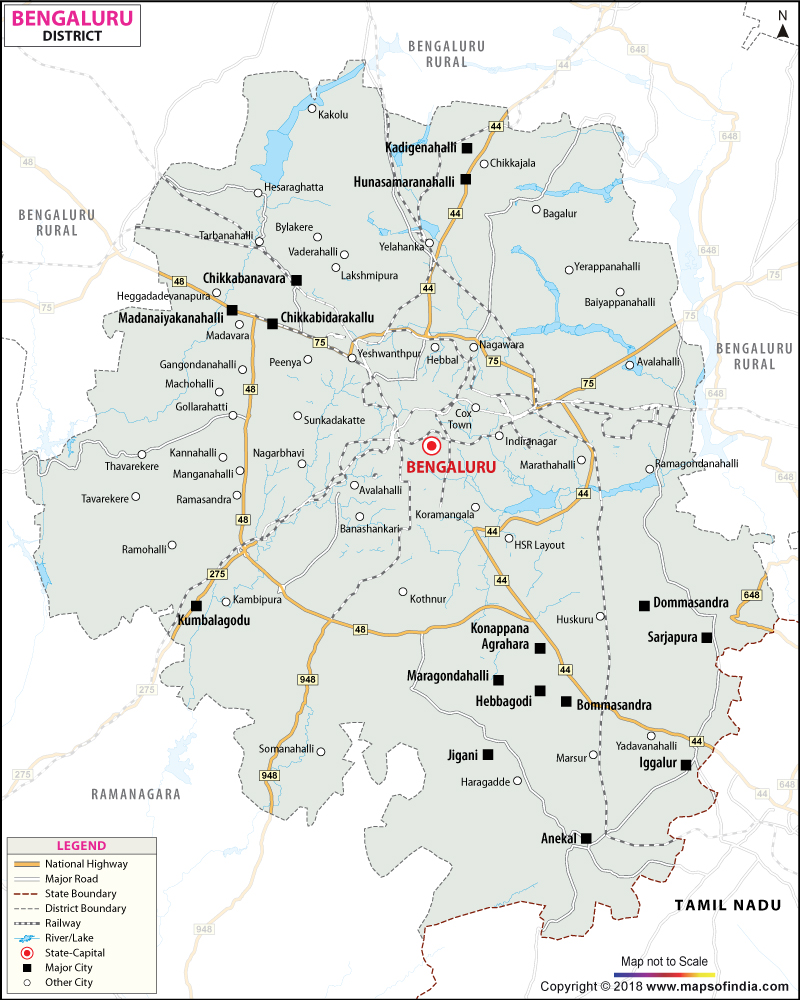
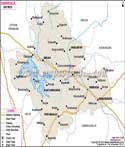
Located geographically in southeast India Karnataka it enjoys an altitude of about 920 meters (3,018 ft).It was called by many the "City of the Gardens" due to its vast tree cover, cool temperatures, and very clean lakes. In the shortest span possible, this city has turned from a serene natural haven into the "Silicon Valley of India, " which is a name that only the world's technological center deserves. The district borders Bengaluru North, and Bengaluru Rural on the north and east, Ramanagara to the west; and Krishnagiri district to the south belong to Tamil Nadu. The area has just 342 km2, a relatively small size but a major hub of administration, culture and economy at the state level for Karnataka. With that, it has the very capital city of the state, Bengaluru. This urban settlement offers a high-altitude climate and the development and maintenance of infrastructure that can support global markets.
History & Culture
The history of Bangalore tells a story through time that blends ancient Indian structural empires up to British colonial administration. The early records like antiquarian hero stones (Veeragallu), dated 890 CE and found in Begur, prove the presence of an ancient settlement called "Bengaluru." Still, the foundation of the present city came into being in 1537 CE. The First Step by Kempe Gowda I. Kempe Gowda I, Magadi, who was a very talented chief officer of the empire (Vijayanagar) had created a mud wall here at the location of the present city of Bangalore. As the legends, Gowda drew a plan of a settlement, released four carts from a point, going off in the four cardinal directions until they stopped; where the carts stopped he built watchtowers and Because of this marked the boundaries of the new town. To this day, four structures where he built the watchtowers namely - Lalbagh, Kempegowda Nagar, Mekhri Circle, and Ulsoor Lake work as the town's historic boundary markers. Also, he allocated different roads (pete) to cater to various professions with a fair share, like Chikpet (hardware), Nagarthpet (cloth), and Balepet (grain). These commercial streets still survive and are bustling. The region came under the influence of alternating local ruling powers after the Vijayanagara Empire became a thing of the past. First, the Bijapur Sultanate and then the Marathas were the ones to get their turn to govern the territory. But in the year 1687, Chikkadevaraja Wodeyar, the king of the Kingdom of Mysore leased the territory. After all, it was the Mughal Empire that did the leasing at that time. By the 1750s, with time it turned out, the Kingdom of Mysore was under the de facto control of Hyder Ali and his son Tipu Sultan, both of them being able and effective military commanders. Really, they not only reinforced the mud fortress with stone but also developed the palace courtyard into a beautiful place. Bangalore was one of those cities that was important enough to work as a strong base. Anglo-Mysore Wars being the context, the British, after Tipu Sultan fell in battle and died in the Fourth Anglo-Mysore War of 1799, gave the Wodeyar dynasty back the throne. Still, the British army's troops stayed in large numbers as the biggest reason for keeping things quiet.
In 1806, Britain decided to shift its troops from Seringapatam to Bangalore, mainly because of its more pleasant and cooler climate. So, the town of Bangalore Cantonment was set up. This change gave rise to the unique two-faced situation:
Economy
Bangalore has become a global economic powerhouse after shifting its focus away from traditional agrarian activities to technologically driven manufacturing, advanced research, and global financial services. This district is the major taxpaying unit of the state of Karnataka and contributes quite a few of the total Indian service-based exports.
Government Sector
Bangalore Urban is the administrative district that contains the major state government offices like the Vidhana Soudha (legislative assembly) and the Raj Bhavan (Governor's house). The district holds first class state and national research institutions like the Indian Institute of Science (IISC), National Aerospace Laboratories (NAL), Mental Health and Neurosciences Institute (NIMHANS).
Public Sector
Before the software industry took off in the 90s, Bangalore had a very massive central public sector industries foundation. The Indian Government selected Bangalore due to its central geographical position and mild weather. A lot of defense, aerospace, and heavy industry factories set up shop there. Among these giant state-owned enterprises are: HAL (Hindustan Aeronautics Ltd), manufacturer of fighter jets and helicopters. BEL (Bharat Electronics Ltd) is India's main company to produce defense electronics. ISRO, the organization that runs India's missile & space launch program. Also based here, BEML (Bhart Earth Movers Ltd) - maker of earth movers for mining, railways, and metros.
Services Sector
Come on, if you're going to say something about the district economy, the services sector is the unquestioned top earner. Not surprisingly, Bangalore is a hub of the world's major software parks such as International Tech Park Bangalore (ITPB) which is located in Whitefield and Electronic City, which also houses some tech park of international repute. Software (IT) & ITES: It is the headquarters of major global software companies like Infosys Wipro, Tata Consulting services (TCS) and also a base of multinational IT companies like Microsoft, IBM, Google, Intel, etc.
Global Capability Centers (GCCs): About 30% of the GCCs in the country are in Bangalore city. The city does for global operations what most cities would imagine, besides housing the R&D and engineering functions.
Tourism
Bangalore Urban District has many places in it that are worth visiting by tourists like a good mix of historical landmarks, lovely open places, and modern entertainment spots. Bangalore Palace: This unique location built by the kings of Mysore at the turn of 19th-20 century reveals the blend of architectural styles including reinforced towers, turreted parapets besides the interior ballroom structures having traditional oil paintings. It looks like a miniature version of Windsor Castle which is a design inspired by the Tudor architecture. Tipu Sultan's Summer Palace: The one-storey house on the bank of the Tank of Kalasipalyam represents an Indo-Islamic structure which is a rare gem. The house is made entirely of French rosewood and the walls are adorned with intricate columns, the arches have been buffed to a mirror-like finish, while the balconies have flower designs on them. Vidhana Soudha: This huge building with the House of Legislation of Karnataka and various other state offices besides being a fine specimen of the Indo-Dravidian and Neo-Dravidian architecture. The stone used for this building is an extremely pure granite and the four-headed Lion Capital of Ashoka is mounted at the top of the large dome. The Bull Temple (Dodda Basavana Gudu) at Basavanagudi is a place for a Bull Temple, which is also a famous temple of a big bull, that was mainly a construction under the guidance of Kempe Gowda I in the 16th century. Here is to be found a very impressive stone carvings of Nandi the bull in one very large rock. This is a symbol of sacredness and reverence as much as beauty and power.
Demographics
Bangalore is a beautiful city located in the Indian state of Karnataka. It has an approximate population of 96,21,551 at the time of the 2011 Census which makes it one of the main contributors to the state's population. Men and Women. The population of the district consists of 50,22,661 males and 45,98,890 female. Sex ratio in Bangalore district is at a figure of 916 for every 1000 males, which is lower than the Indian national sex ratio figure. This sex ratio is a good indicator of the balance of gender in the district and at the same time social conditions. Education. Literacy rate among the population of the district is a figure of 78 percent, a great testimony to the educational development of the region. The m District Magistrate/Deputy Commissioner (DC) is the highest-ranking officer of the administration who is also a member of the Indian Administrative Service (IAS) and is responsible for the supervision of matters related to land revenue, law and order and also the functioning of the state government. The major city region of Bangalore is under the control of Bruhat Bengaluru Mahanagara Palike (BBMP) who runs the show with civic facilities and also manages traffic and sanitation plus the cleanliness of the city. Taluks (Tehsils). The literacy rate is 91 percent and that of females is 84 percent which shows female education is lagging behind male education by a margin of 7 percent. Providing education has been a priority goal for the local administration. Schools. Besides its main language Kannada, which was given state-language status some time back and is still widely spoken.
Administration
Bangalore Urban District's administrative setup is such that an area large enough to cover its municipal limits is taken into the ambit of its administration. Apart from that a relatively small administrative setup has been chosen to handle its rural and suburban outer areas. Villages Clearly this is an area of dense urban fabric, but in fact, many villages are still situated right outside its city limits with the village population living alongside a highly industrialized environment.
| Facts of Bengalore District | |
|---|---|
| Official Name | Bengalore |
| Location | Karnataka |
| Area (km2) | 2170 |
| Population | 96,21,551, (2011) |
| Language | Kannada, Telugu |
FAQs
Q1: What is the number of Villages in Bengalore District ?
There are a total of 1209 revenue villages in Bangalore.
Q2: What is the population of the district?
96,21,551 people live in the district.
Q3: The Bengalore district is known foe what?
Bangalore or the Bangalore Urban district has its name globally because of the title 'Silicon Valley of India' which is given to it because of its premier status in Information Technology, software export and startup areas.
Q4: How many Legislative Assembly constituencies ?
There are 28 Legislative Assemblies.
Q5: What is the Official Language of the district ?
Kannada is the Official language of the district.
Q6: What role did the establishment of the British Cantonment have to play in the formation of modern Bangalore Urban?
The British erected a Bangalore cantonment in 1806 and this way created a kind of European-style development alongside the traditional old Indian city (the Pete). The new layout with wide roads, extensive military areas, and park systems characteristic of a colony were responsible for shaping the large-scale modern city that Bangalore eventually turned out to become, Mostly after gaining independence.
Last Updated on : August 04, 2026
