What is an Expressway?
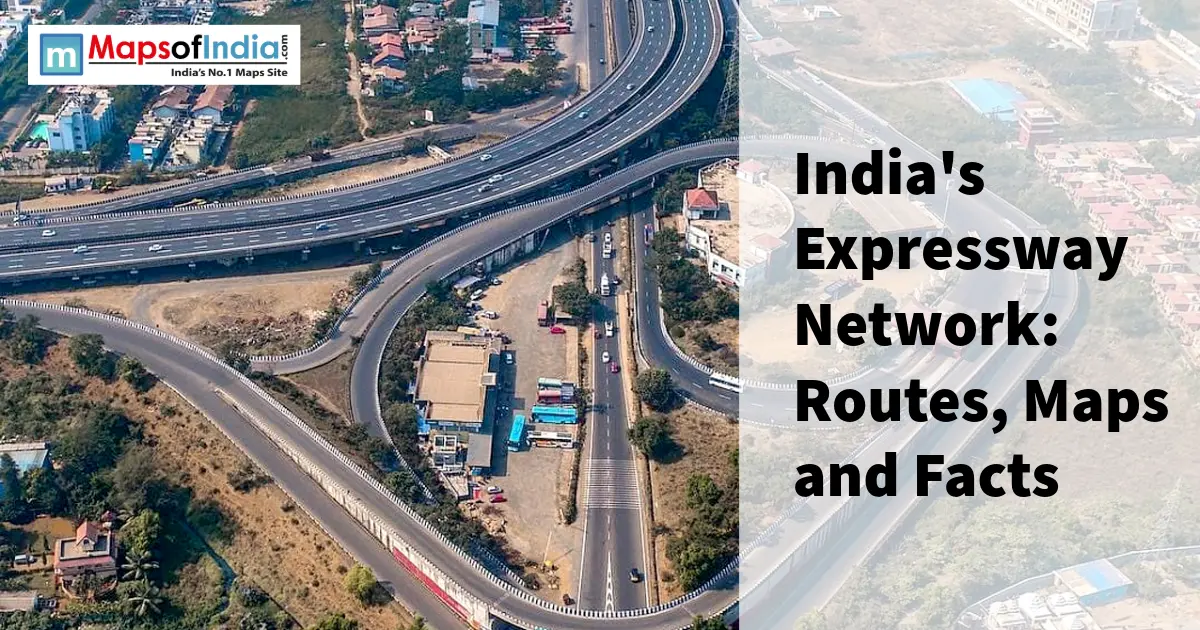
An expressway is an access-controlled road, meaning entry and exit points are limited to specific interchanges, with no local traffic, no crossings, and no slow-moving vehicles allowed onto the carriageway. A national highway, by contrast, often runs directly through towns and villages, sharing space with local traffic and cutting across intersections. That distinction is exactly why expressways support far higher speed limits, typically up to 120 km/h, compared to the much lower, more variable speeds you would see on an ordinary highway.
Overview of India's Expressway Network
India's expressway network has expanded dramatically over the past decade under the Bharatmala Pariyojana programme, overseen by the National Highways Authority of India, or NHAI. As of late 2024, the country had approximately 6,059 km of operational expressway, with a further 11,127 km under active construction. The government's longer-term Vision 2047 target aims even higher still, pushing toward 50,000 km of access-controlled expressway nationally. Uttar Pradesh currently leads every other state by a wide margin, home to more than 13 separate expressways.
Complete List of Operational Expressways in India
Here is a working list of expressways in India, covering the major operational and near-complete routes.
Expressway | Route | Length | States | Status |
| Delhi–Mumbai Expressway | Delhi to Mumbai | ~1,350 km | Delhi, Haryana, Rajasthan, MP, Gujarat, Maharashtra | Partially operational |
| Mumbai–Nagpur Expressway (Samruddhi Mahamarg) | Mumbai to Nagpur | 701 km | Maharashtra | Operational |
| Delhi–Amritsar–Katra Expressway | Delhi to Katra | 670 km | Haryana, Punjab, J&K | Under construction |
| Purvanchal Expressway | Lucknow to Ghazipur | 340.8 km | Uttar Pradesh | Operational |
| Bundelkhand Expressway | Etawah to Chitrakoot | 296 km | Uttar Pradesh | Operational |
| Bengaluru–Chennai Expressway | Bengaluru to Chennai | 258 km | Karnataka, Andhra Pradesh, Tamil Nadu | Partially operational |
| Delhi–Dehradun Expressway | Delhi to Dehradun | 210 km | Delhi, UP, Uttarakhand | Operational |
| Yamuna Expressway | Greater Noida to Agra | 165 km | Uttar Pradesh | Operational |
| Eastern Peripheral Expressway | Around Delhi NCR | 135 km | UP, Haryana | Operational |
| Western Peripheral Expressway (KMP) | Around Delhi NCR | 135 km | Haryana | Operational |
| Jaipur–Kishangarh Expressway | Jaipur to Kishangarh | 90 km | Rajasthan | Operational |
| DND–KMP Expressway | Delhi to Faridabad-KMP | 59 km | Delhi, Haryana, UP | Partially operational |
| Dwarka Expressway | Delhi to Gurugram | 29 km | Delhi, Haryana | Operational |
| Mumbai–Pune Expressway | Mumbai to Pune | ~95 km | Maharashtra | Operational since 2002 |
1. Delhi–Mumbai Expressway
India's longest and most ambitious road project, connecting the capital to the country's financial hub, with sections opening in phases since 2023 and full completion expected around 2026-27.
2. Mumbai–Nagpur Expressway (Samruddhi Mahamarg)
Officially named the Hindu Hrudaysamrat Balasaheb Thackeray Maharashtra Samruddhi Mahamarg, this six-lane route connects Maharashtra's two major cities, cutting Nagpur-Mumbai travel time down to roughly 8 hours.
3. Purvanchal Expressway
Connecting Lucknow to Ghazipur across nine districts, this route also features a 3.2 km airstrip built for Indian Air Force emergency landings, a genuinely unique feature among India's expressways.
Longest and Fastest Expressways in India
Longest Expressway
The Delhi-Mumbai Expressway holds this title at approximately 1,350 km, though the under-construction Nagpur-Goa Shaktipeeth Expressway, planned at 802 km, will become the second-longest once finished.
Fastest/Highest Speed-Limit Expressway
Most modern expressways share a common 120 km/h design speed for cars, including the Delhi-Mumbai and Purvanchal Expressways, though posted limits can vary slightly by stretch and vehicle category.
Upcoming & Under-Construction Expressways
Nagpur-Goa Shaktipeeth Expressway
Stretching 802 km through 12 districts in Maharashtra before reaching the Goa border, this route is expected to cut travel time between the two regions from around 18-20 hours down to just 8-10 hours once complete.
Delhi-Amritsar-Katra Expressway
At 670 km, this route will link Delhi to the Sri Guru Ram Das Ji International Airport in Amritsar and onward to Katra in Jammu & Kashmir, with full completion targeted for 2026.
Bengaluru-Chennai Expressway
Currently partially operational, with full completion pushed to around July 2026, this 258 km route will link two of South India's biggest economic hubs.
State-Wise Expressway Network
Uttar Pradesh leads the country with over 13 expressways, including the Purvanchal, Bundelkhand, Yamuna, and Agra-Lucknow routes, largely developed through its own dedicated body, UPEIDA. Maharashtra follows closely, anchored by the Mumbai-Pune and Mumbai-Nagpur expressways, plus its share of the Delhi-Mumbai corridor. Haryana and Delhi together host the densest cluster of shorter peripheral expressways anywhere in the country, built specifically to ease NCR traffic congestion.
Economic & Regional Impact of Expressways
Reduced Travel Time
The Delhi-Chitrakoot route has reduced the time to around 6 hours from 14 hours, and the Ghazipur-Lucknow route from 12 hours to less than 6 hours on the Purvanchal Expressway.
Boost to Trade and Logistics
Better and faster travel times directly impact logistics costs, and in particular, the Mumbai-Nagpur Expressway has been cited as a catalyst for improving economic development along previously underutilised corridors.
Real Estate and Urban Growth Along Corridors
The Yamuna Expressway corridor has become one of the most sought-after real estate zones in the Delhi NCR region, with numerous large-scale residential and commercial developments springing up directly along its route since it opened in 2012.
Toll Rates and Rules on Indian Expressways
Toll collection on Indian expressways generally follows distance-based pricing, with FASTag now effectively mandatory for smooth, cashless passage at most plazas, though cash payment often remains available as a backup option. As an example, the Purvanchal Expressway charges around ₹2.15 per kilometre, with a full single-journey toll for cars running to roughly ₹700 based on recently reported rates. Speed limits typically sit around 100 km/h for cars, and 80 km/h for trucks and buses, and most expressways prohibit slower vehicles entirely, including two-wheelers, three-wheelers, and tractors, to keep traffic flowing at consistently high speed.
Conclusion
India's expressway network has grown at a genuinely remarkable pace, from a single Mumbai-Pune route in 2002 to a system pushing toward 50,000 km under Vision 2047. Whether you are tracking the Delhi-Mumbai Expressway's phased completion or planning a road trip along the Purvanchal or Yamuna corridors, this network is reshaping how the country moves, trades, and grows, one stretch of tarmac at a time.
FAQs
What is the number of expressways in India?
Right now, there are approximately 44 or more expressways in India, spanning approximately 6059 km, and thousands of kilometres are under construction.
Which is the longest expressway in India?
That is held by the Delhi-Mumbai Expressway, which will be about 1,350 km long when complete around 2026-27.
How fast can you travel on an Indian expressway?
Generally, the maximum speed of the expressways for cars is 120 km/h, although it varies from stretch to stretch, and posted limits are lower for trucks and buses, around 80-100 km/h.
What is the difference between an expressway and a highway in India?
Highways may run through towns and have mixed traffic with slower speeds, while expressways have limited access points and exits and no local traffic.
Which is the Expressway between Delhi and Mumbai?
The Delhi-Mumbai Expressway will be a direct link between the two cities, slashing travel time from about 24 hours to around 12 hours.
Which state has the highest number of Expressways in India?
Uttar Pradesh is the top leader with over 13 expressways in the state, such as Purvanchal Expressway, Bundelkhand Expressway and Yamuna Expressway.
Is there any need for FASTags to access the Indian expressways?
Yes, effectively. In most cases, FASTag is required for vehicles at toll plazas, but there may be a few exceptions where cash payment is still allowed.
Which was the first expressway of India?
The Mumbai-Pune Expressway project, which has been fully completed since 2002, is considered the first 'true' access-controlled expressway in India.