
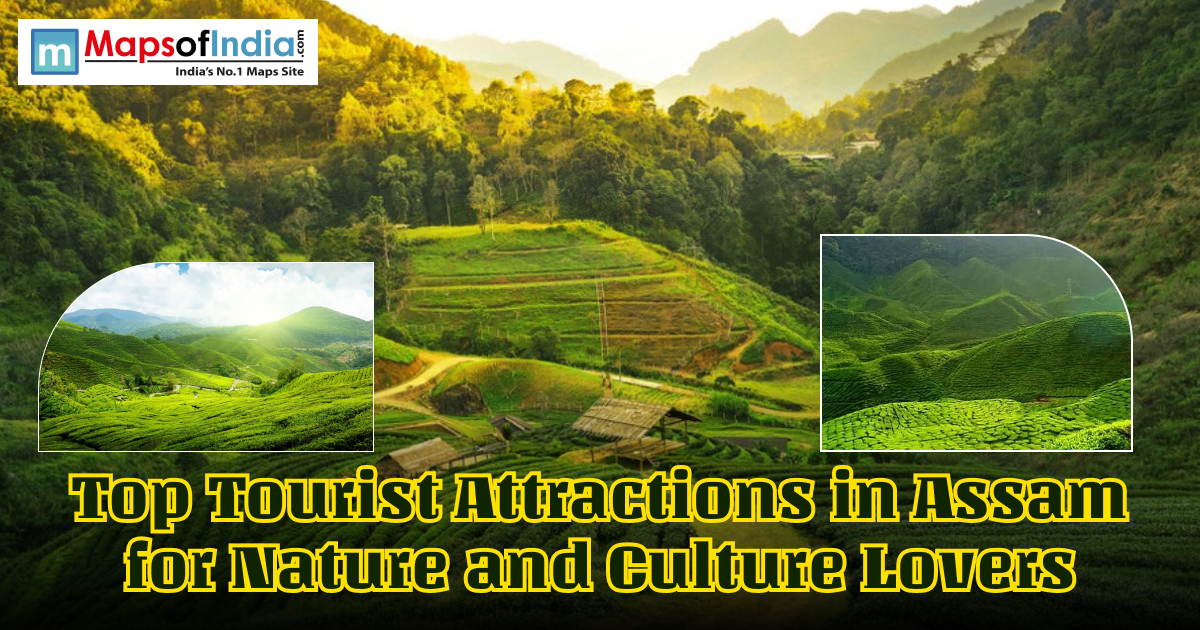
When you enter Assam, the open skies are complemented by the uneven parts of the land. Apart from being very wide and powerful, the Brahmaputra River forges through the terrain. Tea plantations spread over the hills in little waves of green without any break. Large forests are full of life and sounds. Inhabited animals are living their natural life here. Stone temples tell stories, which are so old that even the memory of them has been lost. The tribal villages are full of life, and their traditions are always handed down from generation to generation. Silence after dark is so long that you almost forget time. Animals in the forest lure those who are crazy about forests, and birds with bright plumage attract bird watchers’ eyes.
Kaziranga National Park is Home to Diverse Wildlife
Wandering through Kaziranga, a single-horned rhino might appear just beyond the mist. Most of Earth’s population lives within these boundaries. A jeep moves slowly, following fresh tracks across muddy trails. High above on an elephant, the view suddenly shifts to green stretches endlessly. In hidden patches of tall grass, tigers sometimes slip by unseen. Out in the marshes, swamp deer share space with wild water buffalo under quiet skies. When seasons shift, flocks of migratory birds settle into the wetlands. A nod from UNESCO marks the area as truly one of a kind. Each of the four distinct zones brings something different to notice. Most often, those crossing the central stretch spot the highest number of animals. Mornings begin quietly, then animals stir by the first light.
Majuli, The Biggest River Island In The World
Majuli lies in the lap of the Brahmaputra, which flows on all sides of it. Its soul is still intact, although the island is slowly getting smaller due to the erosion of the river. The Vaishnavism traditions run deep inside the satras. Monks in masks make their way through the ancient dance forms. Auniati Satra is a treasure house of old-time objects. The faces of Chamaguri masks depict many tales. Riding a bike, you easily navigate narrow lanes. The Mishing villagers are very hospitable and open their homes readily. The weavers carefully arrange the threads before starting the weaving. The sun is setting, and golden light is trickling over the water. The place is preserving its ancient culture even as changes are happening around it.
Kamakhya Temple Spiritual Energy
High on Nilachal Hill rests Kamakhya, quiet yet bold. Pilgrims come without pause, drawn by the pull of a Shakti peeth. When the rains arrive, so do the crowds of Ambubachi Mela; crowds swell into numbers hard to count. For exactly seventy-two hours each year, the temple shuts its doors and waits. Feminine power shines through monthly cycles. Hidden rooms hold tantric practices. Buildings mix Ahom with Koch forms in quiet harmony. Steps wear red marks from sindoor, fresh each time. Animals are given as offerings, a custom passed down. Something old hums beneath the feet of those who come today. As if walking into a room where the air still remembers her presence.
Sivasagar Remains of the Ahom Rule
Up on the flat land stands Rang Ghar, said to be Asia’s oldest arena. Long ago, kings lived here; their legacy lingers in Sivasagar’s soil. High perches once held royal eyes watching contests down below. Under Talatal Ghar, tunnels slip through dark corners of rock and dirt. Floating up on light like dawn fog, Kareng Ghar rises through seven tiers. Over Joysagar’s calm water, sky-blue drifts soft and wide. Not crowned but capped in silent gold, Shiva Dol and Vishnu Dol shine beyond noise. Through wind, war, and winter, for five centuries strong, the Ahom warriors kept rule alive. To walk this ground means entering stones that exhale ancient thrones.
Manas National Park is Rich in Wildlife
Over by where India meets Bhutan lies Manas. Listed twice under UNESCO’s heritage badge. Through thick woods, tigers move without fences. Golden langurs share space with tiny hogs barely seen. Rhinos on Indian soil slowly grow in number. White water trips bring wild scenery into view. Beyond open meadows, animal tours uncover hidden lives. On elephant backs, travellers reach places roads miss. Protecting nature here has brought quiet victories. A fragile patch of earth shelters creatures on the edge.
Tezpur, Old City of Love Stories
Silent streets of Tezpur guard an ancient story of love. The love between Usha and Aniruddha from that era is a familiar story through the stones. Walk up to the Bamuni Hills, where ruined temples stand like abandoned memories. Up on Agnigarh Hill, faces gaze at the vast sky extending far. The Mahabhairav Temple stands in history. Amidst the ruins, Da Parbatia conceals the bas-reliefs dating back to the Gupta period. Stone figures are left to the elements at Cole Park, lined up like silent tales. Brahmaputra’s broad waters flow sluggishly beside the city. It seems as though time slows down, allowing the remnants of the past to whisper among cracked pillars and moss.
Haflong Scenic Hill Station
Up high in Assam, Haflong rests quietly and calmly. Curiosity pulls people toward Jatinga’s strange bird happenings. Tired minds find rest where mist hugs the hillsides. Old stones at Maibong whisper tales of the Dimasa rulers long gone. Colour bursts through when flowers open wide in the orchid patch. Peace settles in while gliding across Haflong Lake by boat. Villages trade hand-carved goods. A breath of shade when lowlands blaze.
Hajo Sacred Meeting Place
Peace lives here among different beliefs. The Hayagriva Madhava Temple brings in Hindu worshippers. Meanwhile, Powa Mecca holds meaning for Muslim visitors. A quiet Buddhist monastery keeps old sacred objects safe. Not far away, a Sikh gurdwara remembers when Guru Nanak came through. Few spots on Earth show such calm sharing of holy ground.
Jeypore Rainforest Exploration
Deep inside Jeypore-Dehing, life hums without hurry. Treetops shiver when hoolock gibbons leap across branches. Between roots and bark, rare orchids open unseen. Water from the Namphuk River slips over stones like glass. People who’ve lived here longer than memory lead walks with quiet confidence. This place, lowland green, almost forgotten, still draws breath.
Living Traditions Meet Modern Revival
Unmoored from their time signature and fabric, tribal dances, together with crafts, are being kept alive. Bihu unites the whole town, and happiness flows from the people as a result. The story of how the bamboo structures change their shape from the past to today is being told. Textiles are reborn in the present garment styles through sewing. The young artists boldly reinvent the heritage of the seniors during their creative experiments. Like a tree sprouts the new branches from the old roots, tourism is the means by which, at hand, traditions are getting silently preserved. Slowly, culture is getting on its feet with the help of travel.