

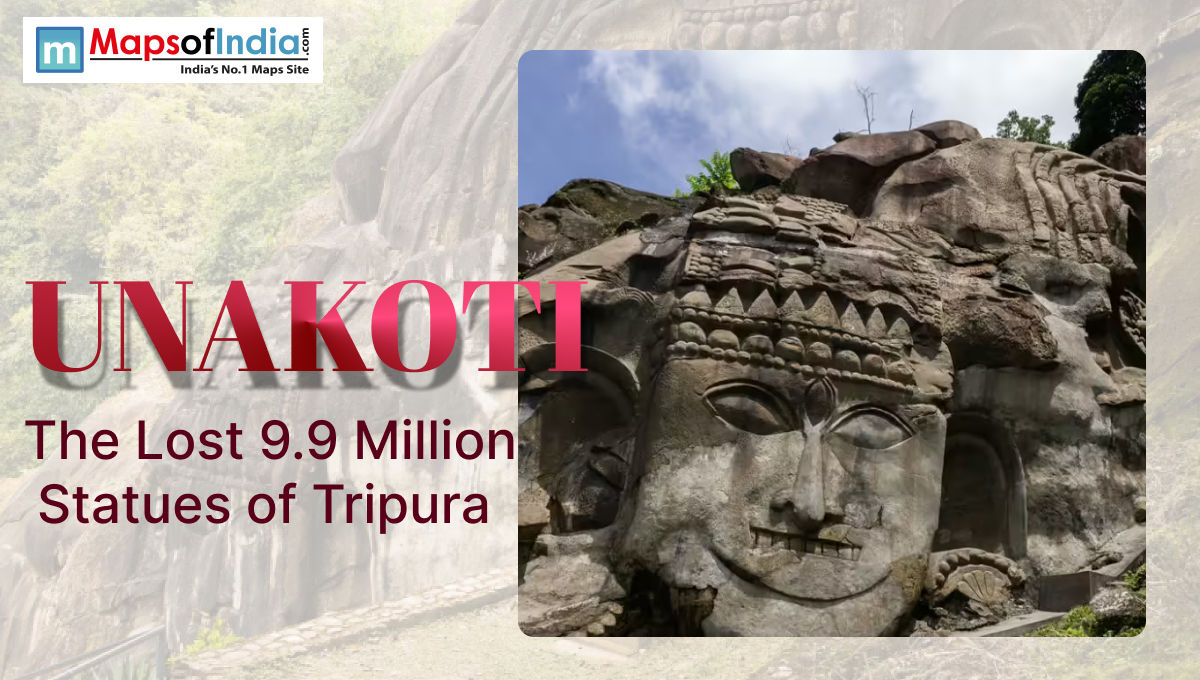
Hidden among Tripura’s slopes lies a puzzle from long ago. Not quite ten million – that is what “Unakoti” points to. Stories say almost ten million carvings covered these rocks once. Now, just traces stay within sight. From cliff walls, huge faces of Shiva break through stone. Around them, on boulders nearby, gods gather in quiet clusters. Over time, nature took back most of the place. Thick moss covers old carvings, while vines twist around them slowly. People move quietly between rows of ancient stones. Each statue holds something unknown close. The makers of these figures remain unnamed. Their timing is unclear. Purpose? Still hidden. Unakoti gives nothing straight out. It lingers like a thought just beyond reach.
The Name and Lasting Story
A legend gave Unakoti its name. Once, Shiva moved across land with a million faithful. Night fell, and they rested right there. Before first light, he told them to rise. Many stayed lost in sleep when morning came. In fury, the deity froze those still dreaming into rock. Only one fewer than ten lakh remained behind. So it stood, named Unakoti ever after. Still today, local tribes tell the tale when festivals come around. One version tells how Shiva cursed those pilgrims who refused to climb. Another says they all stumbled through a trial meant from above. The legend breathes life into something unseen, lingering. As if judgment turned stone and never softened.
Location And Natural Setting
Near Kailashahar town, Unakoti sits without noise. All around the carved stones, thick trees grow close. The Juri River moves slowly just a short way off. Rising only so high, hills stand about the figures. Fresh downpours in summer fill the land with thick green growth. Cold months arrive with sharp light and calm air. Getting here has become easier over time. A smooth roadway now ends near the starting point. A brief walk takes you toward the carved stone figures. Among tall bamboo stands, then under broad sal leaves, the trail curves ahead. High in the trees, birds sing out loud. A secret place, protected by green around it.
The Huge Shiva Heads
Right away, the biggest carvings grab attention across the terrain. Standing close to thirty feet tall, the main face of Shiva takes centre stage. Its third eye stands out sharp and intense. Downward streams of jata, tangled hair, fall in thick waves. A twist of serpent rests on the shoulder, clear to see. Calm sits heavy in the gaze, quiet but strong. Tiny faces press near the central figure, packed tight. One splits down the middle, half man, half woman. More wear masks of Shiva’s many shapes. Size hits hard when seen for the first time. As if a peak shaped like a god stares without blinking across the lowland.
Smaller Rock-Cut Figures
Beneath towering figures, tiny etchings cover the stone. Often, you’ll spot Ganesha holding a modak close. Beside Shiva, Parvati rests in quiet poise. On their own rocks, Vishnu and Lakshmi sit apart. Figures of animals, elephants here, lions there, appear carved into stone. Across the surface, stories from old myths slowly come alive. Dance postures stretch through one panel, graceful without trying. In another, stillness shapes bodies lost in thought. Time has worn down sharp edges, though what remains holds its own quiet strength. Around the main gods, forms gather as if whispering. Beauty stays, even when blurred by wind and rain.
The Unakoti Tirtha Festival
Every April brings people back, no matter the year. Not just pilgrims, others come too, pulled by what they can’t explain. Among old stone etchings, sadhus stay silent, faces calm, thoughts distant. Along the Juri River, water creeps beneath the early sun, while believers enter it, saying nothing. From high ground, voices climb, shaped more by air than breeze. The smell of burning corn slowly moves away from the makeshift shelters constructed with broken timber. Step by step, the lights come on, the golden faces of the inhabitants lighting up the broken paths. Not sight but sense catches what lingers under song and ash, something breathing slow.
Theories About Origins
Scholars usually place creation between the eighth and twelfth centuries CE. During the Pala times, distinct marks of their influence appear. Some believe early work included Buddhist artisans. Others argue that a Shaivite circle gave the order. Still unclear is why they built it. For wanderers seeking something deeper, one guess feels right. Or perhaps an artist simply worked slowly and steadily over the years. What’s left behind lacks what would make sense of it all. Like trying to play a game when half the rules are gone.
Comparing Other Rock Carved Locations
While Ellora and Elephanta match in size and craftsmanship, Unakoti unfolds widely through open terrain instead. Carved by the sea, Mahabalipuram’s temple stands apart. Hidden among trees, Unakoti stays far from reach. Ajanta, along with the Bagh centre mostly on painted art. Few places match Unakoti’s numbers. Sculptures rise here as if shaped by an artist’s history overlooked.
Conservation Challenges Today
Water beats down on the carvings every rainy season. Roots push through cracks bit by bit. Over time, green growth pries the rock apart. People reach out now and then. Fences that should be guarded are missing in spots. The stone wears thin where hands pass. Official care does not cover everything. Fragile rock art needs urgent, gentle attention. Slowly, awareness efforts begin to spread. Not far off, local people watch over the place without official roles.
Unakoti Travel Guide
Fringes of the highway climb into hilly stretches near Agartala. Four hours by road unfold quiet green ridges along the way. The small hub of Kailashahar holds starting points for visitors. Getting there becomes simple using either the bus services or hired cabs from that centre. Winter still holds the top spot. Bring along water; toss in some snacks, too. Feet need good hiking boots, nothing less. Keep your hands off the carvings, honour the place that way. Snap photos without limits. Walking here feels like stepping inside an old artwork that breathes.
Unakoti Holds Attention
A whisper moves where hands fail to hold. Heavy above, the sky presses down, catching veterans off guard. Silence lingers after, gentle but firm, unwilling to disappear. From far off, traces of creators murmur, bodies still, though shapes remain clear. Up from below, stone and root rise, working alongside one another, speaking without sound just by being. Even now, those carved eyes hold your gaze across time. Not a sound comes from them, yet the story grows past the lines of the carving.