

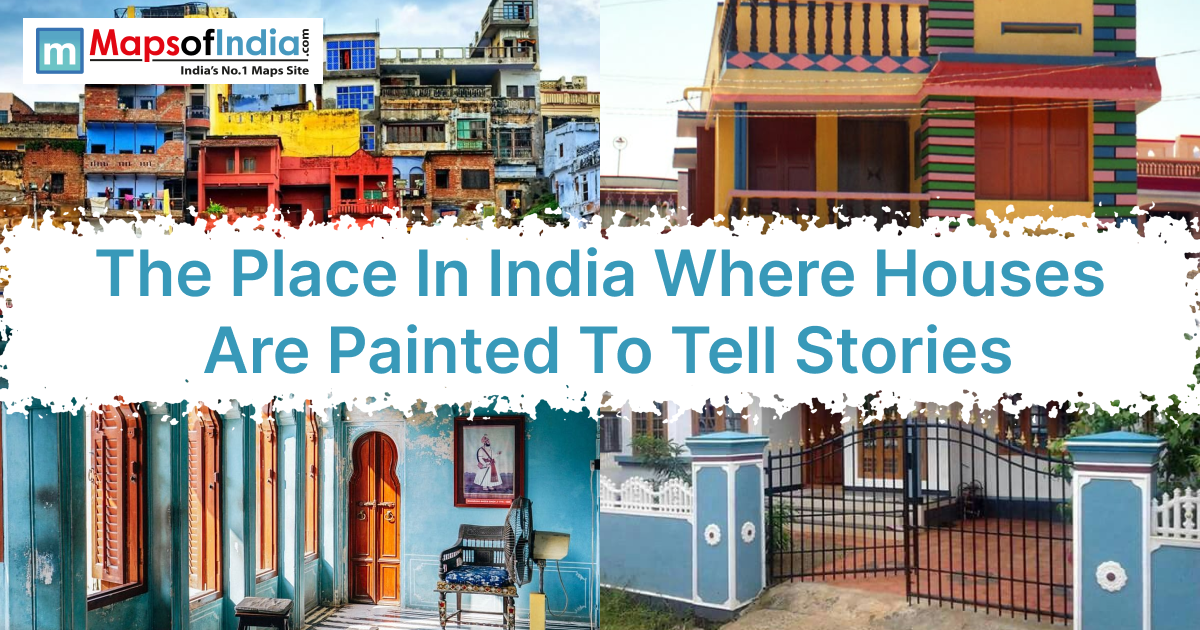
Out here in Rajasthan sits a village where silence isn’t quiet at all. Bright blue, yellow, red, and green homes shine like sunlit fruit. Painted shapes cover every wall you see. Peacocks step across bricks on tiptoe. Camels move slowly through scenes made by brush. Doorframes hold blessings drawn in steady lines. With careful hands, women shape tales: fields heavy with grain, ceremonies under cloth canopies, routines before dawn. You’ve just stepped into Shekhawati. Picture an art show under the sky, spread across old streets. Centuries back, wealthy traders built grand homes here. These havelis remain, standing tall like quiet guardians. Painters filled their surfaces over time. One generation passed brushes to the next. Even now, colours stay alive on crumbling edges. Homes keep secrets in murals that speak without sound. Visitors move slowly, eyes tracing tales burst with pigment.
The Rise of Shekhawati’s Painted Havelis
Back then, the Shekhawati area thrived during the 1600s and 1700s. Trade routes stretched far. Marwari businessmen moved goods not just around India but into Central Asia too. Among the items changing hands: silk, opium, cotton, and spices. Money followed, flooding quiet little towns with new riches. Big homes went up when wealthy clans wanted to display rank. Plain surfaces seemed dull somehow. Craftsmen arrived from Jaipur along with talent drawn from nearby hamlets. Pigments came from plants, and minerals lent their hues. Epics like Ramayana took shape, then tales of Krishna’s youth filled walls. After that, pictures showed how Britain governed trains rolled in, then automobiles appeared. Homes stood like pages opened by traders writing their past.
The Craftsmen and How They Work
From goat hair or palm leaves, brushes took shape. Chejara painters used these with basic tools. Minerals gave colour, and plants stepped in. Geru brought red into the mix. Ramraj offered up a yellow tone. Neel was where blue began. Jangli palak filled in green. Lime-covered surfaces are white. Soot from lamps turned everything black. Red ochre marked the first lines they drew. After that came colour, built slowly in layers. Not a single cartoon guided their hand. Each shape is formed straight from the mind to the surface. Fathers taught sons how it was done. Those ways stayed within bloodlines. Memory held the form. Muscle remembered the motion. A practice kept alive through doing.
Walls Coming Alive With Themes
Paintings at first told holy tales of Krishna with his flute, Rama living in forests, and Shiva marrying Parvati. As years passed, new subjects slipped in. On horseback, colonial men began showing up. Then, iron tracks cut through murals. Wheels rolled where beasts once walked. Metal frames of bikes, wooden boxes of radios quietly filled the space. Faded paintings of lovers tucked away in private chambers. Butter churned by women, while smoke curled from men’s long pipes. Celebrations of Diwali and Holi leapt across the outer walls. As if stone remembered both shift and stillness.
Mandawa: An Open Air Canvas
Paint peels on old walls where stories sleep. Narrow lanes wind through Mandawa, a place proud of its colours. Along these paths stand havelis, quiet watchers dressed in bright scenes. One called Gulab Rai Ladia wears patterns that twist and curl. Inside its yard, images stretch across every surface. Outside, more pictures climb up stone faces. Paintings of lovers hang quietly in Juna Mahal. Gold dust lights up temple walls at Thakurji. Heads tilt back as footsteps slow below. Stories buried in paint come out word by word. Time feels thick here, made visible through brush and hue.
Nawalgarh Home To the Largest Havelis
Some of Nawalgarh’s oldest homes still stand untouched by time. Inside the Aath Haveli compound rise eight grand houses linked under one roof. Once a private residence, the Dr Ramnath A. Podar home now opens as a public gallery. Paintings cover each surface, and gods wander through village routines here. Myth meets market life on every stretch of plaster. Europe’s touch lingers at Morarka Haveli. Alongside deities, trains share space with old wind-up music players. Inside Poddar Haveli, wall paintings stay just as they were made. Step in, it feels like strolling through a vast personal gallery somewhere deep in India.
Fatehpur: Fading Grandeur
Fatehpur once stood equal to Mandawa, even rivalling Nawalgarh in scale and reputation. Havelis here show early forms of Shekhawati architecture. Curves blend with floral patterns painted across surfaces. While many grand homes remain closed, time wears them down piece by piece. A handful of landowners settled in villages long ago. Rain and light together wore down some painted walls. Yet remnants strike deep. Locals familiar with the place unlock forgotten chambers for travellers. Like hushed guardians of something vast, slowly breaking apart.
The Fall and Attempts to Bring It Back
Once free from colonial rule, lots of Chettiar kin moved toward urban hubs. Doors stayed shut, sometimes for generations. Rain seasons cracked overhead coverings. Walls shed their skin in thick pieces. Art dimmed beneath grime and time. Starting late last century, those who valued old things started fixing them up. A group called INTACH wrote down details on notable homes. Some grand houses have been turned into guest lodgings by hospitality firms. Visitors’ spending money gave locals a new kind of support. Some young people from nearby learned how to care for nature. Old houses stood quietly, then began to stir like they were remembering something.
Visiting Shekhawati Today
Early light drapes gentle shadows over Mandawa. Though near the highway, Nawalgarh hides stories behind colour-washed facades. Each curve uncovers another mural, another memory. Fatehpur waits farther off, holding its breath between hills. The sun climbs slowly, touching rooftops only when the hour is thin. Stories sleep behind closed doors until neighbours begin to speak. A small fee grants passage into estates older than memory. Even if residents remain inside, guests may enter provided respect goes both ways. Night settles slowly among stones that have stood since before cars arrived.
Shekhawati’s Painted Walls Hold Meaning
The walls are covered with paintings that tell different stories of India’s history. As time passed, so did the paintings, changing like shadows when the day is ending. The stories of the Mughals are told through the paintings; however, the colours of the Rajputs are also closely mixed, and the traces of the British are slipping into the corners. The 19th century is showing itself very clearly. Women are going about their household work, festivals are being celebrated in the fields, and the first machines are creating new patterns in daily life. Here, the walls are the speakers and the paintings are the storytellers, revealing the history in a very natural way.