

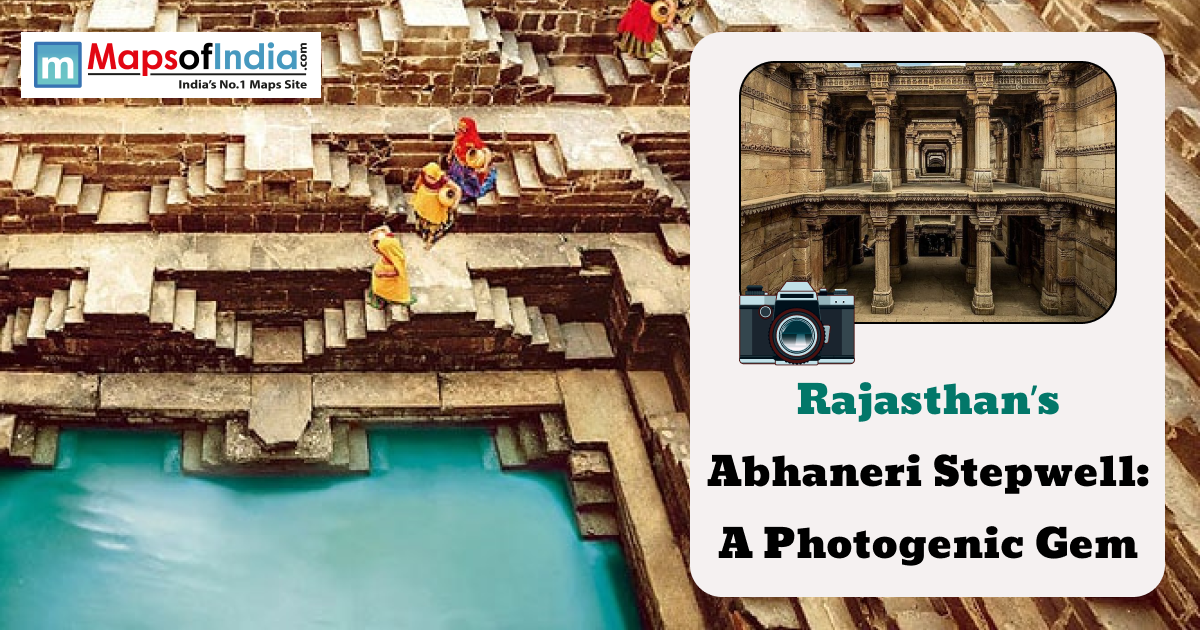
Beneath the open sky, Abhaneri’s stepwell rises quietly from the ground. Called Chand Baori, it drops sharply through thirteen levels lined by thousands of slender stairs. Crafted during the 800s, it still holds its place among India’s best-kept underground wells. Sharp angles repeat themselves in ways that pull the eye down and inward. Light moves slowly over stone faces as hours pass. Light changes fast here. Some say it looks best when the sun hangs low. People show up before sunrise just to see how it glows. Nothing extra is required to make it stand out. The shape itself tells the story. As if someone built it ages ago, knowing lenses would come.
The Ancient Beginnings Of Chand Baori
Water grew scarce under Rajasthan’s harsh sun. Built nearly twelve centuries ago, Chand Baori rose stone by stone when King Chandragupta ruled. His era carried the name Gurjara-Pratihara. With little rain came clever answers. Instead of open tanks, people carved deep into the earth. One after another, steps led down farther than most dared dig. It took shape slowly, shaped by need more than grand plans. Over time, it outgrew every other stepwell nearby. Depth turned it legendary. Not just size but precision held attention. Each level echoes old methods rarely seen now. Once built for daily use and rituals alike. Under sheltered walkways, travellers paused to catch their breath. As one woman drew water, another passed along news of the village. Linked by an old path to the Harshat Mata shrine close by. Each drop is treated as something holy. Not just stone and depth but purpose shaped by rulers and need.
Stepwell Architecture
Beneath the surface, it drops thirty meters across thirteen tiers. A sharp V formation guides your eye down the staircase. As you go lower, the walls draw closer built that way on purpose. The path narrows, making each footfall deliberate. Every now and then, a tight platform breaks the fall. Standing tall, pillars hold up covered walkways, floor after floor. Framing what you see ahead, arches shape sightlines with quiet grace. Patterns built from straight lines spiral down in a steady rhythm. In several spots, nothing sticky binds the pieces together. Each stone fits only when sliced just right. Ancient builders once balanced weight, sun, and dark without flaw, just like here.
The Mesmerising Optical Illusion Effect
Falling into view from above makes the ground tilt without warning. One step after another stacks up like a trick. The mind sees what it wants until proven wrong. Walls lean inward just enough to lie convincingly. A slow tug begins at the feet, drawing bodies closer. A single photo shows the strange loop clearly. Across screens everywhere, the pictures move fast. Visitors say it feels like floating through a vision. For some, seconds stretch longer than usual. A few swear they see endless depth beneath their feet. Stone steps winding down where reality bends.
Stepwell Design Helps Survive Deserts
Water shortage has been a major factor in the life of Rajasthan for a long time. Ingeniously constructed, stepwells provided a brilliant solution. In fact, their depth was able to keep them cool even during the hottest months. Besides, they were not so exposed, thus allowing less water to evaporate than open wells. Even if the water level dropped, Steps would still be a safe way out. During monsoon rains each year, the rainwater is captured, and none of it is wasted. In the course of time, people, together with nature, nurtured it, generation after generation. Not only is the beauty located deep in the stone a quiet survival act.
Cultural And Religious Meaning
Pools carved into the earth sometimes stood where prayers rose each morning. Rain, seen as a blessing from the sky ancestors, shaped daily routines. Along the stone edges, people gathered before sunrise most days. Family health was asked for quietly by women near the cool steps. Water rituals often led people down into stepwells long ago. Connected by path and purpose, the Harshat Mata temple stood near Chand Baori. Worship happened alongside filling pots under an open sky. A place where routine tasks met quiet devotion without a clear dividing line.
Chand Baori Appears In Films, Books, And Media
Down in Rajasthan, sunlight cuts across a thousand stone steps. A movie crew arrived once, chasing shadows for a fight between hero and villain. That battle between masked figures unfolded step by step under a dusty sky. Indian films began appearing there too, drawn without warning. Geometry pulls the eye downward, perfect for dancers framed against depth. Cameras keep returning, framing silence as much as motion. That name rings familiar across continents today. Much like a forgotten stepwell lit by sudden movie lights.
Efforts To Protect Nature And Save Resources
Over the years, weather chips away at the stone while crowds add pressure. Rain, sun, then footsteps each leave a mark on sandstone walls. Steps begin to wear down where visitors pass the most. Care falls to the Archaeological Survey of India now. They watch closely, act gently, and keep decay at bay. Day by day, progress moves forward without rushing. Funds from tickets help keep repairs going. Everyone who comes is expected to follow guidelines without exception. Taking pictures is welcome in every area.
Chand Baori Visited Today
Some 95 kilometres out from Jaipur sits Abhaneri village, reachable without trouble. Beat the heavy sun and people by arriving at dawn. At first, going down the steps feels smooth and slow. Returning up requires strength you might not expect. Bring enough water, keep it close throughout. Put on strong shoes you can trust without question. Golden light at dusk wraps every step in warmth slowly. Snap photos wherever you walk without worry ever. Walking here feels like pages of an old story rising up suddenly.
Why Chand Baori Remains An Architectural Wonder
Nowhere else can we discern so clearly the whispers of the past from ancient structures. However, what impresses us the most is how equilibrium forms awe without concerted effort. It is not merely might that each well-laid stone houses but also intent. Time, gradually, meaning is accumulating just like sediment in a riverbed. Being displayed on the screens of various places, it attracts attention without request. A little going back in time starts at the point where water and stone become one. Not merely an old one, but a structure destined to endure the murmurs of ages.