
Assam, the land of the mighty Brahmaputra, is not only a state gifted by nature to a man but also a state of rich biodiversity and colourful culture. From thick and dense rainforests and tea gardens to temples and different tribal cultures, Assam still has a surprise for the tourists who come here. Every district of Assam has its own beauty, but some of them have historical importance, natural wonders, economic contributions, or cultural significance. These top districts are like pieces of spices that give Assam an unforgettable taste. They are the places of wildlife sanctuaries, tea gardens, and spiritual centres. Each district, like a different colour, together paints the vibrant canvas of Assam.
Kamrup Metropolitan: The Urban Core of Assam
Home base for Kamrup Metropolitan sits right in Guwahati, that’s where you’ll find Assam’s biggest, busiest district. Northeast India opens up through this city, kind of how rivers branch from a single stream. Business flows here, minds grow here, traditions pulse loud in the streets. Each year brings wave after wave of visitors to the Kamakhya Temple, among Hinduism’s holiest sites. Peering out from the river, Umananda Temple sits quietly on Peacock Island while Basistha Ashram hums with calm presence nearby. Though small in size, the area carries weight through constant movement, flights taking off, and trains arriving without pause at its busy hubs. At its core, this place pulses like a vein linking Assam to far corners of the country.
Jorhat: Known for Assam Tea
Home to endless green tea fields, Jorhat earns its title as Assam’s tea hub. Fields stretch far, growing leaves known across the region for their bold taste. Tucked within the town sits Tocklai, a research centre older than any other like it on Earth. Culture thrives here just as much as agriculture shapes the land. Old kings once walked near Raja Maidam, while temples rose quietly beside it. Though time passed, echoes of rebellion still hum through its streets. Schools thrive now where meetings were held long ago. This palace feels calm in the misty morning when the tea leaves rustle in the morning air.
Dibrugarh: Industrial and Oil Centre
Dibrugarh is known as the “Tea City”; this city is located high up in northeastern India. One of Assam’s top tea harvesters, it breathes agriculture. Not far from town, the Brahmaputra carves its way with slow power. Scholars find footing at Dibrugarh University, a name that stands on its own. Industry hums here without shouting about it. Far beyond just a marketplace, Dibrugarh pulses with the rhythm of fields, factories, and classrooms. A place where farming folds into factory work, yet schools still shape its core.
Sivasagar: Heart of the Ahom Realm
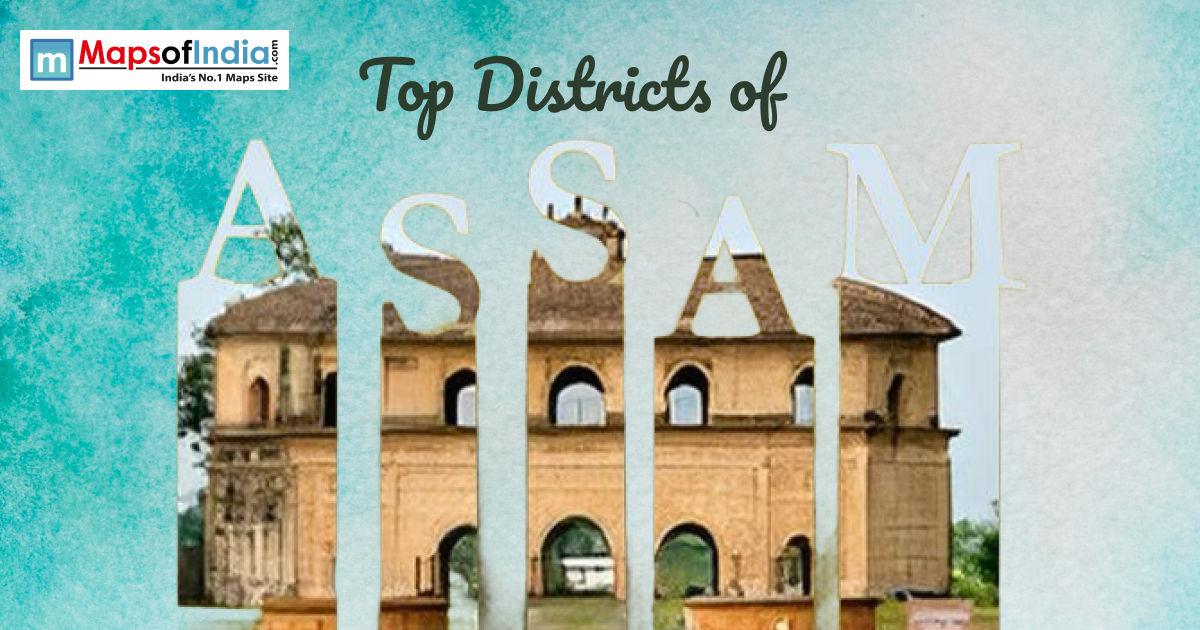
For nearly six hundred years, Sivasagar served as the heartland of the mighty Ahom dynasty. Across its lands, old buildings appear like quiet reminders of long ago. Rising above the rest is Rang Ghar, believed by some to rank among Asia’s first amphitheatres alongside Talatal Ghar and the wide stretch of Sivasagar Tank. Back then, palaces and towering temples emerged through royal decree. Every stone was placed with care, forming what remains visible now. Though time passes, their shape stays fixed in place. Here, customs live without needing names. Moving forward, not stuck, more like tunes hummed by grandparents than artefacts under glass. Majuli holds Assamese life steady not through shows, but through everyday acts. Echoes of the Ahom era slip into routines, soft but certain. What happened long ago never yells, still it walks beside them.
Nagaon: The Cultural Heartland
There is a gentle, slow rhythm hidden deep in the soil of the village of Nagaon; some say it is the very breath of Assam’s creative spirit. From these fields initially the voices of poets arose, then storytellers, and finally artists who paint with brushes, all of them leaving their legacies that are still visible today, beyond their lifetimes. Between the villages, the quiet spaces emerge, the monks’ meeting places under the skies, and the oldest of thoughts are kept alive by them. These are the seats of Satras with Satras, the pockets of memories, each one is a keeper of Sankardev’s ancient teachings. Batadrava is one of them; it unfolds its roots very much at the start of his way. There are places of quiet in nature, such as the Laokhowa Wildlife Sanctuary. The old world Assam is reflected in a rhythm that still beats here.
Dhemaji: Home of Strong Rivers
Up north in Assam lies Dhemaji, a place shaped by wide skies and winding water. Rivers carve through it, powerful and constant, feeding landscapes that take your breath away. Though floods return every year without fail, life thrives here in tangled forests and wetlands. Different tribes live across the land, each carrying customs all their own. Hills roll softly beside rivers, turning the land into something wild ones adore. This part of Assam feels untouched, its beauty rough, real, yet held close by time.
Tinsukia: The Commercial Hub of Upper Assam
Built along the banks of the Brahmaputra, Tinsukia pulses with trade and industry in Upper Assam. Oil, coal, and tea move through its roads and rails every day. Close by stands Digboi’s refinery, old but still working, a quiet giant among Asian landmarks. Life hums differently inside Dibru-Saikhowa, where birds call louder than engines ever could. Commerce thrives here even as forests guard rare creatures beneath tangled canopies.
Goalpara: The Western Gateway
This place is located in western Assam. Goalpara is a place that is covered in green hills. Rivers twist through the countryside, hugging curves beneath tangled tree cover. Stone carvings rise near Sri Surya Pahar figures shaped by Buddhist, Hindu, and Jain hands stand bare under shifting skies. The Brahmaputra moves broad and unhurried, slicing across flat stretches of soil. Stillness hangs close, almost as though moments slow when faith meets wild ground.
These Districts Shape Assam
Something lives inside these places. Not just streets or fields, but rhythm Guwahati hums while Sivasagar remembers. Where Jorhat grows leaves in neat rows, Dhemaji spills green across riverbanks. Beauty shows up in hills, rituals, quiet temples, and busy markets. One colour does not make a sky; it takes many to form what people name Assam.