
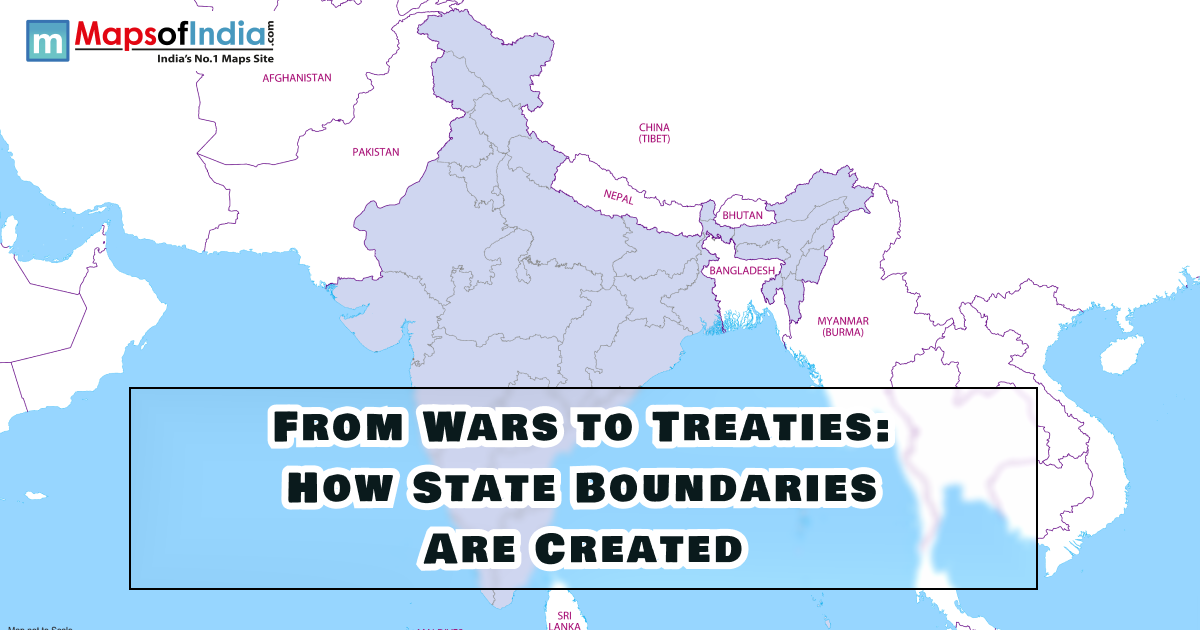
Lines across maps mean more than geography. Power shapes them, along with memory, belonging, and often tension. Peace rarely carved today’s edges. Wars left marks, empires imposed lines, and negotiations sealed divisions. Rivers or peaks guide certain divides. Some emerged from decisions made by kings or empires, ignoring the people already living there. As years passed, deals between nations attempted to set those edges in official terms. Still, a number of divisions spark arguments right up to now. The way political lines form explains why certain areas stay uneasy, and others live without conflict. Ghost barriers drawn long ago, still guiding daily existence for countless souls.
Wars And How Borders Change
War shaped maps more than anything else across time. When one kingdom beat another, land changed hands. The Peace of Westphalia in 1648 started what we now call sovereign states. Colonial fights left lines on African and Asian soil that remain today. War tore through Europe and the Middle East, redrawing borders overnight. Fresh nations rose up as familiar names faded off maps. Unsettled lines on the ground still spark tension in places now. Fights over land often settle with more than victory; they fix boundaries between states.
Treaties And Peace Agreements
Boundaries shift when conflicts end, shaped by deals between leaders. Out of World War I’s wreckage came fresh countries drawn across old lands. Following the war in 1971, talks at Simla aimed to fix where one nation ends and another begins. A tense handshake in 1966 led to the Tashkent words on disputed lines. Far later, under the Egyptian sun, maps were discussed with quiet urgency. Years passed before further attempts emerged near Jerusalem. Each paper held hope lines on pages meant to hold back chaos. Most treaties come after long talks where the sides give up something. When lines on maps stay unclear, a temporary setup might run things there instead. Groups such as the UN step in when countries argue about borders. These papers act like rules meant to make wartime outcomes official.
Colonial History And Made-Up Boundaries
Out of old empires came lines on maps, mostly in Africa and parts of Asia, put there during colonial times. Europe’s scramble for Africa took shape at a meeting in Berlin, lasting from 1884 to 1885, where land was split without attention to the people already living there. A boundary slicing through mountains and villages between Afghanistan and Pakistan appeared because of a British officer’s work in 1893. Farther east, a line sketched across high terrain between India and China still stirs disagreement today. Lines sketched far away shape how people live now, even after years have passed. Old maps redrawn without asking those who lived there first, leaving behind quiet fractures.
Natural Boundaries Rivers Mountains Seas
Where land splits, rivers sometimes mark the line. The Rio Grande cuts through North America, separating the United States from Mexican territory. Flowing far south, the Brahmaputra threads between India and Bangladesh like a liquid border. Peaks rise where nations meet the towering Himalayas stand tall between India and China. Water shapes edges just as much; shorelines curve into sea limits, drawing lines across waves. Defence comes more simply when nature builds walls first. Stability tends to grow where geography draws firm lines. Still, rivers shift paths as years pass, sparking fresh disagreements. Much like how natural shifts lay down borders, nations might later embrace or challenge them.
Border Marking Steps
Out of talks between nations, agreements begin to form. Once signed, these deals bring together teams that walk the land together. Marking lines becomes real through stones set in the earth, or barriers built by hand. Out there, where borders get drawn, gadgets such as GPS paint a clear picture. Satellites look down, snapping sharp images so lines match what’s decided. Every now and then, neutral eyes from abroad step in to keep things even. What looks neat on paper becomes real only after months, sometimes decades of work. People living nearby do not always welcome it. It is about making something invisible suddenly impossible to ignore.
Border Conflicts And Effects
Tensions linger where maps disagree across several parts of the world. Along the Line of Actual Control, soldiers watch closely between India and China. In Kashmir, clashes keep families on edge while governments stand firm. Nations circle each other near the waters of the South China Sea. Troops gather, money drains away, and people endure over lines drawn long ago. Peace talks plus tribunals occasionally settle conflicts without violence. Much like raw sores across the globe’s surface, never healing, always stirring unrest.
The Future Of State Boundaries
In such an environment, where relations between nations become increasingly interconnected on a daily basis, the nature of borders is always changing. The existence of various trade treaties and regional alliances serves to blur some of the national borders on the globe. At the same time, nationalism and security considerations can serve to reinforce them even more. As climatic changes affect the migration of populations, existing notions of national territory can become obsolete. Remote sensing of Earth’s surface from outer space makes it possible to manage the borders of states more effectively than ever before. There may come a time when borders will fade away to become connections.
The Human Toll of Border Disputes
Across the border, locals face fights that break their lives completely. Paper lines unexpectedly dividing houses. Land that had been shared for planting is now fallow, isolated and guarded. Residents are forced to walk for a long time just to find a secure place. Days go by, and no solutions come. Moving on becomes a challenge when friends and family disappear without a trace. One side patches their houses while the other side keeps their scars hidden. Dividing the territories results in separating the family members.
The Role of International Law And Diplomacy
Across borders, rules set by nations guide how countries handle disagreements. Instead of conflict, groups like the UN and the World Court step in to mediate. Written deals between two states create a shared understanding of rights and limits. Talking openly, plus small steps to build trust, often cools rising friction. Still, things slip through when big countries are part of the picture. Much like a set of guidelines, it only holds strong if everyone leans into teamwork instead of conflict.