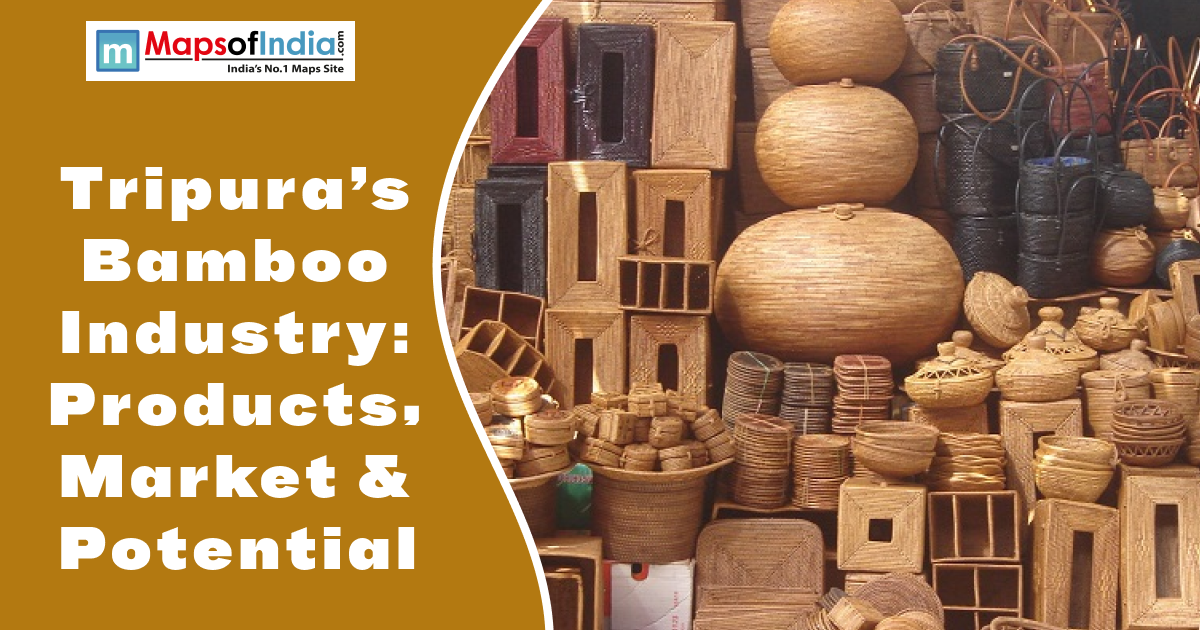
Bamboo grows throughout Tripura, which is one of the largest producers in India. The warm air clings to the skin there; it rains frequently just in the place where thick groves will grow. In the hills and valleys, there grow at least a dozen varieties of wild. Life here has long been beating to the beat of this rapidly growing grass, fashioning homes, crafts, and trade. Bamboo nourishes daily existence, forms artisanal products, and shelters families. Recently, the authorities in the state shifted the focus to cultivating this plant, which can be used as a source of revenue. New plants are appearing, together with training sessions, and they are accompanied by outreach, transforming old skills into market victories. Here, hope is born, and jobs are eco-balanced in corners of villages. Quiet force, green and bending and yet never breaking, pushes on without sound.
Rich Bamboo and Varied Species
The Bamboo is dense in Tripura, more so than in India. It grows wild or is planted in village yards or in the deep woods. Here, Muli has established herself, and Kanak and a kind of bambusa tulda. All these types have different kinds of jobs that are converted into products. Hills develop behind the flat areas, forming pockets where different types establish themselves. What keeps low ground will not always cope with slopes, but somehow, all fit. Suddenly, groves of it start growing out due to climatic conditions conducive to rapid growth. Stalks are harvest size after only a few seasons, instead of decades. Due to this rate, there are seldom shortages in supplies. Bamboo farming has been a major growth area for the officials. It nourishes trees and lives, just as a treasure that replenishes itself.
Uses and Knowledge of the Tradition
Besides shelter, bamboo shapes daily life in Tripura's tribal villages. From homes to tools, it builds both structure and routine across generations. Women earn a living through weaving mats and baskets, crafting what tradition handed them. Each pattern made by the Tripuri, Reang, or Jamatia tells a quiet story. Homes rise with it, meals depend on it, and rivers are fished using its strength. Skills once learned at elders’ feet now teach new hands how to bend and bind. What grows fast becomes lasting, woven into more than objects, but memory. Bamboo shows up in homes where old ways hold strong. Not just tools but routines shaped around what grows nearby.
Modern Industrial Applications
Now beyond old traditions, Tripura moves along fresh paths. Bamboo workshops rise here, crafting sleek items step by step. Floorboards draw interest, so do wall coverings built from green stalks. Furniture grows from grass, quiet yet bold. Hand-shaped ornaments catch the eye without trying. Nowhere else have so many new processing hubs popped up like here across the area, while shared workspaces keep appearing alongside them. Living biomass turns into paper, cooking fuel, and even black char, all from bamboo these days. Rooms shaped with treated bamboo parts show how building styles shift slowly, inching forward. Cash from individuals moves in easily because upgrades to refinement gain quiet backing from authorities. Used to be just basic stuff lying around; today, it becomes neat, usable goods powered by green thinking.
Tripura Bamboo Products
Tripura produces bamboo goods in various forms. One of the products, incense sticks, has great export prospects. People take bamboo mats, baskets, and handmade works not only at home but abroad as well. Style is combined with strength in bamboo-built furniture, which is also lightweight. In addition to its use in green building, bamboo is also used as flooring and wall panels. Filtered carbon and young stems are also sold in fresh markets, originating from the same source. The construction material produced largely using this grass is supported by government initiatives. Consider the one species producing a host of marketable products, all of which are the children of a rapidly growing stalk.
International Reach and Overseas Sales
Tripura's bamboo products sell both locally and internationally. They are imported by Europe, the United States, and sections of Southeast Asia. Agarbatti sticks are popular among several purchasers in such regions as the Middle East and throughout South Asia. Local market is largely comprised of big Indian cities including Delhi, Mumbai, and at the time, Bengaluru. Web stores have allowed small manufacturers to sell directly to individuals who purchase their products. At shows where traders gather, Tripura bamboo is pushed with the help of the state. Good brands and enhanced standards present large foreign opportunities. Consider it a living craft journey connecting local hands to distant markets.
New Rules and Government Help
Now topping Tripura’s priority list, bamboo draws sharp focus. Without delay, artisans gain hands-on skills through the Bamboo Mission. Tools arrive right at their worksites, easing daily tasks. Support comes not just as gear but also as funds keeping efforts alive. Out here, shared workspaces help teams shape rough materials into finished goods. Right from the start, worth shows up quietly in places where folks gather. Learning fits together with gear-like pieces of an old puzzle. Growth slips through rural spots without much noise. Some startups qualify for funding along with low-cost credit options. Hands-on abilities are being passed to youth now, inside workshop rooms across several towns. Hidden hands shape how makers meet buyers. Picture slow growth, nudged forward by rules shaped like bamboo crafts.
Industry Challenges
Here in Tripura, bamboo work is a struggle, though it could be far. Antique implements put the brakes on - factories seldom modernize. The reason why handwork remains low is that most makers adhere to the traditional methods. Getting products noticed? That is a part that is usually ignored. Roads and distance add costs, merely due to the location of the place. Bamboo is now growing less frequently due to the change in weather patterns and the method of farming among the people. This business would flourish, provided that roads, equipment, and assistance were commensurate with its potential.
On the Road to Sustainable Growth
Bamboo has the potential to make Tripura one of the main manufacturing areas of India. Support of the government, educating employees, and new equipment could lead to numerous job opportunities. Attentiveness to the virtuosity, aesthetics and identity opens up the possibilities of high-end purchasers. Careful harvesting today secures the supply for a long time. Bright days to come when old ways will see a new approach. Imagine it, nature is flourishing where agriculture becomes intelligent and where the villages are populated without damaging the land.