

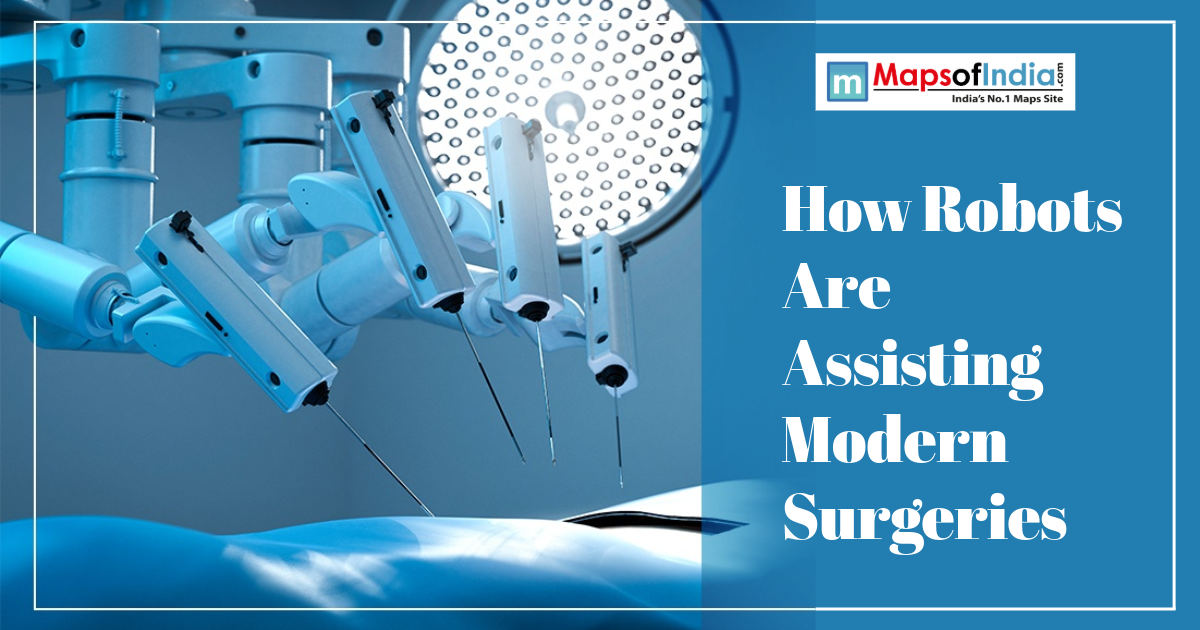
In hospitals, machines today assist doctors in operating with high precision, cutting with a very small opening. What was previously only ever thought of in movies is now helping during surgeries all over the world. Surgeons continue to have full control, and their hands are now moving more precisely, and they see more clearly, thanks to magnified 3D images. This combination of mechanical support and human skill makes procedures involving the heart, nerves and more or less risky. Where technology enhances a surgeon’s capabilities, better recovery pathways appear. Surgeons navigate them through small incisions rather than big ones. Some procedures can be shorter due to their slow movement. Others commit fewer errors due to better control. New models are released every year at hospitals across the globe. They are not a replacement for people but rather alter the way teams operate.
The Emergence Of Robot Surgery Systems
Robotic surgery first garnered world attention in the early 21st century when the da Vinci system came to light. Inside numerous medical centres around the globe, these machines are used. They don’t bring a tool on a tray to the table, but several mechanical limbs and sharp three-dimensional vision pods. A console lies behind all of them, from which doctors control each motion. Fine adjustments are made easier, even with the smallest of shakes; they are smoothed out, and gestures are reduced, making them easier to fine-tune. From early tests have emerged techniques used in countless surgeries. Picture a master healer with unparalleled accuracy, hands that navigate the inner landscape of the body.
Precise And Unsurpassed Mastery
Machines make smooth movements much easier to make than humans. Doctors use tools that replicate their movements to a high degree with guidance from a control station. When fine control is most important, like the heart or brain. Human hands have limits; robots do not. Robots do not have limits; they make minute corrections over time. When surgeons control the movement of small instruments in narrow spaces without damaging nearby organs, there’s no need to worry. Think sharp little fingers moving deeply, softly turning at each turn.
Minimally Invasive Procedures
All too often, very small tools are used for fine work on mechanical limbs. Doctors do not make large incisions into the tissue, but rather pass instruments through small openings in the skin. This method quickly cuts down the bleeding, and the scars fade rapidly as well. Previously, lying still for hours or days, now walking out in days. Now surgeons cut with robotic arms, instead of big cuts from the belly button. Using the smallest ports allows instruments to be inserted inside, like steel fingers into a needle. Results continue to be good and often better than good. Machines bend where hands can’t twist. Precision cuts without damaging tissue. Cancer is purged, organs can move freely, and recovery time is reduced. These systems hear all tremors and cancel them before they move too far. When there is a decrease in trauma, healing occurs more quickly. Scars are reduced to dots on the skin.
Faster Recovery, Less Pain
The majority of people feel significantly less sore following the robot-assisted treatments. The damage to the body from tiny cuts is minimal. As a result, returning to normal operations is much quicker than in normal operations. The shorter the hospital stay, the less of a financial burden it will be. Surgery is now made easier for healing, and more people opt for robots. A gentler path to a faster recovery with fewer bumps.
Complex Surgery Applications
Most tricky operations get a big help from robotic tools. They are utilised by urologists as they remove the prostate; this way, nerves stay safe. They are used to fix a valve or reroute blood flow in tiny incisions in the heart. The precision that the surgical procedure provides now means surgical procedures in the bowel and womb work much better. Control provides surgeons with an easy way to do delicate work in tight spaces. Imagine that you are trying something and your fingers are constantly there to assist you during the surgery.
Improved Viewing and 3-D Images
Modern robots in the body show three-dimensional details of what is going on. The image is more dynamic and vivid when seen closely, compared with the traditional keyhole methods. Here, tiny structures are more readily apparent due to the natural effect of depth. This is a vision that will enable mid-play decisions to be made more accurately. It would feel like you’re reading through the tissue and seeing it all, no need to guess.
Skills And Training Enhancement
Today’s surgery and surgery practice are different, and robots are used in learning surgery. Physicians try out complex operations in mock situations before performing them on Humans. Physicians perform difficult procedures on dummy patients prior to performing procedures on real patients. All the movements are stored in the machine, providing clear and definite feedback. As errors are obvious, skills are sharpened. The better you’re able to prepare, the less risky it will be in the future. Young surgeons get their razor-sharp skills faster without having to wait. Practice tools, based on the robot, hone young surgeons’ abilities out of nowhere.
Remote Surgery Possibilities
Picture a doctor leading small instruments across the nation within you. When robots meet with superfast internet connections, distance is reduced. It may be possible for faraway villages to get the best medical skills without having to travel. Tests have proven it to be effective, although it may sound like science fiction these days. Geography is replaced by precision, and it travels through wires, not feet.
Cost And Accessibility Issues
While robotic surgery has advantages, it has drawbacks in terms of cost and accessibility. For many hospitals, the machines are difficult to afford, especially in tight budgets. Maintenance costs can quickly escalate and become a major burden on limited resources. Doctors are required to learn how to use these tools, but time and money are scarce resources. However, there is always progress to be made, new models emerge, and new competition comes along. Over time, these pressures can cause the price to ease. These devices could become more commonplace than uncommon in future clinics. Like a razor-sharp knife that is hidden away today and is soon in the hands of many.
Robotic Surgery Is A Game Changer
Today, doctors are working with robots, a combination of skill and precision. This combination yields more powerful outcomes, faster healing, and fewer restrictions on demanding procedures. Progress continues, and thus, people across the board can gain access to smarter care. Progress in medicine is not made with machines but with hands, leading the way with understanding. A subtle transformation occurs, skill becomes design, and health takes new forms, forms once unimagined.